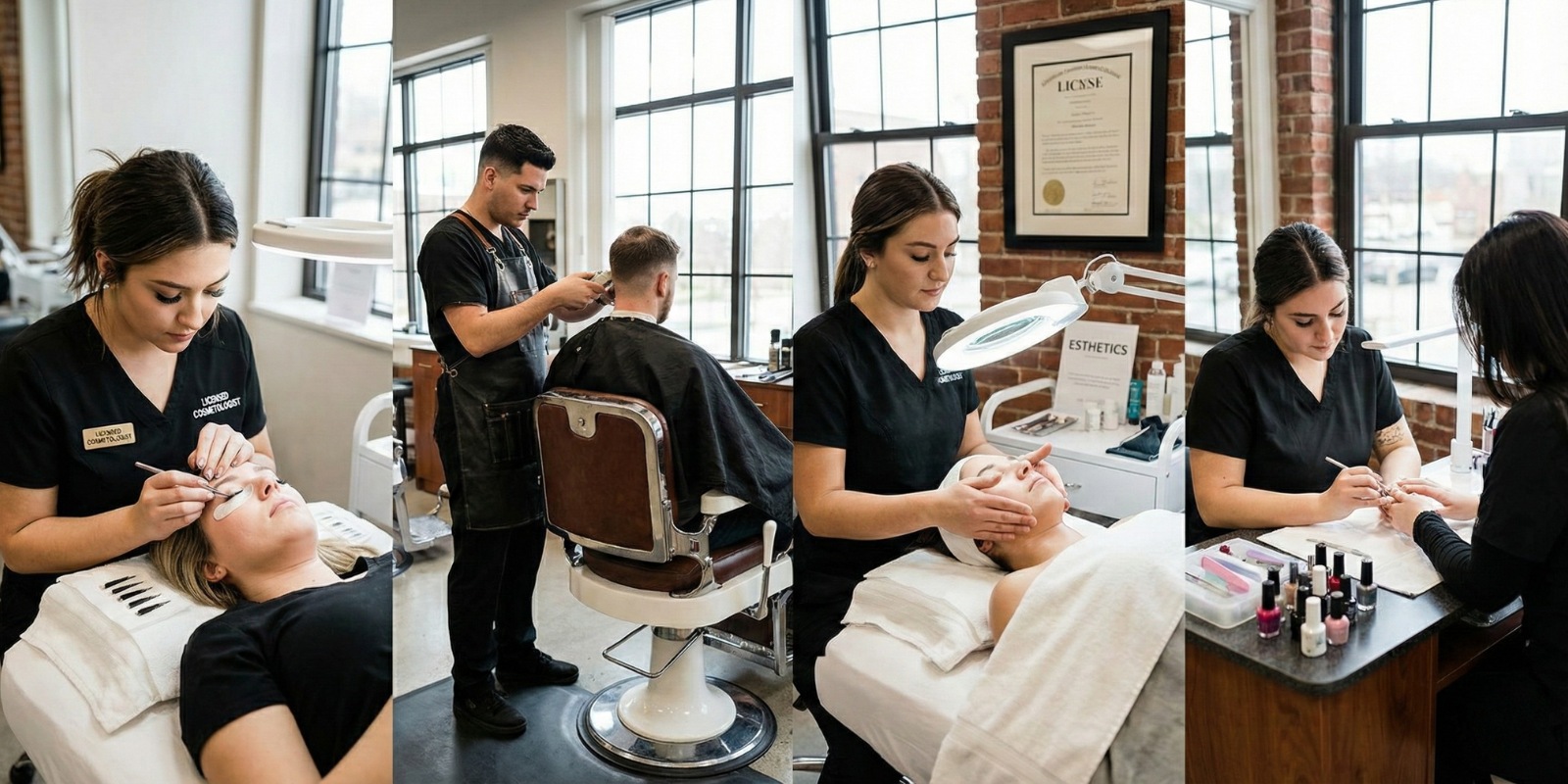
Is It Possible For You to Work as an Esthetician, Barber, Lash Tech, or Nail Tech With a Cosmetology License?

If you have ever looked at your cosmetology license and wondered what else you can do with it, you are definitely not the only one. I see this happen all the time – someone is about to graduate or is already licensed, and they start dreaming about doing lashes full-time, opening a nail boutique, or even moving into a barbershop. Usually, the confusion starts because of one simple fact:

A cosmetology license is very broad, but it is not a “magic key” for every service in every state.

What your school tells you or what a salon owner says is okay does not actually matter. The only thing that legally matters is your scope of practice as defined by your specific state.

Your License Is Not One-Size-Fits-All

In the U.S., every state gets to decide exactly what “cosmetology” means.

For instance, New York is pretty straightforward – they explain that cosmetology includes things like nail specialty, waxing, and esthetics, but also includes cutting or trimming beards and hair.

Texas handles things differently. They publish detailed guides that spell out exactly what a Cosmetology Operator can and cannot do. For example, they are very specific that you can only use a safety razor, not a straight razor, for shaving services.

So, when I get asked, “Can you become an esthetician with a cosmetology license?” my answer is always the same:

You are allowed to do whatever your state board says is part of your license – no more, and certainly no less.

My 5-Minute Strategy for Checking Your Scope

Before I ever help a pro add a new service to their menu or pivot their career, I use a quick verification checklist:

  1. Find your regulator. Go straight to your state board or licensing agency website.
  2. Look for the “Scope of Practice” section. You might also see it under “Laws and Rules” or “Definitions.”
  3. Search for specific terms. Look for things like eyelash extensions, chemical peels, straight razors, or microneedling.
  4. Get it in writing. If you are still confused, email the board and save their response.

Texas makes this very easy by putting everything in one place. California, on the other hand, uses “Industry Bulletins” to explain rules for specific tools or services like lashes. Following this process can save you from a very expensive legal headache.

Can You Work as an Esthetician With a Cosmetology License?

In most states, your cosmetology license covers standard skincare treatments. These are the typical services you would find in a full-service salon.

In New York, esthetics is explicitly listed as part of cosmetology. Similarly, Florida includes skin care, waxing, and manicures in their definition of a cosmetologist.

The Catch: Basic Skincare vs. Medical Procedures

I like to keep the distinction simple:

  • Basic services like traditional facials, masks, and manual exfoliation are usually fine.
  • Advanced procedures are where things get tricky.

Illinois is very strict, stating that neither cosmetologists nor estheticians should be performing services that affect the living layers of the skin. And in California, the board is clear that microneedling is outside the scope of practice for all of its licensees.

A Note on Your Professional Title

Even if you can legally do a facial, you might not be allowed to call yourself an “Esthetician.” The National Coalition of Estheticians Association points out that some states restrict this title only to those with a specific esthetics license. I always tell my readers to check this before they start printing business cards or running Instagram ads.

Doing Nails With a Cosmetology License

This is generally the most straightforward “yes” you will find.

Texas includes manicures, pedicures, and artificial nail applications in the cosmetology scope. Florida does the same.

While you are likely legally covered, remember that employers and boards care deeply about sanitation. Just because you can do nails doesn’t mean you shouldn’t seek extra training in hygiene and safety to protect your license and your clients.

Can You Be a Lash Tech With a Cosmetology License?

Lashes cause a lot of stress because people often confuse a training certificate from a brand with a legal license from the state.

California’s Board notes that applying lash extensions or strips is only for licensed estheticians or cosmetologists. Texas has a specific lash license, but they also allow Cosmetology Operators to perform those same services.

The Liability Factor

It is not just about the law; it is about insurance. On forums like SalonGeek, you will see endless threads about whether insurance covers moving from lash lifts to extensions. Even if it is legal, I always recommend double-checking that your policy actually covers you for the specific service you are providing.

Working as a Barber With a Cosmetology License

This is where people usually get surprised. While there is a lot of overlap in hair cutting, the big divider is usually the razor.

In Texas, a cosmetologist can do most barbering tasks but cannot use a straight razor for shaving. In contrast, New York allows cosmetologists to perform shaving and beard trimming.

Interestingly, in Texas, a Class A Barber can do almost everything a cosmetologist does, except for eyelash extensions. This is a perfect example of why you have to know your specific state’s rules.

Can You Work Without a License?

I get why people search for ways to work without a license – they want to start making money now. But the risks are massive. States like Texas explicitly forbid you from even advertising services you aren’t licensed for. It is always better to finish school and stay within the legal lines so you don’t lose your future career before it even starts.

How to Build Your Career Path at Hogan Institute

If you are looking at all these options and thinking, “I want a license that lets me do the most,” the key is choosing the right foundation. At Hogan Institute of Cosmetology & Esthetics, we focus on high-impact training that matches Georgia’s licensing requirements.

The Pathway for All-Around Skills

For those who want to “do it all” – hair, skin, and nails – our Cosmetology program is the standard. It is a 1,500-hour comprehensive course that prepares you for the Georgia State Board. Because the curriculum includes hair coloring, cutting, manicures, pedicures, and basic facials, it is the most flexible license you can hold in this industry.

The Specialist Route

If your heart is strictly in skincare, you can dive into a more targeted program:

  • Esthetician: This program goes deep into skin health, spa treatments, and advanced techniques like microdermabrasion and chemical peels. It is designed specifically for those who want to work in high-end spas or medical esthetics environments.
  • Instructor Training: For licensed pros who are ready to step away from the chair and lead the next generation of beauty professionals.

Take the Next Step

The best way to figure out which program fits your goals is to see the school in action. You can schedule a tour at our Lilburn campus to meet our instructors, check out the CHI-equipped labs, and talk to admissions about your career path. Whether you want a broad cosmetology foundation or a specialized esthetics focus, we are here to help you get salon-ready.
The Ultimate Guide to Cosmetology Career Opportunities (Offline & Remote)

The common assumption is that getting a cosmetology license means you’re signing up for one specific job-standing behind a salon chair for forty hours a week. While that’s a classic and rewarding path, it’s only one piece of the puzzle. I’ve found that a license is actually a versatile toolkit that can open doors to everything from corporate brand roles to legitimate work-from-home options.

If you have been searching for what you can actually do with those hours of training, I want to break down the real opportunities-both the high-energy offline roles and the digital paths you might not have considered.

Check Your Boundaries First

Before you dive into a specific niche, you have to understand your “scope of practice.” This is just a fancy way of saying “what the law allows you to do.” Because every state has its own board, the rules for what a licensed cosmetologist can do in Georgia might differ from New York or California.

For example, if you are looking for specific details on what is allowed, the Texas Department of Licensing and Regulation has a great official scope guide that explains how different licenses overlap.

Also, if you are dreaming of a home-based setup, keep in mind that many states view this as a regulated business, not just a hobby. California’s home salon rules are a good example of how detailed these requirements can get. My best advice is to verify your local board’s rules before you spend money on equipment or a home studio.

Traditional and Hands-on Cosmetology Occupations

The Salon and Studio Landscape

This is the heart of the industry, but it isn’t a “one-size-fits-all” career. Inside the salon world, there are several cosmetology career opportunities depending on what you love doing most:

  • Precision cutting and modern styling
  • Advanced color chemistry and balayage
  • Texture specialist roles
  • High-end extensions
  • Bridal and special event styling

Specialization is usually where you find the best cosmetology careers. According to the Bureau of Labor Statistics, the median pay for hairstylists and cosmetologists was around $16.95 per hour as of May 2024, with roughly 84,200 job openings expected each year. While that is a broad average, specializing in high-demand services like color corrections or extensions can significantly shift your personal cosmetology careers salary.

Focusing on Esthetics and Nail Care

Many professions in cosmetology focus less on hair and more on the detailed work of skin and nails. If you enjoy a more routine, one-on-one environment, these are fantastic jobs in the cosmetology field.

The BLS reports that skincare specialists earn a median of $19.98 per hour, while manicurists and pedicurists are around $16.66 per hour. I like these paths because they often lead to very loyal, repeat clients who value the consistency of their monthly appointments.

The Underrated Path: Senior Living Communities

If you want more predictable hours and a built-in client base, look into senior living facilities. Companies like Resident Salon Services specifically hire licensed pros to work within these communities. It is a stable, care-focused way to use your skills without the constant pressure of chasing the latest TikTok hair trends.

The Creative Side: Stage, Screen, and Specialty Work

If you love the idea of storytelling or high-stakes environments, there are plenty of cosmetology opportunities in the creative arts.

This includes:

  • Film and television production
  • Fashion editorials and magazine shoots
  • Theatrical and performance makeup

The BLS actually tracks makeup artists for theater and performance as a distinct category. If you’re aiming for the big screen, look at the IATSE Local 706 requirements, which often specify that a current license is needed for hair department roles.

Medical Support and Wigs

Some of the most meaningful work involves helping people through medical transitions. Specialized wig styling and “cranial prosthesis” (the medical term for wigs) are vital for clients dealing with hair loss.

The American Cancer Society provides resources on how patients can choose wigs, and the National Alopecia Areata Foundation helps clients navigate insurance reimbursement. As a licensed pro, you can be the bridge that helps these clients feel like themselves again.

Corporate Roles and Career Stability

If you are looking for cosmetology jobs with benefits and a more corporate structure, you might want to move “behind the scenes” of the brands you already use.

  • Education and Training: Every major beauty brand needs people to teach stylists how to use their products. This could be anything from a local educator to a platform artist at major trade shows.
  • Sales and Account Management: If you have a head for business, you can work as a sales rep for professional lines. You’re still in the beauty industry, but your day-to-day involves building relationships with salon owners rather than doing hair.

Can You Work From Home with a Cosmetology License?

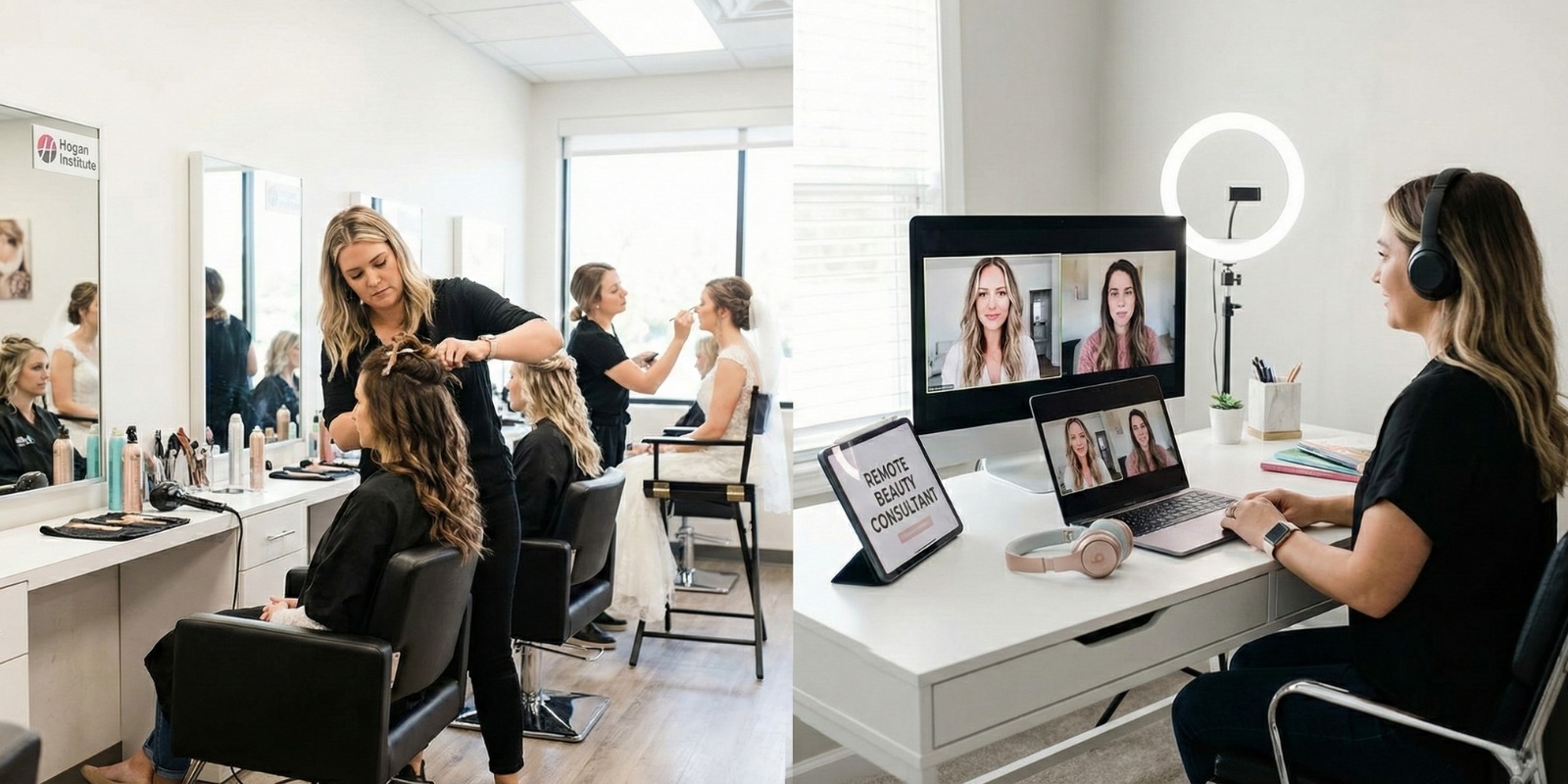
I get asked this a lot. While you can’t physically cut hair over Zoom, there are real cosmetology jobs remote that allow for a better work-life balance.

Online Color Consulting

This is probably the most legit WFH path right now. Companies like eSalon hire licensed colorists to help customers find their perfect shade and troubleshoot application issues from home. It’s perfect if you love color theory but your body needs a break from the physical demands of the salon floor.

Digital Content and Brand Support

Your license gives you instant authority. You can use that to create educational content, write for beauty publications, or work in remote customer support for high-end beauty brands. When a customer has a technical question about a product, these brands want a licensed professional-not a generic chatbot-to answer them.

How Hogan Institute of Cosmetology and Esthetics Prepares You for These Paths

If you’re sitting there thinking, “I want these options, but how do I actually start?” then your choice of school is the first big move. You need a program that doesn’t just teach you how to pass the state board, but one that prepares you for the “Beyond the Chair” opportunities I’ve mentioned.

At Hogan Institute of Cosmetology and Esthetics (HoganICE), we focus heavily on making sure you are “Salon Ready” from day one. Here is why that matters for your career:

Comprehensive Master Cosmetologist Training

In Georgia, you need 1,500 hours to get your license. Our program covers the full spectrum-hair, skin, makeup, and nails. Because we use high-quality products like CHI, you are getting trained on the same tools used in top-tier salons and by major brands. This makes a huge difference if you eventually want to go into brand education or sales.

Real-World Experience on our Clinic Floor

You can’t learn the nuances of client retention or salon management by reading a book. At HoganICE, we have a full-service salon environment where you work on actual clients. I believe this is where the real confidence is built. We even encourage you to make mistakes while you’re in school, because that’s how you learn to solve problems before you’re out in the real world on your own.

Support for Your Job Search

We don’t just hand you a diploma and wish you luck. Our instructors help with the “unspoken” skills-things like resume writing, job seeking strategies, and how to build a client base that actually sticks with you. Whether you want to work in a high-end spa, a film set, or a corporate office, we provide the foundation of professionalism you need.

If you are wondering what careers can you do with a cosmetology license and which one fits you best, the easiest way to find out is to see our environment for yourself. You can book a tour at our Lilburn campus to ask about our schedules and see if the vibe matches your career goals.