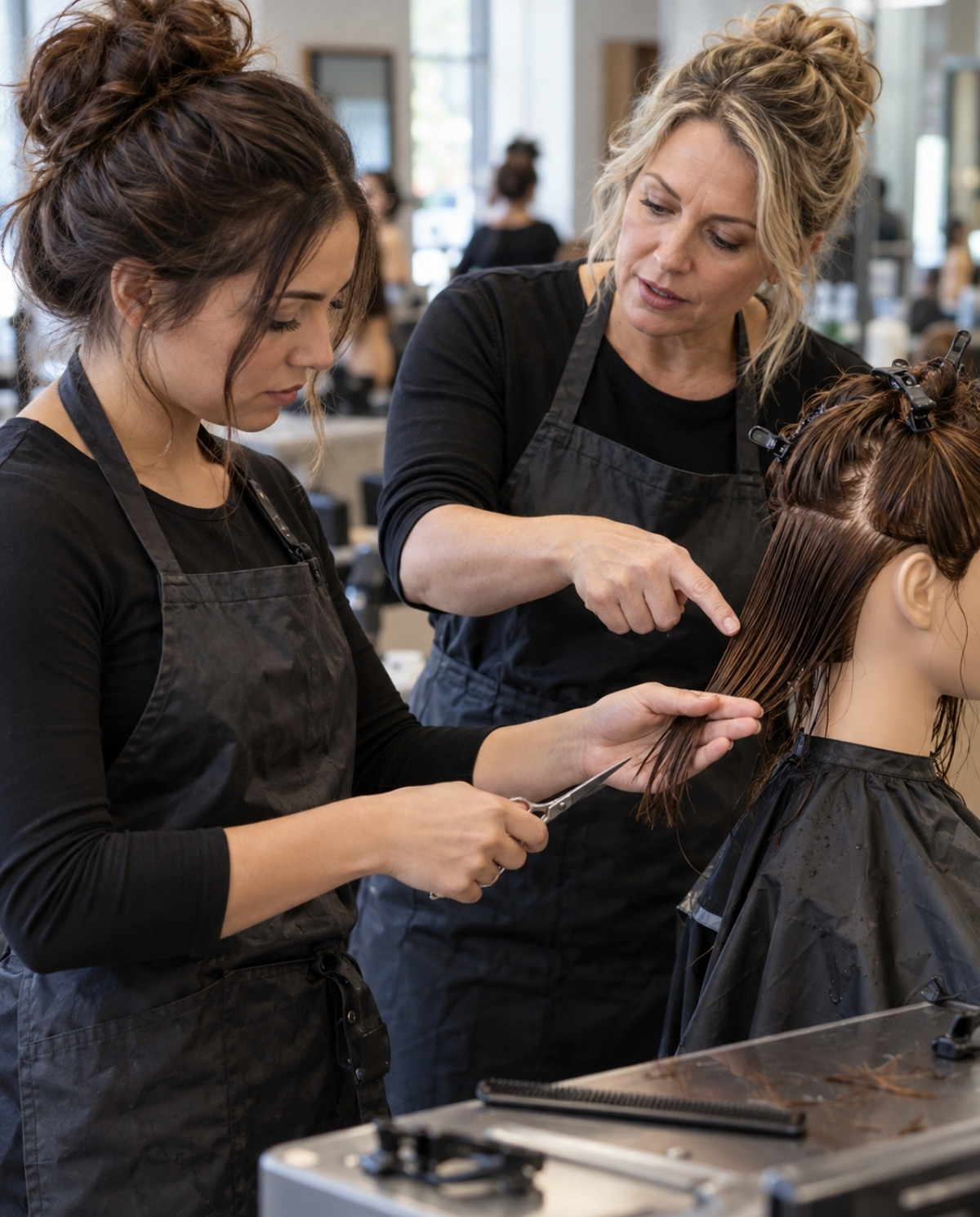
State-by-State Cosmetology License Guide: Training Hours, Tests, and Renewals

Stepping behind the chair and launching a professional beauty career represents a major milestone for many creative individuals. The desire to work independently, master advanced styling techniques, and build a loyal clientele serves as a strong motivator for entering this dynamic field. However, turning a creative passion into a legitimate business requires navigating a complex environment of localized regulations, mandated training hours, and rigorous testing requirements. This procedural roadmap can easily feel overwhelming to prospective students who are trying to balance their education with everyday responsibilities.

Many individuals hesitate to begin their training because they worry about fitting a rigid school schedule into their lives, while others face significant anxiety regarding standardized tests. For those who are already working within the industry, the prospect of moving to a different region or accidentally letting their credentials lapse raises valid concerns about career continuity and financial stability. Understanding the structural entry requirements of the profession helps clear up these doubts early on. Prospective students can review this detailed breakdown regarding what you actually need to enroll to see how accessible, organized, and structured the admissions process truly is for dedicated applicants.

Key Takeaways

  • Baseline Standard Variations: Cosmetology rules are dictated by individual state boards, meaning age rules, school-hour requirements, exams, fees, and renewal timelines can vary significantly across state lines.
  • The 1,000-Hour Shift: Several large states now use a 1,000-hour cosmetology requirement, and recent research suggests hour reductions can lower tuition and improve completion without showing a detectable decline in cosmetologist earnings.
  • Interstate Portability: The new Multi-State Cosmetology Licensure Compact is designed to reduce traditional reciprocity friction once fully implemented in participating states, though it is not the same as automatic nationwide license transfer.
  • Safety-Focused Renewal: License renewals and continuing education rules help boards reinforce sanitation, consumer protection, legal compliance, and updated health-and-safety practices, including safer chemical handling.

Making Sense of Cosmetology Regulations by State

State laws govern the legal parameters of who can safely offer beauty services to the public. Because the United States does not use a single centralized oversight system, cosmetology regulations by state differ based on local board policies. Each local agency establishes a baseline framework to police the regional market and define your professional scope of practice. This scope outlines the exact boundaries of the services you are legally permitted to perform under your specific credentials.

These strict guidelines are put in place to enforce thorough skin anatomy knowledge, proper chemical safety protocols, general sanitation, and infection control. State boards are not responsible for measuring your artistic flair or personal style; instead, their primary mandate is protecting public safety and consumer health. Developing a clear understanding of these local expectations early in your journey keeps your professional credibility fully intact from the very start of your career.

Reading the Fine Print of State Licenses

When reviewing general cosmetology license requirements by state, applicants will discover a wide mix of mandatory age limits, education prerequisites, required school hours, testing formats, processing fees, and background disclosures. Most jurisdictions require candidates to be at least 16 or 17 years old, but educational milestones vary from coast to coast. For example, the Texas Department of Licensing and Regulation demands a 1,000-hour cosmetology operator course alongside a minimum age of 17, whereas the New York Department of State mandates an approved 1,000-hour course followed by both a written and a practical evaluation.

Relying solely on a generic national checklist can cause major delays in your licensing timeline. A successful career strategy depends entirely on looking up the exact rules set by the board where you intend to practice. Attending a structured educational program streamlines this entire setup, making it much easier to gather your age verification paperwork, official transcripts, exam applications, required fee payments, and any needed criminal-history disclosures without facing administrative setbacks.

Because a full license covers a diverse range of personal care skills, students frequently ask about the exact boundaries of their future daily work. If you are curious about your day-to-day workplace freedom, you can read our complete guide to see if it is possible for you to work as an esthetician, barber, lash tech, or nail tech with a cosmetology license to learn how these different specialties fit into your legal scope.

Tracking Cosmetology School Hours by State

The first major structural milestone for any future beauty professional is accumulating the specific training hours required by state boards. The amount of time you must spend in the classroom and student salon depends completely on localized rules. Anyone tracking cosmetology school hours by state will quickly notice that these baselines can shift drastically right at the state line.

To break down these differences with real examples, New York sets its baseline at 1,000 hours, California requires 1,000 school hours for cosmetologists through the administrative rules of the California Board of Barbering and Cosmetology, and Texas designs its operator curriculum around a 1,000-hour track. Conversely, states like Ohio, Arkansas, and Georgia still heavily rely on a 1,500-hour path for standard licensure, though the specific titles and test designs vary by region.

It is vital to look up the mandatory cosmetology hours for each state where you intend to establish your future business. Keeping track of these required hours keeps you from spending extra time or tuition dollars on a program that fails to meet your local board’s structural criteria. Choosing an educational institution that plans these training sequences efficiently allows you to graduate on time and join the workforce with minimal delay.

Interestingly, a 2025 EdWorkingPaper from the Annenberg Institute at Brown University revealed that lowering required training hours can create positive results for students by boosting completion, lowering total tuition costs, and increasing enrollment among some student populations. The data showed no detectable decline in cosmetologist earnings after these hours were reduced. While these findings do not guarantee an identical salary path for every single individual, they support the perspective that very high hour requirements can create expensive barriers to entry without adding clear economic value later on. This structural shift makes joining the workforce faster and more affordable in regions that adopt the 1,000-hour model.

Getting Through the State Board Exam With Less Stress

Once your required training hours are officially recorded in the state registry, you must face the final step of the licensing process: passing the official board exam. Experiencing intense nervousness during this period is completely normal, especially for visual, hands-on learners who excel on the salon floor but feel intimidated by traditional written testing environments.

Building a Smart Review Plan

To pass your licensing evaluation on your very first attempt, you must look past the creative cuts and colors you practice in class and invest real energy into a thorough cosmetology state board exam review. The written or theory portion of the test covers heavy technical material, including chemical safety, sanitation protocols, infection control, hair care, skin care, nail care, and regional legal rules.

Utilizing a cosmetology practice test free online can help take the mystery out of the official layout. Working through a comprehensive cosmetology written exam study guide makes it much easier to memorize important concepts like tool disinfection, chemical texturizing, and safe product handling without feeling buried under your study materials. Thorough technical preparation bridges the gap between being a talented student and a safe, highly employable professional.

Breaking Down the Exam Mechanics

  • The Content Blueprint: You should find out exactly how many questions are on the cosmetology state board exam before your test day so you can pace yourself properly during the session. Many states use standard national content, but the layout depends entirely on your board and testing vendor. For example, the NIC National Cosmetology Theory Examination contains 110 total items, with 100 scored questions counting toward your final grade.
  • The Practical Exam Variation: Do not assume that every jurisdiction requires a hands-on practical test anymore. California, for instance, updated its system to state that the practical exam is no longer required for any license categories, meaning candidates only need to clear the written theory test. Other regions still mandate a mix of hands-on practicals, written practicals, or separate evaluations covering specific cosmetology state law questions.
  • The Investment Cost: Make sure to factor testing fees directly into your career budget. Always look up how much it costs to take the state board for cosmetology through your local agency or testing provider, as fees change depending on whether you are paying for written, practical, or law-specific portions.
  • The Registration System: While your beauty school will help you submit your final graduation records, you are ultimately responsible for learning how to apply for cosmetology state board exam dates and figuring out how to schedule cosmetology exam sessions through official proctors like PSI, Pearson VUE, Prov, or another approved vendor.
  • The Actual Difficulty: Students frequently worry about how hard is the cosmetology state board to pass. The reality is that the state is looking for a baseline of safety and competence, not flawless creative mastery. If you understand sanitation rules, infection control, chemical handling, and your legal scope, you can confidently learn how to pass the state board of cosmetology on your first try.

As you plan for these mandatory testing fees and review your total program tuition options, remember that you do not have to fund your entire education out of pocket. To find real assistance covering these initial career expenses, look over our comprehensive manual on using FAFSA, grants, and 529 plans for cosmetology school.

Keeping Your License Active After Graduation

Earning your professional beauty credentials is a massive achievement, but keeping them active requires regular upkeep. If you take a brief break from the salon or simply lose track of the calendar, you might suddenly discover that your official paperwork has lapsed. This can cause a sudden wave of panic, but an expired status can usually be corrected if you follow the proper steps right away.

The Real Steps to a Smooth Renewal

Every state board sets its own unique renewal cycle. Your deadline might be tied to a fixed calendar date, your birth month, the anniversary of your original print date, or a custom board schedule. Some states require a cosmetology renewal license every year, while others operate on a two-year or longer cycle. If you live on the West Coast, you might wonder, can I renew my ca cosmetology license online? Fortunately, the vast majority of state boards now use online portals to speed up the application process.

If you miss your deadline, you need to find out exactly how long after cosmetology license expires you can wait before the state board penalizes you, changes your file status, or cancels your record completely. Waiting too long increases your out-of-pocket costs and stops you from working legally behind the chair. You should learn how to check if my cosmetology license is expired on the official state registry immediately so you can calculate your late fees and get your business back on track. Managing your cosmetology license renewal after expiration online is almost always the fastest path to avoid missing time with your clients.

Fixing a Lapsed or “Null and Void” License

If a license sits neglected for multiple years, the state board may permanently cancel it, labeling the file as null and void. Reinstating a cancelled license can be an incredibly stressful process because every board establishes its own rules for a comeback.

For instance, the Florida Department of Business and Professional Regulation states that a license becomes null and void if a professional fails to renew for two consecutive licensure cycles. A null and void status usually cannot be restored unless the applicant can prove illness or major economic hardship, and the board reviews these applications case by case. You cannot assume a simple late fee will clear up a long-expired file.

Furthermore, many states require you to finish approved continuing education courses for cosmetology before they will grant a renewal. For example, the Georgia State Board of Cosmetology and Barbers mandates five hours of board-approved continuing education for every renewal cycle after the first renewal exemption where applicable, including three hours dedicated to health and safety. These requirements ensure professionals stay sharp on sanitation, infection control, and state laws, rather than existing for just one single reason.

Long-term occupational health research shows why this safety focus is so vital in a salon environment. A study published in Occupational and Environmental Medicine discovered connections between professional hairdressing and certain hormone-related health outcomes, including a higher rate of incident endometriosis and higher odds of a pre-baseline hysterectomy, while finding no notable links to several studied cancers. This does not mean every single stylist will face these health issues, but it strongly highlights why modern salon ventilation, ingredient awareness, protective gear, and safe chemical handling matter throughout your beauty career.

Relocating Your Beauty Career Across State Lines

Life changes fast. Whether you are relocating for family, a partner, or just looking for a fresh professional start, moving your beauty business across state lines can be incredibly frustrating. Stylists often worry that their hard-earned training hours will not be respected by a new state, putting their client momentum and income at risk.

Understanding Transfers and Reciprocity

When you start planning a move, you must look into how to transfer cosmetology license to another state. This process generally relies on reciprocity or endorsement, but those terms are not completely interchangeable. A cosmetology license by reciprocity application usually means one state board directly recognizes another state’s training standards. Endorsement typically means the new state board manually reviews your active license, school hours, exams, and sometimes your verified work history before making a decision.

To get approved, you usually have to submit a formal application, pay a processing fee, and ask your original state board to send or submit official license verification to your new board. However, if your original state required fewer school hours than your new destination, you might hit a regulatory wall. Some boards will require you to complete additional training hours, take a state-law exam, pass another practical or written evaluation, or show years of licensed work experience before they grant approval.

Arkansas is a prime example of why checking the details matters. The Arkansas Department of Health explains that if you are transferring hours from another state without holding an active, current out-of-state license, you must pass their written and practical exams to qualify for an Arkansas license. Florida uses a different path. The Florida DBPR states that if you qualify for a Florida cosmetology license by endorsement, you do not have to take the Florida licensing exam, but you must hold a valid, active out-of-state license and complete an approved HIV/AIDS education course.

Digital Transfers and the Multistate Compact

If you are wondering, do cosmetology licenses transfer to other states easily? The answer comes down to your destination’s specific cosmetology license transfer from state to state requirements.

Fortunately, many boards now allow you to submit a cosmetology license transfer from state to state online, saving you from weeks of traditional paperwork delays. Before you sign a lease on a new salon suite, always look up the local transfer rules so you do not face forced unemployment while waiting on state bureaucracy. Knowing how easily your credentials move allows you to confidently explore the full range of cosmetology career opportunities waiting for you, whether you want to work as a traveling platform artist, an editorial session stylist, or a salon manager.

Legal and legislative analysts from the University of Missouri School of Law Scholarship Repository have been tracking the rollout of the Multi-State Cosmetology Licensure Compact. The official Cosmetology Compact explains that this system creates a streamlined, multi-state licensing pathway for eligible cosmetologists who live in a compact member state and hold an active, unencumbered license. Once fully implemented and once member states begin issuing multistate licenses, this framework should allow qualifying beauty pros to practice across member state lines without filing individual reciprocity packages in every single participating state.

However, do not mistake this compact for automatic nationwide portability. It applies strictly to participating states that have passed the legislation, and your eligibility still hinges on your home state’s rules and the compact’s active rollout timeline. It is a meaningful step forward for professional mobility, but you should still double-check whether your target state is participating and whether multistate privileges are actively available before you pack your bags.

Ready to Begin Your Beauty Training?

Navigating the shifting landscapes of training hours, transfer protocols, and exam criteria becomes much simpler when you have a supportive community behind you. Finding a beauty school that focuses on real-world preparation can make all the difference as you launch your creative career.

A great beauty education bridges the gap between textbook theory and actual salon realities, helping you build strong hands-on skills while mastering critical sanitation and state board requirements early on. When a school integrates regular state board prep directly into your training routine, it changes the entire experience. What usually feels like an intimidating exam becomes a manageable, predictable process, giving you the confidence to walk into your licensing test with a stronger foundation.

If you are ready to take the next step and map out your path in the beauty world, you can explore all the details and learn more about getting started in our Enrollment section.

Have questions about scheduling a campus tour, class start dates, or how the licensing timeline fits into your life? You can use the contact or enrollment form on the site, and an admissions representative can help you map out your journey from student to successful beauty professional.

Frequently Asked Questions

Can I offer mobile beauty services or work from home without a license?

No. State laws strictly require an active, valid beauty license for professional cosmetology services, regardless of where the work happens. Offering hair, nail, or skin services for money or compensation without a license can lead to expensive fines, disciplinary actions from the board, misdemeanor charges in certain states, and serious issues if you try to apply for a real license in the future.

What is the difference between a standalone cosmetology board and a merged board?

In the past, barbering and cosmetology were often handled by separate boards with different exams, approved schools, and license tiers. Today, some states are merging these administrative bodies. For example, Texas combined its barber and cosmetology systems under the TDLR through House Bill 1560. The Texas Department of Licensing and Regulation now manages Barbering and Cosmetology together under a unified program. While this can standardize health, safety, sanitation, establishment, and administrative rules, it does not mean the actual structural differences between a barber license and a cosmetology license have completely disappeared.

Do states with fewer required school hours see lower customer satisfaction?

Not necessarily. A major econometric review hosted by San Jose State University analyzed Yelp ratings as a measure of customer satisfaction in beauty occupations. The data revealed that stricter, higher-hour licensing rules did not show a general positive link to better consumer ratings. While online reviews are not a perfect measurement of technical safety or clean tool protocols, the study highlights that massive hourly burdens do not automatically guarantee better service for the consumer.

To visually understand how interstate career movement is changing for beauty professionals, you can watch this helpful breakdown of the Cosmetology Licensure Compact and State Board Rules. This video outlines the active member states joining the compact and explains how the system may simplify professional mobility without the headache of traditional reciprocity paperwork.

Can You Use FAFSA For Cosmetology School? Also Grants, 529 Plans, and More

Starting a career in the beauty industry is a fantastic path toward financial independence and creative freedom. However, navigating the logistics of school tuition and equipment costs can feel overwhelming at first. Many prospective students worry about how they will manage the upfront expenses or whether they will be forced to take on high-interest debt before they even learn to use professional styling tools.

Fortunately, you do not have to fund your entire education out of pocket or clear out your savings on day one. Because professional beauty programs require structured hours to meet state licensing standards, legitimate financial systems are in place to help you manage the investment. If you are wondering about the baseline requirements to get started, it is helpful to look at what you actually need to enroll to understand the typical admissions criteria. By learning how federal aid, specialized grants, state programs, tax perks, and modern savings plans interact, you can map out a practical funding strategy.

Important Points Before You Enroll

  • Title IV Eligibility Matters: Federal funding through the FAFSA may be available for beauty school, but only if the school participates in federal Title IV student aid programs. Accreditation matters, but students should also confirm that the school has a valid Federal School Code and that the specific program is aid-eligible.
  • Budget Beyond Tuition: Base rates can ignore the “kit bottleneck.” Anticipate extra costs for mandatory professional tools, textbooks, uniforms, registration fees, and state licensing-related expenses.
  • Attendance Directly Impacts Aid: Because many trade schools operate on clock hours instead of traditional credit semesters, missing classes can stall your milestone hours and delay your financial aid payouts.
  • State and Specialized Aid Varies: State workforce programs, private scholarships, VA benefits, 529 plans, and federal tax credits can all reduce your out-of-pocket cost, but eligibility depends on the school, program, student status, and state rules.

What Beauty School Really Costs

Before evaluating financial aid options, you need to understand how beauty schools structure their fees. A common error is looking exclusively at base tuition and assuming that is the final price tag. Trade school billing is uniquely fragmented compared to traditional colleges, so the smarter question is not only about the tuition rate, but rather the full cost of attendance.

When researching your options, the overall cosmetology school cost varies based on geographic location, program length, curriculum depth, school type, and what the tuition actually includes. According to SoFi Financial Insights, the average cost for cosmetology school generally runs between $5,000 and $20,000 across the United States. If you are specifically searching for a cosmetology school under 10k, your options will typically be limited to regional vocational centers, specialized community college programs, shorter certificate tracks, or schools in smaller, rural markets.

To determine exactly how much tuition is for cosmetology school, you must look past the baseline instructional rate. Accredited institutions often require students to purchase a mandatory student kit. This kit is a collection of professional-grade tools, including shears, styling irons, mannequins, sanitation supplies, textbooks, and sometimes uniforms, that you use daily on the clinic floor and may retain after graduation.

Data compiled by the Renaissance Academie Cost Analysis shows that student kits and learning materials can add a significant mandatory expense, with one example listing student kit and textbook costs at about $2,498. Other schools may bundle these items into tuition, while others bill them separately before classes begin. When evaluating how to pay for cosmetology school, always ask the admissions office whether the student kit, books, uniforms, registration fees, and state board preparation materials are included in the advertised price or charged as independent upfront costs.

You should also ask for the school’s full cost of attendance, not just tuition. A complete budget may include tuition, required fees, books, course materials, supplies, equipment, transportation, and licensing-related costs. This matters because the cost of attendance is often the number used to calculate how much aid you may qualify for, not just the number printed on the tuition page.

Using FAFSA for Beauty Training

The most frequent question prospective applicants ask is whether they can use FAFSA for cosmetology school. Federal student aid may be available for trade programs, provided you choose a school and program that are eligible to participate in Title IV federal student aid programs. Accreditation is an important signal of quality and legitimacy, but it is not the only requirement. The U.S. Department of Education maintains Federal School Code Lists for institutions that participate in Title IV federal student aid programs, and students should confirm that the school they are considering appears under the correct campus or institution name.

Submitting the Free Application for Federal Student Aid can unlock access to federal Pell Grants, federal student loans, and other forms of aid for eligible students. However, when you attend a cosmetology school with FAFSA approval, your funds may be managed through a system that differs significantly from a traditional college campus. Traditional universities often disburse financial aid by academic term. In contrast, many beauty and trade institutions measure your academic progress through clock hours, which represent the actual time you spend learning in the classroom or practicing on the student salon floor.

Attending a cosmetology school with financial aid means your funds may be distributed in installments tied to completed hours and weeks of instructional time rather than simple calendar dates. The Federal Student Aid Handbook explains that payment periods for clock-hour programs are based on successful completion of clock hours and weeks of instructional time. As outlined by the Continental School of Beauty Financial Guides, beauty school aid is often released in segments as students clear specific program milestones. Because of this structure, missing classes does more than just hurt your technique; it can delay your clock-hour completion, postpone your financial aid disbursements, and leave you with a temporary unpaid tuition balance until you catch up.

Before enrolling, ask the financial aid office four direct questions: Is this exact program Title IV eligible? What Federal School Code should I use on the FAFSA? Is the program measured in clock hours or credit hours? At which payment periods will aid be disbursed? These answers can help you avoid surprises once school begins.

Grants, Scholarships, and Other No-Repay Funding

To graduate with minimal debt, your primary strategy should focus on securing financial aid for cosmetology school that does not require repayment. The largest federal source of non-repayable assistance is the Federal Pell Grant, which is based on financial need and other eligibility factors calculated through your FAFSA submission. For the 2026–27 award year, the maximum Federal Pell Grant scheduled award is $7,395, although the actual amount a student receives depends on eligibility, enrollment status, program structure, and other federal aid rules.

Beyond federal programs, you should aggressively pursue specialized grants for cosmetology school sponsored by private foundations and corporate beauty brands. As noted by the American Association of Cosmetology Schools, non-profit organizations like Beauty Changes Lives offer seasonal scholarships that may help cover tuition, tools, supplies, or other training costs for qualifying students.

For students balancing family responsibilities, there may also be dedicated demographic resources available, such as cosmetology grants for single mothers or training support for displaced workers, low-income adults, and career changers. These awards are not always labeled specifically for beauty training. Many state workforce development boards, local community foundations, vocational rehabilitation agencies, and nonprofit career-training programs provide education vouchers or tuition assistance for approved job-training programs.

State aid can also dramatically offset costs depending on where you reside, but the exact program must be verified carefully. For instance, the Georgia Student Finance Commission provides the HOPE Career Grant to HOPE Grant-qualified students enrolled in selected high-demand programs of study. Students should not assume every beauty or personal care program qualifies. The safer approach is to check the current eligible program list and ask the school’s financial aid office whether your exact program is approved for the grant. Similarly, residents looking at options through Paul Mitchell The School Arkansas financial aid pathways should ask whether the program is approved for Arkansas workforce funding, vocational rehabilitation support, or other regional training assistance before assuming those funds will apply.

If you have a military background, you may wonder if the VA pays for cosmetology school training. Veterans and eligible dependents can often use GI Bill® educational benefits to fund approved trade school programs. The VA GI Bill Comparison Tool notes that the Post-9/11 GI Bill can be used at colleges, universities, trade schools, apprenticeships, and for licensing or certification tests, including cosmetology license tests. To use these benefits for a beauty program, the school or program must be approved for VA benefits. You should coordinate directly with the school’s VA certifying official to confirm tuition coverage, book and supply support, licensing-test coverage, and monthly housing allowance details.

Other Ways to Cover the Remaining Balance

If federal grants do not cover your full balance, or if you do not qualify for need-based aid, alternative financial tools can bridge the gap. For instance, families frequently ask if a 529 plan can be used for cosmetology school tuition. According to the latest Chase Investment Insights on 529 Rules, 529 funds have generally been usable for college, graduate, and vocational school tuition and fees, books, supplies, and certain education-related costs. Newer federal rules also expanded 529 use for qualified postsecondary credentialing expenses, including tuition, fees, books, equipment, exam fees, and costs required for earning or maintaining certain professional credentials.

That said, students should be careful with the phrase “tax-free.” For federal tax purposes, 529 withdrawals are generally tax-free when used for qualified education expenses, but state tax treatment can vary. Saving for College notes that some states may define qualified expenses differently, so families should keep receipts, match withdrawals to qualified expenses in the same tax year, and check state rules before using 529 funds for licensing or credentialing costs.

If you are figuring out how to pay for cosmetology school without financial aid entirely, you do not always need to have the entire balance saved before your first day. A common source of anxiety is whether you have to pay for cosmetology school upfront. Many beauty institutions offer internal monthly installment plans that break your remaining balance down across the length of your program. Some may be interest-free, while others may include fees, late penalties, or specific withdrawal-balance rules. This allows you to pay for your classes out of pocket while continuing to work a regular job, but you should read the enrollment agreement carefully before signing.

Additionally, you may be able to reduce part of your out-of-pocket cost when tax season arrives. You can potentially claim your cosmetology school expenses on taxes using the federal Lifetime Learning Credit if the school is an eligible educational institution and you meet IRS requirements. The IRS Lifetime Learning Credit equals 20% of the first $10,000 in qualified education expenses, up to a maximum of $2,000 per tax return. This is a tax credit, not a deduction, and it is non-refundable. That means it can reduce tax you owe, but it will not generate a refund if you do not owe enough tax. This is another reason why selecting a properly eligible academy can matter for your long-term financial strategy.

Can Cosmetology School Really Be Free?

While exploring funding options, you will likely encounter online advertisements or articles claiming ways to attend cosmetology school for free. It is critical to approach these offers with healthy skepticism. Unaccredited online entities frequently use these headlines as clickbait to harvest personal data, offering meaningless certificates that do not legally qualify you to sit for your state licensing exam.

An authentic, zero-out-of-pocket beauty education usually requires stacking multiple legitimate funding sources. A student might combine a Federal Pell Grant, private scholarships, state workforce funding, VA benefits, vocational rehabilitation support, institutional aid, or a payment plan to reduce the final balance. The exact combination depends on your income, residency, military status, school eligibility, program approval, and scholarship deadlines.

Rather than chasing unrealistic shortcuts, investing in high-quality, professional training is a reliable path to long-term career stability. The beauty industry continues to show steady demand. According to data from the U.S. Bureau of Labor Statistics, employment for barbers, hairstylists, and cosmetologists is projected to grow 5% from 2024 to 2034, faster than the average for all occupations.

Industry career resources from the Boulevard 2026 Cosmetology Career Outlook also point to the wide range of career directions available after structured training, from salon services and bridal styling to beauty entrepreneurship, film production makeup, color specialization, and salon management. Some graduates may pursue advanced esthetics or medical spa support roles, but those services can be heavily regulated and may require a separate license, additional training, or medical supervision depending on the state. Because this path is highly versatile, it is valuable to read about whether you can work as an esthetician, barber, lash tech, or nail tech with a cosmetology license to see how far your credentials can legally carry you across multiple beauty niches. Choosing a properly licensed and accredited program helps ensure you gain the training foundation required to build a sustainable career within your state’s legal scope of practice.

Build Your Future at Hogan Institute

Investing in professional training is not just about managing educational expenses; it is about finding a supportive space that transforms your creative passion into long-term professional opportunities. At Hogan Institute of Cosmetology & Esthetics, students can train in a career-focused environment designed to help them develop the skills, knowledge, and confidence needed for the beauty industry.

Through hands-on practice, real clinic-floor experience, and preparation for state licensing requirements, you can build the technical foundation needed to move forward with clearer direction. If you want to learn more about the industry landscapes waiting for you after graduation, take a look at the ultimate guide to cosmetology career opportunities.

To find out exactly how the application process works and explore your options, visit the Enrollment page for more details. You can also use the contact form provided at the end of this page to connect with an advisor, ask questions about funding, or plan a campus visit.

Common Questions About Paying for Beauty School

Is it realistic to keep a full-time job while attending beauty school?

Yes, but the answer depends on the school’s schedule and your personal stamina. Many institutions offer flexible training schedules, including day, evening, or weekend tracks. This may allow you to maintain regular employment while accumulating your state-required training hours. However, because clock-hour programs depend heavily on attendance, students should choose a schedule they can realistically maintain without repeatedly missing required hours.

How does financial aid work if I pause or leave my program?

Because many trade schools operate on clock hours, taking an official leave of absence can pause your financial aid progress and affect future disbursements. If you withdraw permanently, the financial aid office uses federal return-of-aid rules to calculate how much aid you earned based on your completed portion of the payment period. If you leave early, you may owe a remaining balance directly to the school or may have to repay unearned aid, depending on your situation.

Can aid help with licensing exam expenses?

It may, but students should ask the school’s financial aid office how those costs are handled. The Federal Student Aid Handbook explains that for programs requiring professional licensure, certification, or a first professional credential, the cost of attendance must include an allowance for costs such as licensing exam fees and application costs. However, timing matters. Some fees may need to be paid while you are still enrolled, and each school may handle documentation differently. You may also be able to use 529 funds for eligible professional licensing or credentialing costs if the expense qualifies under federal and state rules.

Are beauty training scholarships difficult to win?

While national awards draw many applicants, a significant number of localized and industry-specific scholarships receive fewer applications than students expect because people assume they will not win and skip the process. Knowing what you want to do with your credentials helps give you a major advantage when writing your scholarship essays. Private beauty organizations often look closely at your creative drive, work ethic, financial need, community goals, and professional salon plans rather than just your old high school transcripts.

How to Get a Cosmetology License With or Without School: Finding Your Path

Starting a career in the beauty world is incredibly exciting, but I’ll be the first to admit that the legal side of things can feel like a total maze. I remember when I first started looking into the industry, I was so focused on learning the latest trends that the actual licensing process caught me off guard. It often feels like you need a special degree just to figure out how to work in a salon legally.

I want to simplify this for you. Getting your license is a major milestone, and while the specific rules change depending on where you live, the overall path is actually very manageable once you break it down step-by-step. I am going to walk you through how the system works so you can stop worrying about the paperwork and start focusing on your future career.

Verify the Specific Rules in Your Area (No Guessing!)

The biggest mistake I see people make is assuming that the rules in one state apply everywhere else. Every state has its own board that decides exactly what you need to do. When you are looking up cosmetology license requirements or general cosmetology requirements, you are essentially looking for the unique rulebook of your specific state.

I always suggest starting with the official state board website. You should look for details on how many training hours you need to complete, what the fees are, and the exact exam type you’ll face. For example, California requires at least 1,000 hours of instruction. Meanwhile, Virginia recently updated its rules to a 1,000-hour curriculum as well. Since these numbers can shift, checking the board directly is the only way to be certain you are following the right steps and not wasting time.

Choosing Your Training Path

There are generally two ways to get your training done.

The Traditional Beauty School Route

This is the path I see most students take because it provides a structured environment where you can learn everything from safety to advanced technical skills. If you choose this route, you just need to make sure the cosmetology school is approved by your state board. This ensures your hours will actually count toward your license.

The Apprenticeship Route (Licensing Without School)

I get asked all the time about how to get cosmetology license without school. In many states, you can actually get cosmetology license without school by finding a cosmetology apprenticeship. This basically means you work under a licensed professional as a mentor while also completing some classroom instruction. You can find more information about these types of registered programs through federal resources. It is a great alternative for people who prefer a hands-on environment, but you have to check if your state actually allows a cosmetology apprenticeship path before you start. You can even check California’s specific apprenticeship model or visit Apprenticeship.gov to see what’s near you.

Understanding Your Licensing Timeline

I often hear people asking how long does it take to get a cosmetology license. The answer depends on your daily schedule and how fast your state processes paperwork. If you attend school full-time, you might finish in less than a year, but part-time students will naturally take longer.

Once you finish your training hours, you also have to factor in the time it takes to get an exam date and for the state to mail your license. In California, for instance, applying online is much faster, but mailed applications can take up to eight weeks to process. I always tell people to plan for a few months of waiting after graduation just to be safe.

Managing the Costs and Financial Aid

Training for a new career is an investment, and it can be stressful to figure out the finances before you are allowed to earn. You have to think about tuition, your student kit, and the various application fees.

If the school you choose is eligible, you might be able to use federal student aid. You can use the Federal Student Aid school code search to see if a specific program qualifies. If a school does not show up there, Federal Student Aid explains that they might not participate in those programs. Additionally, the IRS allows for certain tax deductions for education expenses at eligible institutions, which can help out during tax season.

The State Board Exam Process

Once your training is complete, it is time to handle the actual testing. This is the part that makes everyone nervous, but there is no need to panic. The standard flow is to finish your hours, submit your how to apply for cosmetology license paperwork, and then get approved to schedule your exam. For instance, California provides clear checklists through their board’s forms to help you stay organized.

Many states use exams developed by the NIC. They provide Candidate Information Bulletins that tell you exactly what topics the cosmetology state board exam will cover. I have found that the best way to prepare is to treat your practice sessions like a real performance. When students ask me how to pass cosmetology state board exam, I tell them to focus on the procedures. Most people do not fail because they don’t know how to do hair; they fail because they forget a sanitation step. I have seen many people on Reddit express frustration with vague study advice, so I recommend focusing strictly on the official bulletins or checking resources from Prometric if they are your exam vendor.

Keeping Your License Active

After you finally get that license, you have to maintain it. You will need your license number for job applications, booth rentals, and professional insurance. Most states have an online portal like BreEZe where you can verify your status or update your address.

You also have to stay on top of your cosmetology license renewal. Every state has a different schedule. In New York, for example, you have to renew every four years. In Texas, the renewal process is also done online. If you let it lapse for too long, like more than five years in Pennsylvania, you might have to retake the exam entirely. Florida is particularly strict, and if your license becomes null and void, you may have to show documented hardship to get it back.

Moving Between States

If you decide to move, you will need to look into a cosmetology license transfer from state to state. This is technically called applying for a cosmetology license by reciprocity. The board in your new state will check your previous training hours and exam scores. Some states, like Virginia, are working on a licensure compact to make moving easier in the future. Until that is fully active, you will need to follow the specific transfer rules of the state you are moving to, which often include official verification letters.

Special Circumstances and Eligibility

I know some people worry about personal factors like not having a social security number or having a past record. In California, the board is allowed to accept an ITIN instead of an SSN for applications. When it comes to criminal history, many states evaluate these situations on a case-by-case basis. I always suggest being honest on your application and contacting the board early if you have concerns about your eligibility.

Your Path Forward with Hogan Ice

Taking the first step toward a new career is a big deal, and I want to make sure you feel supported through the whole process. At Hogan Institute of Cosmetology and Esthetics, we focus on providing the training you need to meet the strict standards of the state board while also giving you the confidence to succeed in a real-world salon environment. We know how much this career means to you, and we are dedicated to helping you navigate the journey from being a student to becoming a licensed professional.

If you are ready to learn more about how to get started, I encourage you to check out our Enrollment page. It has all the information you need to begin your application and join our community.

I also want to make sure all of your questions are answered. If you want to talk about your specific goals or see the campus for yourself, we have a contact form at the bottom of this page. Please reach out and let us know what you are looking for so we can help you take that next step.

Does Everyone Get Into Cosmetology School? What You Actually Need to Enroll

I have seen so many people with incredible natural talent hold themselves back because they are worried about a piece of paper. Maybe you are sitting there wondering if your education background is going to stand in the way of your career, or perhaps you are just trying to figure out where to even start the enrollment process. It is completely normal to feel a bit overwhelmed by the technicalities.

I want to help you clear the air. Getting into beauty school is less about being a perfect student and more about understanding the specific rules that govern our industry. If I had to break down who these schools are actually for, I would categorize it by the requirements you need to meet to move forward with confidence.

Understanding the Three Different Hurdles

One of the biggest reasons people get confused when looking into how to get into cosmetology school is that there isn’t just one set of rules. You are actually looking at three different gatekeepers that each have their own requirements.

The Admissions Office

Each individual school has its own standards for who they let in. While most prefer a high school diploma, some have flexibility depending on the program.

The State Board

This is the most critical part. To actually work as a professional, you eventually have to be licensed by the state. In Georgia, this is handled by the Georgia State Board of Cosmetology and Barbers. If you don’t meet their specific criteria for training hours and education, you won’t be able to sit for your exams, regardless of how well you did in class.

Federal Funding

If you are planning to use federal financial aid to pay for your tuition, the government has its own strict set of rules. This is often where the requirement for a high school diploma or GED becomes most rigid. If you are in a position where you are looking at cosmetology school without a high school diploma, you might need to explore Ability-to-Benefit (ATB) pathways, which are specific routes designed to help students without a traditional diploma qualify for aid through career-focused programs.

The Reality of GEDs and High School Diplomas

I get asked all the time if it is possible to start a beauty career without a standard high school background. The answer is usually more positive than people expect, but it requires some planning.

If you have been asking yourself can I get into cosmetology school with a GED, the answer is a very common yes. Most schools and state boards view a GED as the equivalent of a high school diploma. It is a perfectly valid way to meet the education requirements for both enrollment and licensing.

However, if you are currently looking for cosmetology schools without GED or diploma requirements, you have to be more careful. While some programs may allow you to start your training, you will almost always need to complete your GED before you can apply for your state license. I always tell people that it is better to handle the education side of things early so you aren’t stuck right at the finish line when it’s time to get your license.

Starting Young: Age and High School Programs

I think it is great when someone knows they want to be in the beauty industry while they are still in their teens. I often hear from 16-year-olds who are ready to jump in right away.

In many cases, you can actually begin your journey while you are still in high school. Many states allow students to start clocking hours at age 16 or 17, though you will generally need a parent to sign off on your enrollment. If you are a high school student, you might even find that your school has a partnership with a local beauty academy, which is one of the smartest ways to get a head start on your career.

Is Beauty School Hard to Get Into?

There is a common myth that you have to be a naturally gifted artist to even get accepted. In my experience, that is rarely the case. Most academies are looking for dedication and reliability rather than existing skills – they are there to teach you the skills, after all.

When people ask does everyone get into cosmetology school, I usually tell them that the main things that stop an application are logistical rather than personal. The most common delays include:

  • Missing Paperwork: Not having a valid ID or your high school transcripts ready to go.
  • Availability: Popular programs fill up fast, and schools have to stay within legal student-to-teacher ratios.
  • Financial Readiness: Having a clear plan for how to handle tuition and the cost of your professional kit.

If you are organized and meet the basic age and education requirements, the path is generally very open to you.

Preparing for Success at Hogan Institute of Cosmetology and Esthetics

If you are looking for a place that is focused on preparing you for the reality of the industry, the Hogan Institute of Cosmetology and Esthetics is a fantastic environment to consider. I have found that the best schools are the ones that don’t just teach you how to do hair or skin, but specifically how to pass your state board exams and thrive in a real salon or spa.

Our Professional Programs

We offer several specialized paths depending on where you want to take your career:

  • Master Cosmetologist
  • Esthetician
  • Instructor Training

Know Before You Enroll

I highly suggest that anyone thinking about applying take a moment to look through our Student Catalog. It contains all the essential details regarding our admissions requirements and the specific documents you will need to provide. Being prepared with your transcripts and identification from day one makes the entire process much smoother.

If you are ready to stop wondering and start training, the best thing you can do is come see the school for yourself. We have a contact form right here on the site where you can reach out to our team to schedule a tour or ask specific questions about your eligibility.

Cosmetology Jobs Without a License: What Can You Legally Do in the Beauty Industry?


If you have been looking for ways to jumpstart your career in the beauty world without a license, I want you to know that you aren’t being reckless. Honestly, you’re just being realistic.

Maybe you want to start making an income sooner rather than later, or maybe the cost of school feels a bit heavy right now. I also know how frustrating it is to get five different answers from the internet and have no idea which one is actually legal.

So, I want to keep this simple. I am going to explain what a “license” actually means in our industry, where the legal boundaries usually sit, and most importantly, what you can do right now to build your brand while staying on the safe side of the law.

License vs Certification vs Business Permit: What is the Difference?

This is where I see the most confusion, so let’s break this down into plain English.

A Professional License

Think of this as your legal permission from the state to perform specific services on other people. States require these because a lot of beauty work involves chemicals, sharp tools, or sanitation risks that could actually hurt someone if handled incorrectly.

A Certification

I see a lot of people get these mixed up with licenses. A certification usually shows you have been trained in a specific skill, like a certain lash technique. While it helps your credibility and sometimes helps you get insurance, it does not give you the legal right to perform that service for money if your state requires a license.

A Business License

This has nothing to do with your talent and everything to do with running a legal company. This covers your local permits, taxes, and zoning. Even if the job you are doing doesn’t require a personal beauty license, you will likely still need a business registration to legally charge clients or sell products.

A quick way to remember it: license = permission to perform, certification = proof of skill, and business license = permission to operate.

How the Law Decides What Requires a License

Most states don’t regulate beauty based on how creative you are; they regulate based on risk.

In my experience, a service is almost always going to require a license if it involves:

  • Cutting hair or skin
  • Using strong chemicals (like hair color, relaxers, or deep chemical peels)
  • Tools that require intense sanitation (like needles or metal cuticle nippers)
  • Anything that could break the skin or cause a serious infection
  • Procedures that carry a risk of burns or long-term scarring

Services that stay on the “surface level” are often less restricted. However, this is why online advice is such a mess. Two people can tell you completely opposite things, and they might both be right, simply because they live in different states.

Cosmetology Jobs Without a License You Can Start Now

If your goal is to get your foot in the door and start earning, there are several careers with a cosmetology license not being mandatory. You can build your network and your name without any legal drama.

Non-Service Roles

These are underrated paths that I think more people should consider:

  • Beauty Retail and Sales: Working with brands or in stores to sell products.
  • Brand Representative: Helping brands at events or trade shows.
  • Salon Coordinator: Managing the front desk, bookings, and client experience.
  • Content Creation: This is huge right now. You can do reviews, tutorials, and education on social media.
  • Beauty Photography or Writing: Creating the visuals or the blogs that keep the industry moving.
  • Consulting: Helping people build skincare or hair routines without actually applying the treatments yourself.

Product-Based Businesses

If you want to be your own boss but aren’t ready for the hands-on service side, products are a smart move:

  • Launching a press-on nail brand
  • Opening an online store for beauty tools or accessories
  • Digital products like beauty planners, checklists, or “how-to” guides

This lane usually requires a solid business setup, but you generally won’t need to worry about cosmetology without a license issues here.

Can You Own a Salon Without Being Licensed?

This is a question I get all the time: can I own a salon without a cosmetology license? The answer, surprisingly, is often yes! In many states, you can be the owner and the “business brain” without ever holding a stylist’s license.

The catch is in how you structure the business:

  • You must hire licensed professionals to perform any regulated services
  • Your building will likely need an “establishment” or “salon license”
  • You are responsible for keeping the business compliant with health and safety laws, even if you aren’t the one behind the chair

So, while you can absolutely own the shop, it isn’t a “do whatever you want” situation. You still have to follow the rules of the board.

The “Big Five”: Lashes, Nails, Hair, Makeup, and Microblading

Most of the time, people aren’t trying to break the law. They are just asking practical questions like, “can I be a lash tech without a cosmetology license?” or “can you do makeup without a cosmetology license?”

Here is the general pattern I see across the country:

Where the Legal Risk Is Higher

  • Lashes: Because you’re working so close to the eyes with strong adhesives, this is heavily regulated.
  • Nails: If you’re wondering, “can I be a nail tech without a cosmetology license?” the answer is usually no if you’re doing professional services involving cuticle work or gels.
  • Hair: Usually, “alteration” (cutting or coloring) requires a license, while “enhancement” (styling or braiding) is sometimes exempt, depending on the state.
  • Makeup: This is often the most flexible area, but it can get tricky if you start doing skincare treatments.
  • Microblading: This is almost always treated as permanent makeup or body art and has its own strict set of rules.

A good rule of thumb I use: If it involves cutting, chemicals, needles, or high-level sanitation, assume you need a license until you prove otherwise with your local board.

How to Check the Rules for Your Area

If you want a clear plan that won’t get you in trouble, I suggest following these steps:

1) Define your service exactly
Don’t just say “nails.” Be specific, like “selling press-on nails” or “applying acrylics.”

2) Contact the right authority
This is usually your State Board of Cosmetology or the Department of Health.

3) Confirm the three big requirements
Do you need a personal license, a building license, and a local business permit?

4) Pick a “legal lane” while you train
I always suggest building your brand through content, products, or admin roles while you are working toward your official credentials.

Final Thoughts and Next Steps

If you’re ready to stop wondering what’s legal and start building a career that no one can take away from you, I’d love to help you take that next step at Hogan Institute of Cosmetology and Esthetics.

Whether you want to master the art of hair in our Cosmetology program, dive deep into skin health with Esthetics, or become a specialist in our Nail Technician course, we focus on making sure you’re ‘salon-ready’ from day one.

If you have questions about our hybrid learning options or how to get started, just fill out the contact form right below this post. I’d love to see you on campus for a tour soon!

Is It Possible For You to Work as an Esthetician, Barber, Lash Tech, or Nail Tech With a Cosmetology License?

If you have ever looked at your cosmetology license and wondered what else you can do with it, you are definitely not the only one. I see this happen all the time – someone is about to graduate or is already licensed, and they start dreaming about doing lashes full-time, opening a nail boutique, or even moving into a barbershop. Usually, the confusion starts because of one simple fact:

A cosmetology license is very broad, but it is not a “magic key” for every service in every state.

What your school tells you or what a salon owner says is okay does not actually matter. The only thing that legally matters is your scope of practice as defined by your specific state.

Your License Is Not One-Size-Fits-All

In the U.S., every state gets to decide exactly what “cosmetology” means.

For instance, New York is pretty straightforward – they explain that cosmetology includes things like nail specialty, waxing, and esthetics, but also includes cutting or trimming beards and hair.

Texas handles things differently. They publish detailed guides that spell out exactly what a Cosmetology Operator can and cannot do. For example, they are very specific that you can only use a safety razor, not a straight razor, for shaving services.

So, when I get asked, “Can you become an esthetician with a cosmetology license?” my answer is always the same:

You are allowed to do whatever your state board says is part of your license – no more, and certainly no less.

My 5-Minute Strategy for Checking Your Scope

Before I ever help a pro add a new service to their menu or pivot their career, I use a quick verification checklist:

  1. Find your regulator. Go straight to your state board or licensing agency website.
  2. Look for the “Scope of Practice” section. You might also see it under “Laws and Rules” or “Definitions.”
  3. Search for specific terms. Look for things like eyelash extensions, chemical peels, straight razors, or microneedling.
  4. Get it in writing. If you are still confused, email the board and save their response.

Texas makes this very easy by putting everything in one place. California, on the other hand, uses “Industry Bulletins” to explain rules for specific tools or services like lashes. Following this process can save you from a very expensive legal headache.

Can You Work as an Esthetician With a Cosmetology License?

In most states, your cosmetology license covers standard skincare treatments. These are the typical services you would find in a full-service salon.

In New York, esthetics is explicitly listed as part of cosmetology. Similarly, Florida includes skin care, waxing, and manicures in their definition of a cosmetologist.

The Catch: Basic Skincare vs. Medical Procedures

I like to keep the distinction simple:

  • Basic services like traditional facials, masks, and manual exfoliation are usually fine.
  • Advanced procedures are where things get tricky.

Illinois is very strict, stating that neither cosmetologists nor estheticians should be performing services that affect the living layers of the skin. And in California, the board is clear that microneedling is outside the scope of practice for all of its licensees.

A Note on Your Professional Title

Even if you can legally do a facial, you might not be allowed to call yourself an “Esthetician.” The National Coalition of Estheticians Association points out that some states restrict this title only to those with a specific esthetics license. I always tell my readers to check this before they start printing business cards or running Instagram ads.

Doing Nails With a Cosmetology License

This is generally the most straightforward “yes” you will find.

Texas includes manicures, pedicures, and artificial nail applications in the cosmetology scope. Florida does the same.

While you are likely legally covered, remember that employers and boards care deeply about sanitation. Just because you can do nails doesn’t mean you shouldn’t seek extra training in hygiene and safety to protect your license and your clients.

Can You Be a Lash Tech With a Cosmetology License?

Lashes cause a lot of stress because people often confuse a training certificate from a brand with a legal license from the state.

California’s Board notes that applying lash extensions or strips is only for licensed estheticians or cosmetologists. Texas has a specific lash license, but they also allow Cosmetology Operators to perform those same services.

The Liability Factor

It is not just about the law; it is about insurance. On forums like SalonGeek, you will see endless threads about whether insurance covers moving from lash lifts to extensions. Even if it is legal, I always recommend double-checking that your policy actually covers you for the specific service you are providing.

Working as a Barber With a Cosmetology License

This is where people usually get surprised. While there is a lot of overlap in hair cutting, the big divider is usually the razor.

In Texas, a cosmetologist can do most barbering tasks but cannot use a straight razor for shaving. In contrast, New York allows cosmetologists to perform shaving and beard trimming.

Interestingly, in Texas, a Class A Barber can do almost everything a cosmetologist does, except for eyelash extensions. This is a perfect example of why you have to know your specific state’s rules.

Can You Work Without a License?

I get why people search for ways to work without a license – they want to start making money now. But the risks are massive. States like Texas explicitly forbid you from even advertising services you aren’t licensed for. It is always better to finish school and stay within the legal lines so you don’t lose your future career before it even starts.

How to Build Your Career Path at Hogan Institute

If you are looking at all these options and thinking, “I want a license that lets me do the most,” the key is choosing the right foundation. At Hogan Institute of Cosmetology & Esthetics, we focus on high-impact training that matches Georgia’s licensing requirements.

The Pathway for All-Around Skills

For those who want to “do it all” – hair, skin, and nails – our Cosmetology program is the standard. It is a 1,500-hour comprehensive course that prepares you for the Georgia State Board. Because the curriculum includes hair coloring, cutting, manicures, pedicures, and basic facials, it is the most flexible license you can hold in this industry.

The Specialist Route

If your heart is strictly in skincare, you can dive into a more targeted program:

  • Esthetician: This program goes deep into skin health, spa treatments, and advanced techniques like microdermabrasion and chemical peels. It is designed specifically for those who want to work in high-end spas or medical esthetics environments.
  • Instructor Training: For licensed pros who are ready to step away from the chair and lead the next generation of beauty professionals.

Take the Next Step

The best way to figure out which program fits your goals is to see the school in action. You can schedule a tour at our Lilburn campus to meet our instructors, check out the CHI-equipped labs, and talk to admissions about your career path. Whether you want a broad cosmetology foundation or a specialized esthetics focus, we are here to help you get salon-ready.

The Ultimate Guide to Cosmetology Career Opportunities (Offline & Remote)

The common assumption is that getting a cosmetology license means you’re signing up for one specific job-standing behind a salon chair for forty hours a week. While that’s a classic and rewarding path, it’s only one piece of the puzzle. I’ve found that a license is actually a versatile toolkit that can open doors to everything from corporate brand roles to legitimate work-from-home options.

If you have been searching for what you can actually do with those hours of training, I want to break down the real opportunities-both the high-energy offline roles and the digital paths you might not have considered.

Check Your Boundaries First

Before you dive into a specific niche, you have to understand your “scope of practice.” This is just a fancy way of saying “what the law allows you to do.” Because every state has its own board, the rules for what a licensed cosmetologist can do in Georgia might differ from New York or California.

For example, if you are looking for specific details on what is allowed, the Texas Department of Licensing and Regulation has a great official scope guide that explains how different licenses overlap.

Also, if you are dreaming of a home-based setup, keep in mind that many states view this as a regulated business, not just a hobby. California’s home salon rules are a good example of how detailed these requirements can get. My best advice is to verify your local board’s rules before you spend money on equipment or a home studio.

Traditional and Hands-on Cosmetology Occupations

The Salon and Studio Landscape

This is the heart of the industry, but it isn’t a “one-size-fits-all” career. Inside the salon world, there are several cosmetology career opportunities depending on what you love doing most:

  • Precision cutting and modern styling
  • Advanced color chemistry and balayage
  • Texture specialist roles
  • High-end extensions
  • Bridal and special event styling

Specialization is usually where you find the best cosmetology careers. According to the Bureau of Labor Statistics, the median pay for hairstylists and cosmetologists was around $16.95 per hour as of May 2024, with roughly 84,200 job openings expected each year. While that is a broad average, specializing in high-demand services like color corrections or extensions can significantly shift your personal cosmetology careers salary.

Focusing on Esthetics and Nail Care

Many professions in cosmetology focus less on hair and more on the detailed work of skin and nails. If you enjoy a more routine, one-on-one environment, these are fantastic jobs in the cosmetology field.

The BLS reports that skincare specialists earn a median of $19.98 per hour, while manicurists and pedicurists are around $16.66 per hour. I like these paths because they often lead to very loyal, repeat clients who value the consistency of their monthly appointments.

The Underrated Path: Senior Living Communities

If you want more predictable hours and a built-in client base, look into senior living facilities. Companies like Resident Salon Services specifically hire licensed pros to work within these communities. It is a stable, care-focused way to use your skills without the constant pressure of chasing the latest TikTok hair trends.

The Creative Side: Stage, Screen, and Specialty Work

If you love the idea of storytelling or high-stakes environments, there are plenty of cosmetology opportunities in the creative arts.

This includes:

  • Film and television production
  • Fashion editorials and magazine shoots
  • Theatrical and performance makeup

The BLS actually tracks makeup artists for theater and performance as a distinct category. If you’re aiming for the big screen, look at the IATSE Local 706 requirements, which often specify that a current license is needed for hair department roles.

Medical Support and Wigs

Some of the most meaningful work involves helping people through medical transitions. Specialized wig styling and “cranial prosthesis” (the medical term for wigs) are vital for clients dealing with hair loss.

The American Cancer Society provides resources on how patients can choose wigs, and the National Alopecia Areata Foundation helps clients navigate insurance reimbursement. As a licensed pro, you can be the bridge that helps these clients feel like themselves again.

Corporate Roles and Career Stability

If you are looking for cosmetology jobs with benefits and a more corporate structure, you might want to move “behind the scenes” of the brands you already use.

  • Education and Training: Every major beauty brand needs people to teach stylists how to use their products. This could be anything from a local educator to a platform artist at major trade shows.
  • Sales and Account Management: If you have a head for business, you can work as a sales rep for professional lines. You’re still in the beauty industry, but your day-to-day involves building relationships with salon owners rather than doing hair.

Can You Work From Home with a Cosmetology License?

I get asked this a lot. While you can’t physically cut hair over Zoom, there are real cosmetology jobs remote that allow for a better work-life balance.

Online Color Consulting

This is probably the most legit WFH path right now. Companies like eSalon hire licensed colorists to help customers find their perfect shade and troubleshoot application issues from home. It’s perfect if you love color theory but your body needs a break from the physical demands of the salon floor.

Digital Content and Brand Support

Your license gives you instant authority. You can use that to create educational content, write for beauty publications, or work in remote customer support for high-end beauty brands. When a customer has a technical question about a product, these brands want a licensed professional-not a generic chatbot-to answer them.

How Hogan Institute of Cosmetology and Esthetics Prepares You for These Paths

If you’re sitting there thinking, “I want these options, but how do I actually start?” then your choice of school is the first big move. You need a program that doesn’t just teach you how to pass the state board, but one that prepares you for the “Beyond the Chair” opportunities I’ve mentioned.

At Hogan Institute of Cosmetology and Esthetics (HoganICE), we focus heavily on making sure you are “Salon Ready” from day one. Here is why that matters for your career:

Comprehensive Master Cosmetologist Training

In Georgia, you need 1,500 hours to get your license. Our program covers the full spectrum-hair, skin, makeup, and nails. Because we use high-quality products like CHI, you are getting trained on the same tools used in top-tier salons and by major brands. This makes a huge difference if you eventually want to go into brand education or sales.

Real-World Experience on our Clinic Floor

You can’t learn the nuances of client retention or salon management by reading a book. At HoganICE, we have a full-service salon environment where you work on actual clients. I believe this is where the real confidence is built. We even encourage you to make mistakes while you’re in school, because that’s how you learn to solve problems before you’re out in the real world on your own.

Support for Your Job Search

We don’t just hand you a diploma and wish you luck. Our instructors help with the “unspoken” skills-things like resume writing, job seeking strategies, and how to build a client base that actually sticks with you. Whether you want to work in a high-end spa, a film set, or a corporate office, we provide the foundation of professionalism you need.

If you are wondering what careers can you do with a cosmetology license and which one fits you best, the easiest way to find out is to see our environment for yourself. You can book a tour at our Lilburn campus to ask about our schedules and see if the vibe matches your career goals.