

After Beauty School: Cosmetology License Rules, First Job Tips, and Career Options
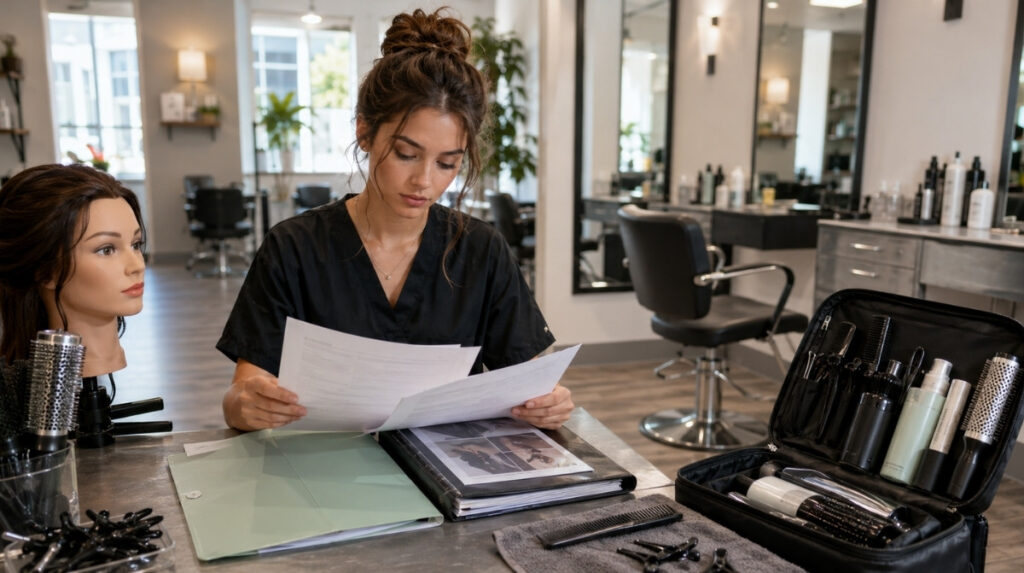
The jump from beauty school into the working world can feel like it happens overnight. One moment you are finishing your final clinic-floor hours and packing up your kit, and the next moment you are staring at a resume that still looks too empty. That pressure is normal. Many new graduates worry about whether they are ready for real clients, whether employers will take them seriously, and how they are supposed to build a client list from zero.
Every experienced stylist, educator, salon owner, and beauty professional had a beginning point. What matters now is learning how to turn your training into a realistic plan. Your school foundation is not just proof that you completed hours. It is the starting point for a flexible beauty career, as long as you understand your legal scope, income options, licensing steps, and the different paths available after graduation.
Quick Career Takeaways
- A cosmetology license can support work across hair, nails, makeup, waxing, and some skincare services, but the exact services you may legally perform depend on your state’s scope-of-practice rules.
- Cosmetology income is more complicated than one hourly wage, because tips, retail commission, booth rental, self-employment, premium services, and client retention can all change take-home pay.
- MoCRA matters if you manufacture, repackage, distribute, or market cosmetic products, but the specific requirements depend on your role, product type, sales model, and whether an exemption applies.
- The Interstate Cosmetology Licensure Compact is being built across participating states, but multistate license applications are not fully active yet.
Your License Can Open More Than One Door
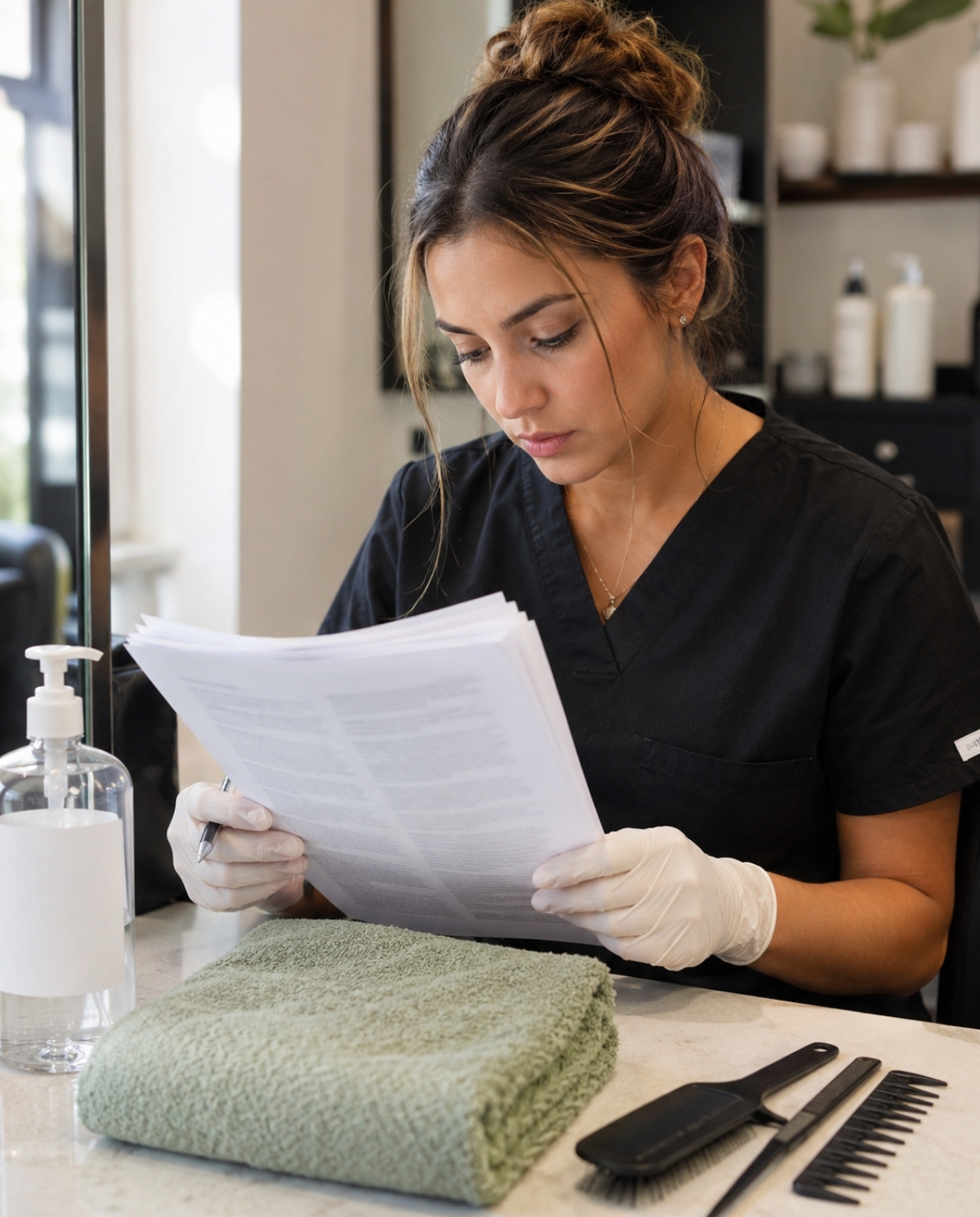
One of the strongest advantages of cosmetology training is that it does not lock you into one narrow job. Your education introduces you to a broad scope of practice, which means the services you are legally allowed to perform under your state’s rules. A full cosmetology program can give you a foundation across several beauty disciplines instead of preparing you for only one small corner of the industry.
When people talk about careers with a cosmetology license, they usually mean that your skills can be layered and redirected over time. You might begin behind the chair, then move into color specialization, bridal work, brand education, salon management, retail sales, or creative production. Reviewing a detailed resource like the ultimate guide to cosmetology career opportunities offline remote shows how a license can connect to hands-on salon services, product education, corporate beauty roles, and certain digital beauty paths.
The Everyday Services That Build Most Beauty Careers
To understand your immediate cosmetology job opportunities, start with the services your training prepares you to perform. In many states, cosmetology education includes haircutting, styling, coloring, chemical texturizing, basic nail care, makeup application, waxing, and some esthetics-related services. The important warning is that every state draws its own legal line. A service that falls under a cosmetology license in one state may require an esthetician license, nail license, barber license, lash specialty credential, or extra approved training somewhere else.
Hair is still the core of many cosmetology careers. Your training usually covers cutting, blow-drying, styling, hair color, lightening, chemical texture services, and client consultation. That foundation allows you to offer everyday maintenance services as well as higher-value work such as color corrections, dimensional color, smoothing services, special-event styling, or texture-focused care.
Nails can also fall within the cosmetology scope in many states. If you are wondering whether you can do nails with a cosmetology license, the answer is often yes for manicures, pedicures, and standard nail services, as long as your state board includes those services under cosmetology. However, some states separate nail technology more strictly, so you should always confirm before advertising nail services independently.
The same state-by-state caution applies to brow, lash, makeup, waxing, and skincare services. A cosmetology license may allow brow shaping, makeup application, basic lash services, waxing, and simple facial services in some states. However, lash extensions, lash lifts, brow tinting, chemical peels, lasers, microneedling, advanced body treatments, and medical-aesthetic services can fall outside a basic cosmetology scope. Before you sell any service, check the exact rule with your state board.
According to the U.S. Bureau of Labor Statistics (BLS), overall employment for barbers, hairstylists, and cosmetologists is projected to grow by 5% from 2024 to 2034, with about 84,200 openings each year on average. BLS also reports that the highest 10% of hairdressers, hairstylists, and cosmetologists earned more than $33.76 per hour in May 2024. That wage data includes tips where reported, but it does not include self-employed workers, which matters in a field where booth rental, suite rental, and independent beauty work are common.
Choosing a Niche Without Repeating Your Whole Education
As you gain confidence, you may discover that you prefer one kind of work over everything else. Some graduates fall in love with blonding, extensions, textured hair, bridal styling, men’s grooming, brows, lashes, skincare, or nails. Specializing does not always mean starting from zero, but it does mean checking whether your state allows the service under your current credential.
If skincare becomes your main interest, you may be able to perform basic facials, waxing, and makeup under a cosmetology license in some states. But if your goal moves toward advanced esthetics, spa treatments, chemical exfoliation, device-based services, or medical-spa work, you may need targeted esthetician training, advanced education, or a separate license depending on state law.
If you enjoy short hair, clipper-heavy cutting, beard shaping, or traditional grooming services, a cosmetology-to-barber crossover may be worth researching. Many states give licensed cosmetologists some credit toward barber training, so you may not have to repeat every hour from the beginning. The safer legal point is shaving: traditional shaving services or straight-razor services may require a barber license in some states, while clipper cutting itself should always be checked against your local scope rules.
Cruise ship salons and spas can also be worth researching, especially after you are licensed and have enough confidence to work independently. Cruise employers may hire hairdressers, nail technicians, beauty therapists, and spa professionals, but these jobs usually come with requirements. Some positions expect a license or diploma, strong service skills, a portfolio, prior salon or spa experience, or employer-specific training. It can be an exciting path, but it should not be presented as an automatic fresh-graduate shortcut.
State rules also keep changing, which is why professionals cannot rely only on what they learned during enrollment. In Georgia, licensees now have continuing education reporting requirements through CE Broker, and the state explains renewal expectations through the Georgia State Board of Cosmetology and Barbers. Georgia lawmakers have also considered trichology-related curriculum updates through proposed legislation, but those ideas should not be described as active school policy unless fully enacted. Arkansas also passed Act 964, which focuses on warning-label requirements for certain hair relaxer products sold in the state when they contain carcinogens or reproductive toxicants. These updates show why beauty professionals need to watch both licensing rules and product-safety developments.
What Beauty Income Really Depends On
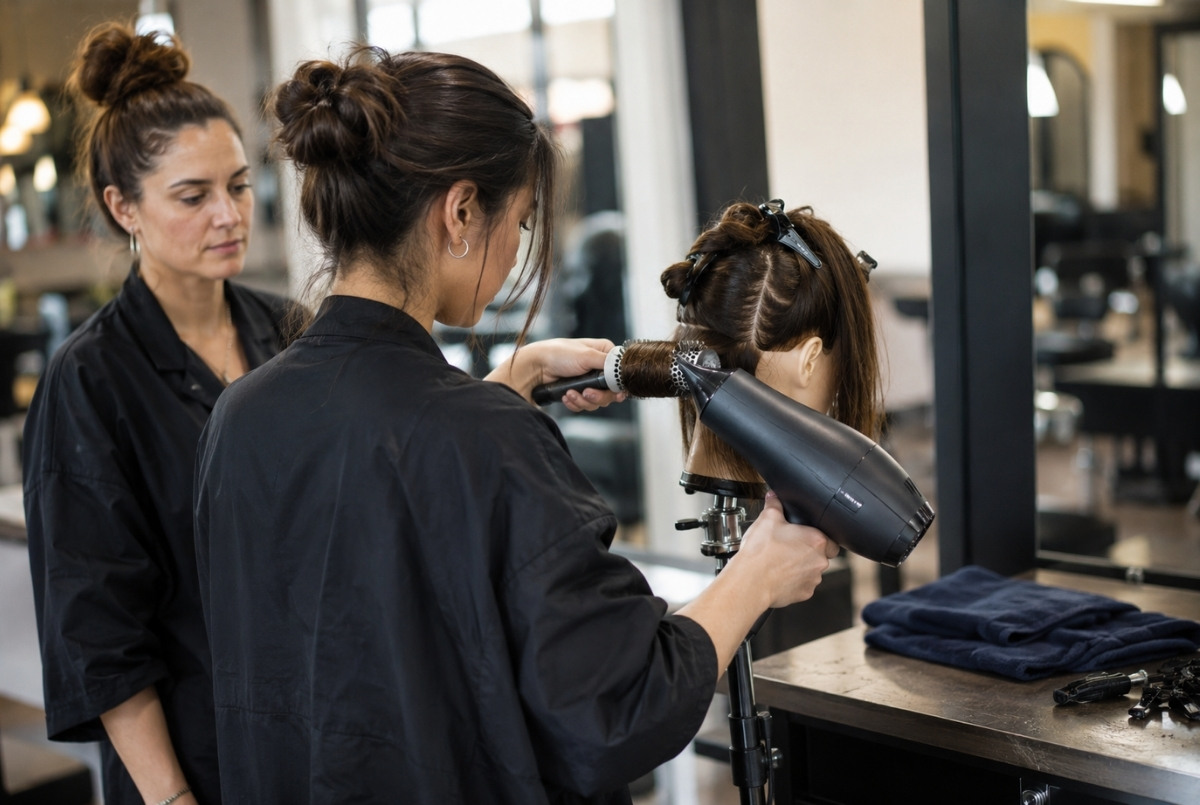
One of the biggest worries after graduation is whether the career can actually support your life. If you only look at a basic salary calculator, cosmetology can look more limited than it really is. Those numbers may be useful as a starting point, but they rarely explain how beauty professionals are paid in the real world.
Your cosmetology yearly salary depends heavily on your work setting and pay structure. Some salons use hourly pay. Others use commission, team-based pay, hybrid pay, or booth rental. Independent professionals also have to think about product costs, taxes, insurance, rent, booking systems, cancellation policies, and client retention. To understand your earning potential, you have to look beyond base pay and include tips, retail sales, add-on services, rebooking habits, and repeat-client value.
The American Association of Cosmetology Schools (AACS) 2026 earnings survey, prepared with Azurite Consulting, points to a gap between standard income tracking and what some beauty professionals report earning. The survey suggests that cosmetology and esthetics earnings may be about 1.3 to 1.4 times higher than IRS-reported income data alone indicates. It also reports a 40-hour-normalized annual income estimate of $54,220 for cosmetology and esthetics respondents licensed in 2014 or earlier.
That number needs careful context. It is an industry survey, not a government wage table, and it includes both cosmetologists and estheticians. Still, it supports a useful point: beauty income is not always captured cleanly by one wage number. A professional may earn from services, tips, retail recommendations, bridal work, extensions, corrective color, treatment add-ons, and repeat maintenance appointments.
Higher earning potential usually comes from better business habits, not only better technique. A stylist who books fewer but higher-value color clients, gives strong consultations, recommends the right home-care products, and rebooks clients before they leave may build a stronger income base than someone who only chases low-priced walk-ins. Long-term income depends on technical trust, pricing confidence, sanitation habits, consultation quality, and client retention.
Getting Hired When You Are Still New
Figuring out how to get a job after cosmetology school can feel intimidating when you do not have years of commercial salon history. The good news is that salon owners are not usually expecting a new graduate to arrive as a fully polished senior stylist. They are looking for reliability, coachability, safe technical basics, professional behavior, and the ability to learn in a real salon environment.
When building a cosmetology resume with no experience, treat your school clinic work like practical experience. Include the services you performed under instructor supervision, the types of clients you worked with, the sanitation procedures you followed, and the tools or products you learned to use. Your resume should make it easy for a busy salon manager to see your training, license status, service strengths, and customer-service habits.
Place your credential status clearly near the top. If your license is already active, use a clean line such as: Licensed Cosmetologist, State Board, License #123456, Active. If your exam is passed but your license is not active yet, say that accurately. Do not imply you are cleared to perform licensed services if the board has not issued the legal authorization yet.
Group your technical skills in one section so the reader can scan quickly. This might include haircutting, blowouts, color application, foiling, balayage basics, chemical relaxing, roller sets, manicures, facials, makeup, or waxing, depending on your training and legal scope. Beside that, include workplace skills such as consultation, retail product knowledge, front-desk software exposure, sanitation, appointment flow, rebooking, and client communication.
If you want more support before taking a full stylist role, look for assistant, apprentice-style, or associate positions where your state allows them. These roles can help you work under experienced professionals, assist with shampoos, blowouts, color prep, product setup, cleaning, booking, and salon flow while learning how a professional salon actually operates. For many new graduates, that bridge can make the transition from school to full client work much less stressful.
Licensing Steps Before You Accept Paying Clients

Graduating from school is not the same thing as being legally cleared to perform paid licensed services. Knowing how to apply for cosmetology license credentials correctly can prevent delays that keep you from taking clients. After graduation, your priorities are to complete the state application, make sure your school hours or transcripts are submitted, pay the required fees, pass the required exams, and wait for the correct legal authorization from your state.
To prepare for testing, it helps to study a detailed resource such as this cosmetology licensing exam guide theory questions practical kit and test day rules. A strong test plan should focus on infection control, chemical safety, sanitation, state-law awareness, client protection, and practical exam rules.
Processing times vary by state. Some boards update online license lookups quickly, while others take longer to process applications, score reports, background checks, or board review. The safe rule is simple: do not perform licensed services until your license, temporary permit, apprentice registration, or other legal authorization is active under your state’s rules.
If you ever need copies of your school records for license transfer, endorsement, moving, or future instructor training, request them from your school while it is operating. If the school has closed, the process is different. Start with the state licensing agency or closed-school records office in the state where the school operated.
If you plan to move later, use a guide such as this state by state cosmetology license guide training hours tests and renewals to compare training hours, exams, renewal schedules, continuing education, and transfer options. The Interstate Cosmetology Licensure Compact is also being implemented across participating states, but it is not fully active for multistate license applications yet. Once operational, it may help eligible licensees in member states work across compact states more easily, but graduates should check the official compact site before making any promises to employers or clients.
Independent Beauty Work Still Comes With Rules
Many new beauty professionals search for cosmetology jobs remote or ask whether they can work from home with a cosmetology license. The answer depends on the kind of work. You cannot cut, color, wax, or perform hands-on beauty services through a screen. However, your background may support digital roles such as brand education, product consulting, beauty content writing, customer support for professional beauty brands, social media education, or virtual consultation services where allowed.
If you want to run a hands-on beauty business from a residential space, the rules are much stricter. You need to check your state board requirements, city zoning laws, business licensing rules, insurance needs, sanitation standards, inspection requirements, and local building rules. Many areas require a separated work area, proper plumbing, ventilation, safe storage, approved equipment, signage compliance, or a formal inspection before a home salon can operate legally.
You may also wonder whether you can open a salon without a cosmetology license. In many places, a person can own or invest in a salon business without personally holding a cosmetology license. However, that does not allow the owner to perform licensed services. The salon itself usually needs an establishment license, facility permit, shop license, or similar approval from the state board or licensing agency before operating legally.
Product businesses add another layer. A stylist mixing a formula for a client service is not the same as a person manufacturing, repackaging, private-labeling, or selling cosmetic products. The FDA’s MoCRA overview explains that modern cosmetic oversight includes requirements such as safety substantiation, adverse-event reporting, facility registration, product listing, records access, and recall authority, depending on the business role and product type. Legal analyses of MoCRA compliance also point out that cosmetic businesses need to pay close attention to registration, labeling, safety, manufacturing, and documentation obligations.
That does not mean every small beauty creator has the exact same burden. Some small-business exemptions exist, and certain product categories are treated differently. Before selling homemade, repackaged, private-label, or custom cosmetic products, treat the idea like a regulated product business and confirm what applies to your exact role.
Turning Salon Experience Into Teaching
As you think beyond your first job, consider what you may want your career to look like five, ten, or fifteen years from now. Full-time client work can be rewarding, but standing all day and managing a packed book can be physically demanding. That is one reason some experienced professionals eventually explore beauty education.
Becoming a cosmetology instructor allows licensed professionals to move from daily service work into mentoring, demonstration, lesson planning, classroom leadership, student assessment, and state board preparation. The requirements are not the same everywhere. Depending on the state, you may need active licensure, documented work experience, instructor training, written and practical exams, and continuing education.
Do not assume every state requires “a few years” of salon experience. Some states require less, some require more, and some allow alternate pathways. In Georgia, for example, cosmetology instructor applicants need items such as a valid Georgia Master’s License, employment affidavit or one year of work experience, passed written and practical exams, and other application documents.
Instructor income should also be described carefully. A teaching role may offer a more structured schedule than commission-based salon work, but it should not be sold as guaranteed stability. According to the BLS profile for career and technical education teachers, the May 2024 median annual wage for CTE teachers was $62,910. Postsecondary CTE teachers had a median wage of $61,490, while private technical and trade school teachers had a median wage of $58,860. Benefits, hours, and job stability depend on the employer, school type, state, and local demand. For professionals who enjoy mentoring, education can still be a meaningful long-term path.
Build Your Next Step With Hogan Institute
Your license can open doors, but your training environment helps shape how confidently you walk through them. If you are ready to move from uncertainty into a more organized career plan, Hogan Institute of Cosmetology and Esthetics gives students a place to begin building the technical habits, sanitation awareness, client-service skills, and workplace confidence needed for the beauty industry.
Hogan’s cosmetology training connects hands-on practice with real career preparation, including areas such as salon business, client retention, resume writing, job-seeking skills, haircutting, coloring, styling, nail services, lash and brow services, facials, waxing, and makeup application. That kind of foundation can help students think beyond the first exam and start preparing for the realities of professional beauty work.
You can learn more about taking your next step by visiting our Enrollment page. If you have questions about scheduling, campus tours, program options, financial aid, or how to get started, fill out the contact form at the bottom of this article. Our admissions team can help you understand the next steps and explore the path that fits your goals.
Frequently Asked Questions
Are there cosmetology jobs that let you work before your license is active? Yes, but your role will be limited until your state authorization is active. You may be able to work as a salon coordinator, receptionist, retail assistant, inventory helper, shampoo assistant, or support team member depending on state rules and salon policy. Some states allow limited non-licensed tasks, such as shampooing, blow-dry styling, or applying cosmetics, when no other licensed practice is performed. However, you cannot legally perform licensed services such as cutting, coloring, chemical texturizing, waxing, esthetics, or nail services unless your state allows it through an active license, temporary permit, apprentice registration, approved student setting, or another valid authorization. Working outside your legal scope can create fines or disciplinary problems for both you and the salon.
How can I get beauty school records if my school closes? If your beauty school closes, do not assume your records are gone, but also do not assume there is one national archive. Start with the state licensing agency or closed-school records office in the state where the school operated. The U.S. Department of Education advises students looking for closed-school records to contact the appropriate state licensing agency to ask whether arrangements were made to store transcripts and academic records.
How do online booking and salon technology affect new stylists? Building a client base today is not only about waiting for walk-ins. Data from the SalonIQ Industry Benchmark Report highlights the importance of client frequency, online booking, retention, rebooking, and retail conversion. Because SalonIQ is a salon software company, its report should be treated as business benchmark insight rather than national labor data. Still, the lesson is useful for new stylists: salons value team members who can use digital systems professionally, guide clients back for the next visit, recommend appropriate home-care products, and support a more predictable book.
One thought on “After Beauty School: Cosmetology License Rules, First Job Tips, and Career Options”