

Basic Esthetician vs Master Esthetician vs Medical Esthetician: Navigating Your Advanced Career Path
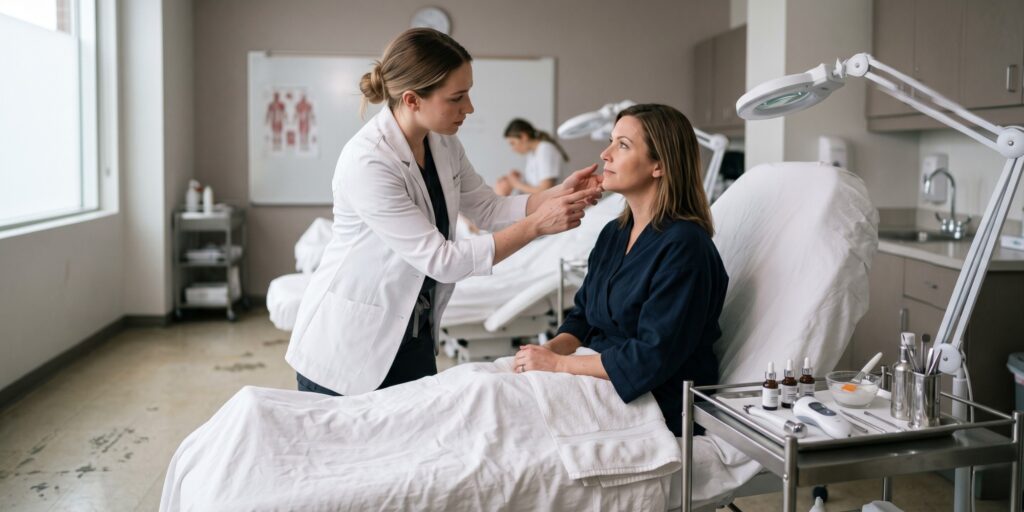
The feeling of hitting a professional plateau is something many of us in the beauty industry eventually face. I have seen talented practitioners go through the daily motions of facials and extractions, only to realize their passion for skin health has outgrown their current routine. Moving beyond the basics often starts with a choice between staying as a basic esthetician vs master esthetician or transitioning into a clinical environment. Reaching this point is actually a great sign because it means I think you are ready to explore the more technical, medical-level side of our craft.
Key Takeaways for 2026
- Market Expansion: Data from Research and Markets suggests the medical aesthetics sector will grow from $14.93 billion in 2025 to $16.79 billion by 2026, continuing a strong upward trend.
- Legal Definitions: A master esthetician is a specific license level in states like Virginia, whereas a medical esthetician is usually just a job description.
- Earning Power: Advanced training may support better pay opportunities, though your final income depends on your employer, your state, your license type, your commission structure, and whether you also have a medical license.
- Compliance: A 2025 FDA Safety Communication regarding RF microneedling risks highlights the absolute necessity of working within your legal scope of practice.
The Difference Between Basic, Master, and Advanced Tiers
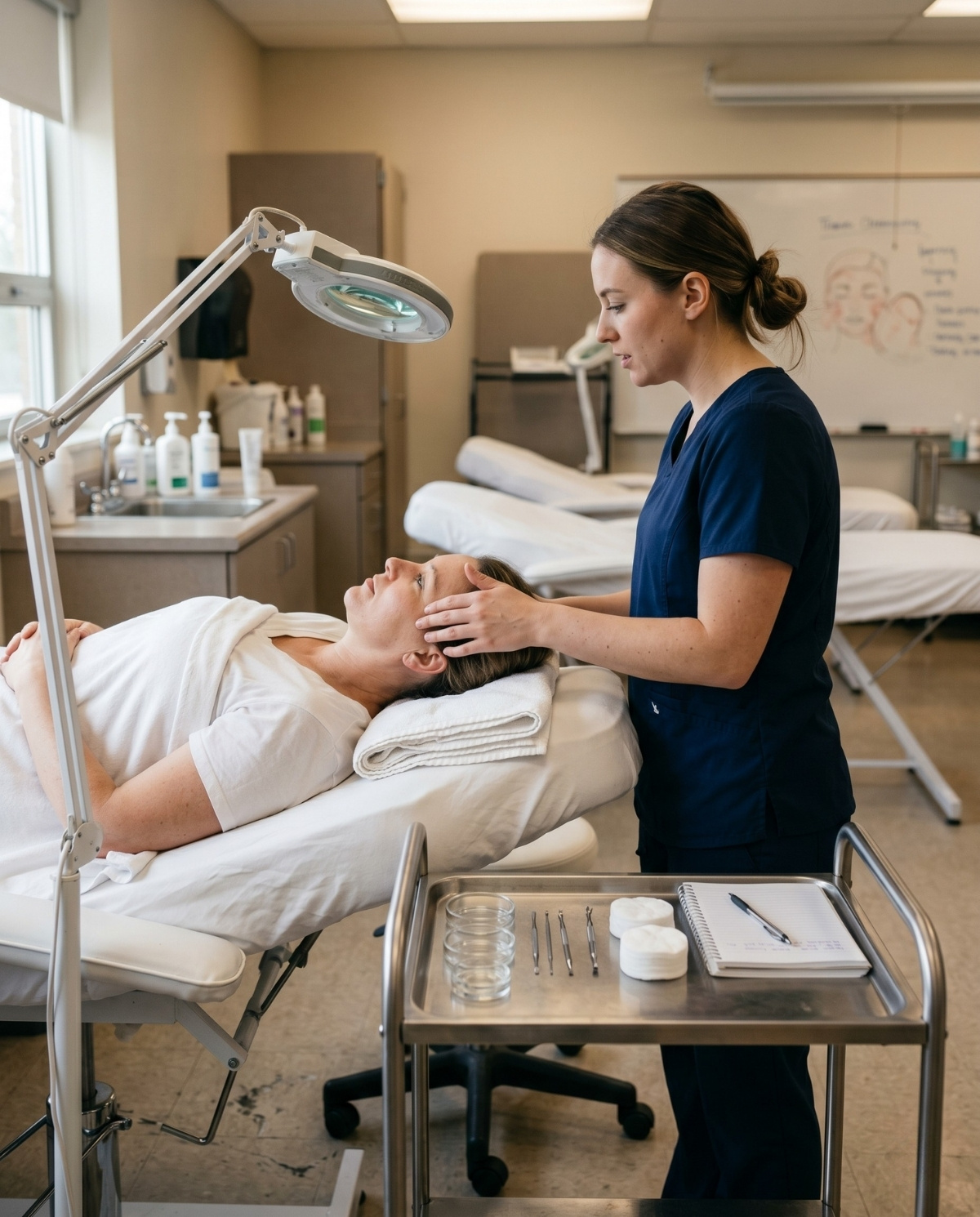
Standard training programs usually focus on the lipid barrier and maintaining the skin's surface. This is a vital starting point, but I always suggest looking into everything to know about becoming an esthetician schooling costs and jobs before deciding which advanced path to take.
In 2026, the industry is shifting toward what is an advanced esthetician and clinical esthetics. I have noticed that many people assume a private certificate automatically expands their legal rights, but that is not the case. You must always verify your state board rules before offering services like IPL, lasers, RF, microneedling, injectables, or deeper chemical peels with esthetician credentials.
If you want to know what is a master esthetician, Virginia provides a great legal example. Under the Virginia Administrative Code, practitioners must complete 600 hours of basic training followed by 600 hours of master-level training. This means you need 1,200 hours of school to become a master esthetician in virginia. This curriculum goes deep into what is an ap esthetician, covering advanced anatomy, advanced modalities, chemical exfoliation, and lymphatic drainage. According to Virginia’s scope of practice, these specialists can perform specific advanced exfoliation services, including Jessner’s and Modified Jessner solutions and trichloroacetic acid under 20%, which require a much stronger grasp of skin chemistry.
Transitioning Into a Medical Setting
A common question I hear is the difference between an esthetician vs medical esthetician. In most of the U.S., the term medical esthetician is a job title for someone working in a dermatology office with esthetician services, a plastic surgery center, or a medspa.
The Research and Markets report shows that patients are increasingly choosing these clinical settings for non-surgical and minimally invasive procedures. If you want to know how to become a medical esthetician, the first step is usually getting your basic license and then finding a clinic that aligns with your goals. Even when you are an esthetician working under a doctor, you must follow the medical director for esthetician protocols while staying within the limits of your state license, state board rules, medical-board delegation rules, and the supervising provider’s protocols.
For example, a specialist might support a physician-led plan for a client with PCOS-related concerns. While the doctor handles diagnosis and treatment planning, an esthetician may help with cosmetic support for concerns such as unwanted hair or acne, as long as those services are legal within the esthetician’s scope of practice. I think it is helpful to explore the various careers and jobs explained for those holding an esthetics license to see where you might fit.
Why Registered Nurses are Entering Aesthetics
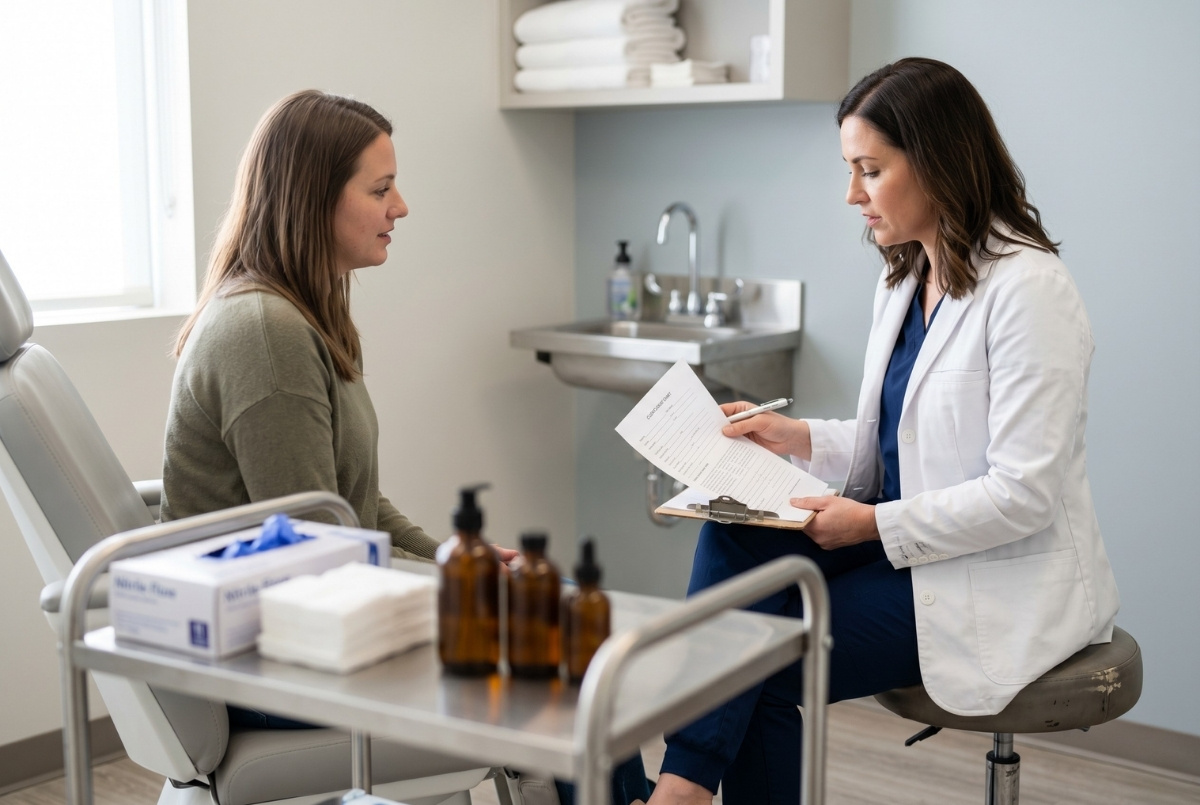
We are seeing a huge rise in medical esthetics for nurses in 2026. Many are moving from rn to esthetician roles to find a better work-life balance while still using their medical skills. If you already hold an RN license, you may be able to bridge skincare and medicine, but your ability to provide more invasive treatments depends on your state nursing rules, medical-board rules, delegation laws, supervising provider, and workplace protocols.
In most states, the ability to perform neurotoxins or fillers comes from the medical license, not the esthetician license itself. This is why an esthetician nurse salary is often higher than a traditional skincare role. The U.S. Bureau of Labor Statistics noted that skincare specialists had a $19.98 median hourly wage in May 2024, but medical-grade roles can vary significantly based on your medical license level, procedure mix, state law, employer, experience, and commission structure.
State Variations and Licensing Rules
Each state has its own rulebook, and it is crucial to stay compliant.
- Virginia: You must know how to become a master esthetician in virginia by completing the full 1,200 hours of required training, as outlined by the Virginia Administrative Code.
- Florida: If you are looking at how to become a medical esthetician in florida, you need to understand that beauty licensing and medical-adjacent services are handled separately. Florida’s cosmetology board recognizes Facial Specialist and Full Specialist registrations, while laser and light-based hair removal is regulated separately through electrology. The Florida Department of Health states that qualified electrologists performing laser or light-based hair removal must work under the direct supervision and responsibility of a properly trained physician.
- California: There is no official master license here. The board also states that estheticians are not allowed to use lasers even if a physician is supervising.
- Pennsylvania: Pennsylvania uses a 300-hour requirement for its esthetician licensure snapshot. Since there is no master tier, you must be very careful about what falls under esthetician license limits when performing clinical services.
I recommend checking out this complete look at state requirements and exams to help you stay on the right side of the law as you grow.
Advanced Services and Clinical Care
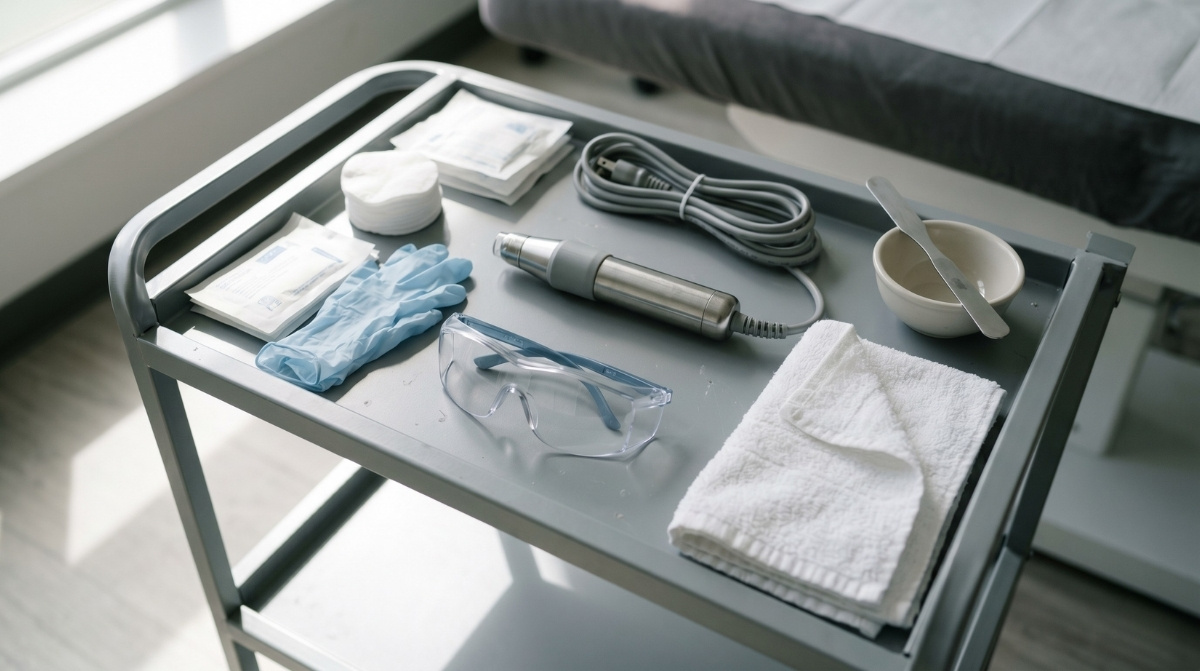
When you start looking at esthetics vs advanced esthetics, your service menu will likely change.
- Injections: People often ask can estheticians inject botox. Generally, an esthetician license does not cover injections. Neurotoxins and dermal fillers are medical procedures and usually require an appropriate medical license, such as RN, NP, PA, physician, or another credential allowed by state law. An esthetician can still assist with skin preparation, patient education, treatment support, and pre- and post-care.
- Microneedling: If you are wondering can microneedling be done by an esthetician, the answer depends heavily on your state and how deep the needles penetrate the skin. Some states view it as a medical treatment, especially when it reaches the dermis or uses radiofrequency energy.
- Laser Services: To become a laser esthetician, you need to master the physics of how light interacts with skin. You must check if your state allows estheticians to operate laser devices, requires a separate laser or electrology credential, or restricts the service to medical professionals.
Safety and RF Technology
The 2025 FDA Safety Communication highlighted serious risks with RF microneedling, including burns, scarring, fat loss, disfigurement, nerve damage, and the possible need for medical or surgical intervention. The FDA also described RF microneedling as a medical procedure, not a cosmetic treatment. This reinforces why I believe a high-quality education is non-negotiable. You have to understand the physics of the devices and the biological tissue response to keep your clients safe.
Elite Credentials for the Modern Specialist
For those who want to stand out globally, the CIDESCO Diploma is one of the best-known international beauty and spa therapy credentials. It is recognized among employers worldwide and sets a high bar for professional skill.
I also recommend staying updated on next-generation treatments like exosomes, polynucleotides, and biostimulators. While these are exciting, many fall outside the standard esthetician scope because they involve medical-grade products, injections, or regulatory limits. I think the smartest path is to learn the science so you can educate your clients, even if you aren't the one performing the injection.
Take the Next Step in Your Career
The demand for clinical results is higher than it has ever been, and I want to help you reach that next level. At Hogan Institute, I focus on making sure every student is "Salon Ready." I believe that hands-on training and professional discipline are what truly bridge the gap between being a student and becoming a leader in the beauty niche.
Choosing a school with a long history matters. I am proud that our institution has been serving students for over 20 years, and our team brings a combined 80 years of experience to the table. We are here to help you understand your legal scope while you master your craft.
If you are ready to see what comes next, I invite you to find out more through our contact page. You can also use the contact form at the end of this article to get in touch with us directly.
FAQ
What qualifications do you need to be a medical esthetician?
You typically need a basic license and advanced training in things like device safety, sanitation, contraindications, chemical peels, and medical-office protocols. However, "medical esthetician" is usually a job title. Your ability to perform specific tasks depends on your state laws, your license, your employer, and your employer's medical director.
How to become a medical esthetician without a degree?
You do not need a four-year college degree. You simply need to graduate from a state-approved esthetics program and pass your licensing exams. From there, I suggest taking continuing education for esthetics that focuses on clinical protocols, device safety, patient communication, and pre- and post-procedure care.
Can an esthetician do microneedling in Michigan or Massachusetts?
Microneedling is often considered a medical or medical-adjacent procedure, especially when it reaches the dermis or uses RF energy. These rules vary by state and can change frequently. I always advise checking with your state board rather than relying solely on a private training certificate.