

How to Compare Esthetician Schools in Georgia Before You Enroll
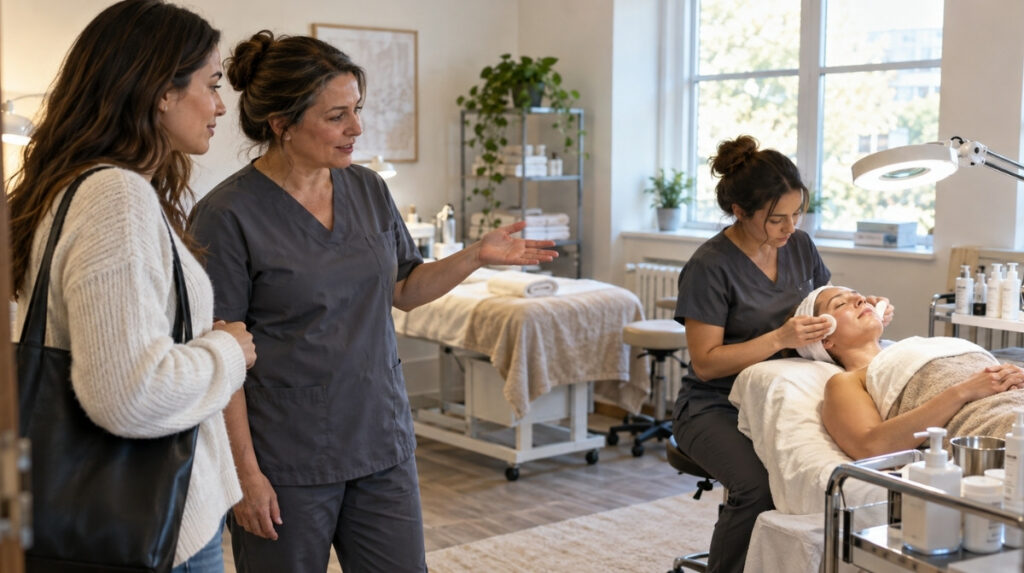
Choosing an esthetician school means committing more than tuition—you are also rearranging work, transportation, and possibly childcare. The challenge is finding a program that helps you develop professional skills within a schedule and budget you can maintain. Here’s how to compare your options before you enroll.
Start With Georgia’s Training Requirements
According to Georgia’s esthetician curriculum requirements, the school-based program requires at least 1,000 hours over a minimum of nine months. Both requirements matter: dividing training hours by a weekly schedule does not necessarily produce a valid graduation date.
Completing school is one step toward professional licensure. Ask admissions to explain the sequence from graduation through examinations and the license application, including which documents you must submit yourself. Our guide to esthetician licensing requirements and exams explains these stages so you can prepare questions before meeting with admissions.
Check state approval and accreditation separately. A school license carries Board approval under Georgia’s school requirements; accreditation is a separate institutional review. Ask for the exact school name, campus, and accrediting organization so you can check each claim independently.
Georgia also requires 250 initial theory hours and the stated 75% passing threshold before students progress to Level II patron services. Ask what support is available when someone has completed the hours but needs more preparation before working with clients. That answer reveals more than a general promise of personalized instruction.
Esthetician Schools Near Atlanta to Include in Your Comparison
Use the same criteria for every school: location, complete charges, attendance requirements, practical instruction, and student support. This numbered comparison begins with Hogan for readers considering Lilburn and multiple schedule options; it does not rank independently measured graduate outcomes.
1. Hogan Institute of Cosmetology and Esthetics
Hogan is a practical starting point if you want to study in Lilburn and need to explore different attendance schedules. Its financial-aid and program-cost page publishes full-time, three-day, part-time morning, and evening completion estimates, together with an itemized esthetics price. It also describes financial aid for qualifying students and monthly payment plans for cash-paying students.
Use those details to build a personal enrollment plan. Ask which schedule is available for your intended start date, when clinic services take place, and how missed hours are recovered. Request the deposit, payment dates, and any applicable financing charges before making work or childcare arrangements.
2. Beaver Beauty Academy
Beaver Beauty Academy’s Decatur location may suit students living or working on that side of Atlanta. Its esthetician program page describes subjects including waxing, makeup, anatomy, chemical peels, and microdermabrasion.
Look beyond the treatment names. Ask whether each subject includes discussion, demonstration, supervised practice, and an assessment. Two curricula can list the same service while offering different opportunities to perform it and receive feedback.
3. Georgia Career Institute
If your search includes Georgia Career Institute, often shortened to GCI, distinguish curriculum documents from information about your next enrollment step. Its 2026–2027 catalog describes a Georgia esthetics curriculum, but a catalog alone does not establish current enrollment availability. Consult the institution’s latest official information before relying on saved materials.
If you already have training hours, focus on a receiving school’s written evaluation. Ask which hours it accepts, which practical requirements remain, and how those decisions affect your costs and completion date.
4. Health and Style Institute
When reviewing Health and Style Institute’s esthetics materials, identify the campus, program, and publication date behind each document. Avoid combining a tuition figure from one listing with a schedule from another and assuming they describe the same enrollment option.
Apply that discipline to every alternative, including Hogan. Your comparison should connect curriculum, attendance, and charges to a specific proposed enrollment—not simply collect appealing descriptions.
Compare the Full Cost Before Comparing Monthly Payments
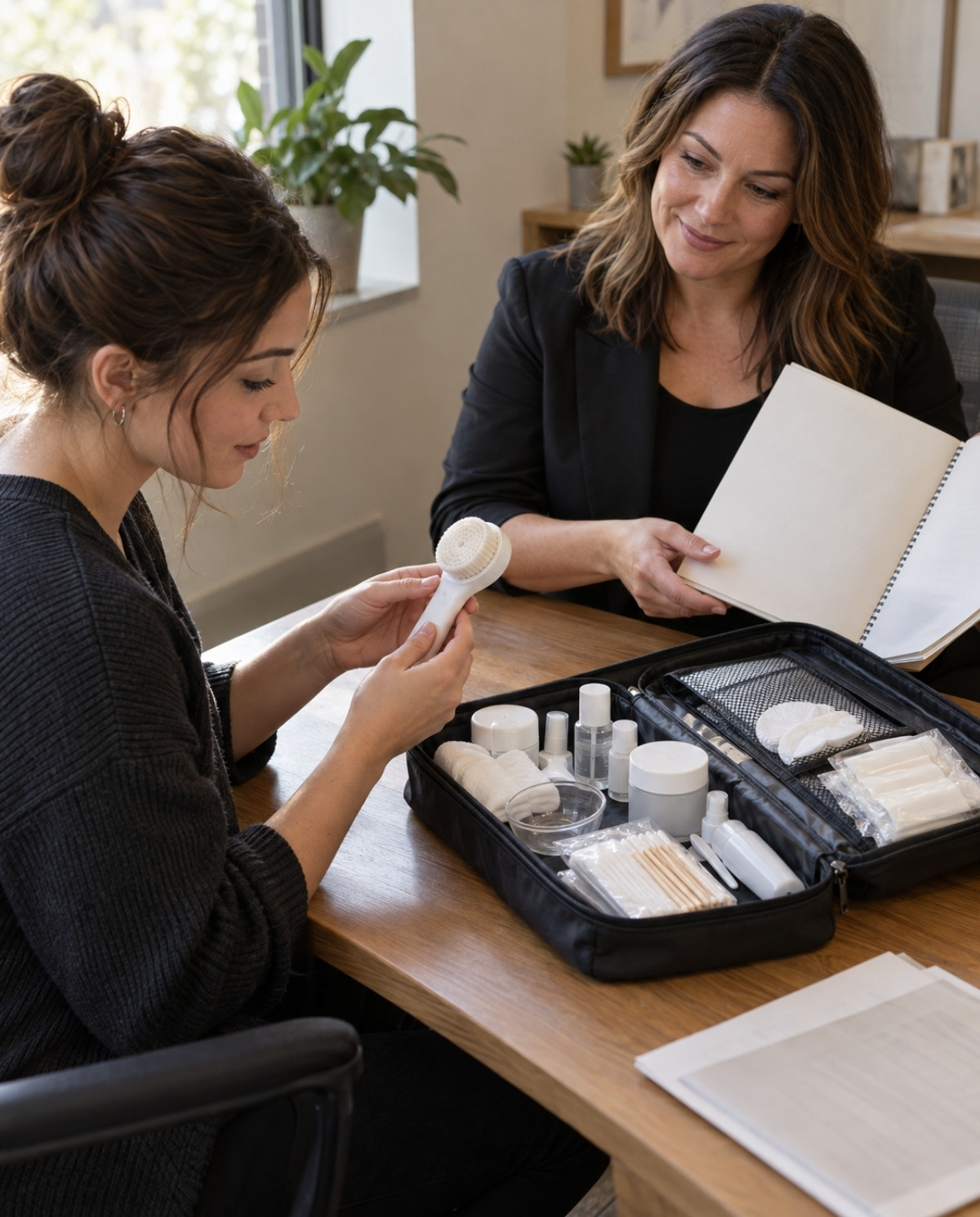
Start with the complete program price. Then examine how you would pay it.
Hogan currently publishes $16,500 in esthetics program charges: $14,550 for tuition, $100 for registration, $850 for books, CIMA, and a uniform, and $1,000 for the kit. The components add up to the stated total. Confirm current pricing and inclusions through Hogan’s published cost information and your enrollment agreement.
For every school, ask what happens after you receive the kit. Which items belong to you? Which products are shared in the clinic? What must you replace? A kit price tells you little about future spending without those answers.
Also connect the financial agreement to the attendance policy. Ask whether charges apply if you finish after your contracted date, how they are calculated, and whether approved absences change that date. This helps you evaluate the cost of an interruption before one occurs.
Separate school charges from transportation, childcare, and reduced working income. Then distinguish grants and scholarships from loans and payment plans. Federal Student Aid explains the different aid categories; a financing offer should make clear which amounts carry repayment obligations.
One often-missed detail concerns childcare. The 2025–2026 Federal Student Aid Handbook permits eligible dependent-care expenses in a student’s cost-of-attendance budget, including care needed during studying and commuting. Ask whether this applies to you. Inclusion in the budget does not guarantee additional grants or full coverage.
Test Whether the Schedule Fits Your Actual Week
“Part-time” and “night classes” are starting descriptions. You need actual attendance days, clinic hours, and makeup arrangements to judge whether a program fits.
Build a sample week that includes work, travel, childcare transitions, and studying. If your job ends shortly before class, test the commute at that hour rather than relying on a weekend drive.
Hogan publishes evening attendance from Monday through Thursday, 5–10 p.m., with an esthetics completion estimate of 50 weeks, or approximately 12 months. Confirm the timetable and calendar for your chosen start date rather than treating the estimate as a guaranteed finish date.
For hybrid learning, which combines online and in-person instruction, ask exactly which hours move online. Georgia’s distance-learning rule permits specified theory hours online, while practical school training must take place hands-on on the clinic floor with an appropriately licensed or approved instructor.
Finally, check whether makeup hours occur when you can attend. A schedule becomes less workable if recovering an absence repeatedly requires missing work.
Look Closely at What Hands-On Training Includes
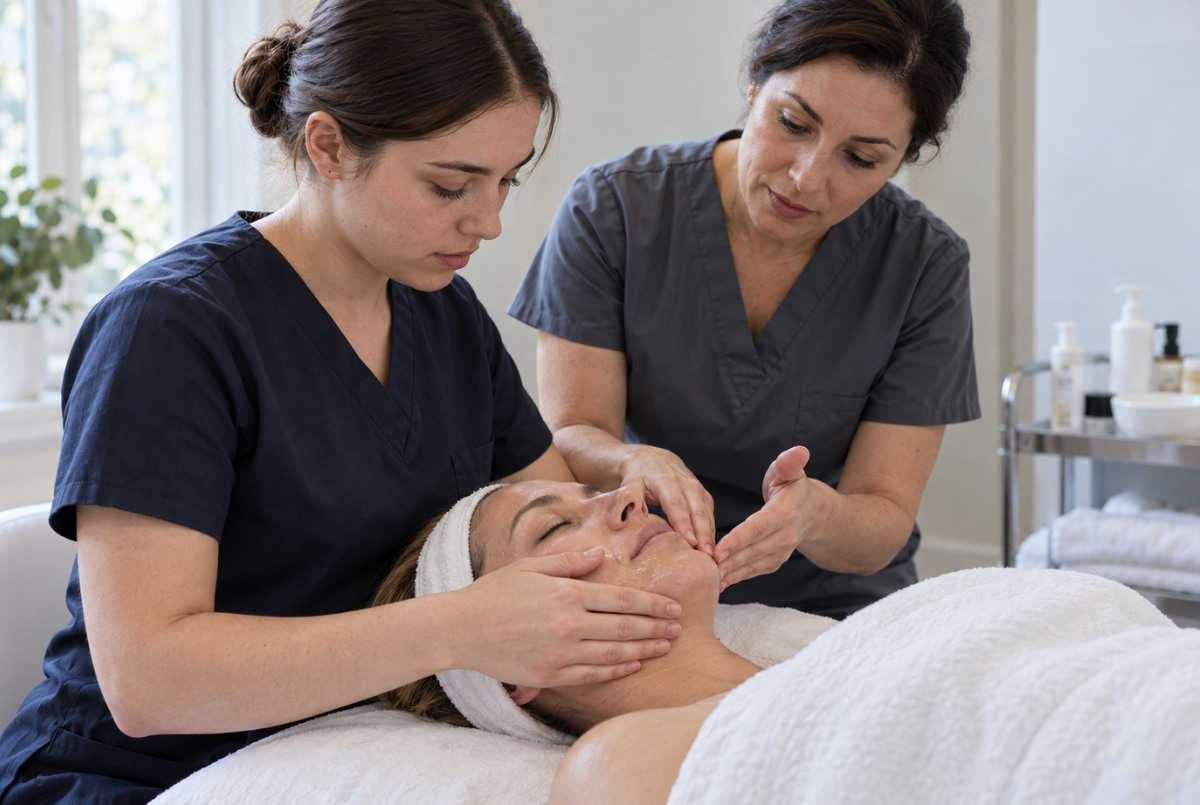
Ask how practice becomes measurable improvement. Understanding what esthetician school involves day to day gives you a useful starting point for comparing classroom learning, practical instruction, and preparation.
During your tour, request an example of a service assessment. Does the instructor evaluate preparation, sanitation, consultation, technique, timing, and aftercare? How does the student receive feedback, and when is the skill assessed again? These questions help you understand how the school moves students from watching a demonstration to performing a service with supervision.
Professional judgment deserves equal attention. Ask how students learn contraindications—circumstances that make a service unsuitable or require modification, postponement, or referral. A useful training discussion should explain how students recognize a concern and communicate the next step respectfully.
Instructor access is another concrete comparison point. Georgia’s school rules recommend an 18:1 student-to-instructor ratio and set a maximum of 20 students per instructor. Ask about staffing during your proposed clinic shift and how assistance works when several services require attention at once.
Investigate equipment access rather than counting machines. Which devices form part of the core program? How is practice scheduled? Does any advertised instruction require an additional fee? These questions distinguish equipment you see from equipment you will learn to use.
Match the Training to the Career You Want
Choose with your likely first job in mind. If you are still exploring the field, our overview of esthetician education, costs, and career options can help you connect the training commitment with possible work settings. Bring that perspective into your school visits: ask how the program develops consultation skills, service timing, client communication, and professional recordkeeping.
Georgia’s curriculum includes business instruction covering subjects such as salon development, insurance, client records, résumé preparation, and interviews. Ask how those subjects become practical assignments rather than assuming their appearance in a curriculum guarantees depth.
If advanced aesthetics interests you, understand scope of practice: the services you may legally perform under your license. Georgia maintains a separate cosmetic laser practitioner licensing framework, with additional eligibility, training, and supervision requirements. A treatment certificate does not automatically expand an esthetician’s legal authority.
The distinction has real safety implications. In its October 2025 RF microneedling communication, the FDA described reports of serious complications and identified RF microneedling as a medical procedure. Ask how schools teach boundaries, risk recognition, and referral alongside equipment knowledge.
Career data provides context, not a promise. According to the Bureau of Labor Statistics, skincare specialist employment is projected to grow 9% nationally from 2025 to 2035. Its approximately 14,200 annual openings include replacement needs, and its May 2025 median wage of $21.79 per hour is neither a Georgia starting wage nor guaranteed graduate earnings.
Leave Your Campus Tour With Answers in Writing

Before enrolling, collect an itemized cost, proposed schedule, completion estimate, kit list, and attendance, withdrawal, and refund policies.
If a school presents graduation, examination, or placement rates, ask which program and reporting period they describe. Find out what counts as a placement before comparing percentages.
Then consider the documents together. Does your budget support the schedule? Can you attend makeup hours? Do the training arrangements support your goals? You should be able to explain why the program fits your circumstances using more than the impressions you formed during the tour.
Frequently Asked Questions
Are “esthetician” and “aesthetician” schools different?
The spelling alone does not establish a different qualification. Check the actual credential, curriculum, and licensing pathway rather than assuming “aesthetician” means preparation for medical procedures.
Can I transfer esthetician school hours to another school in Georgia?
Request an individual written evaluation from the receiving school. It should explain accepted hours, remaining practical requirements, anticipated completion time, and costs before you commit.
Can I use a Georgia esthetician license in another state?
A Georgia license does not automatically authorize you to practice elsewhere. Before relocating, contact the destination state’s licensing board to confirm its application process and how it evaluates your education, examination history, and current license.
Should I buy an esthetician kit before enrolling?
Wait for the school’s list and an explanation of included charges. Georgia’s equipment requirements specify a basic student kit, but you still need to establish its contents, what you keep, and which supplies you must replace.
Ready to Master Your Craft?
Turn your interest in skincare into skills you can build a career around. At Hogan Institute, our Salon Ready approach connects hands-on training with the professional habits that matter when serving clients. Explore our Lilburn campus, schedule options, and financial aid for those who qualify. Fill out the contact form below to discuss your goals and see more than 20 years of experience in action. Join a legacy of beauty education—and take your next step toward becoming a licensed esthetician.