

Beauty Instructor School Explained: How Pros Learn to Teach the Craft
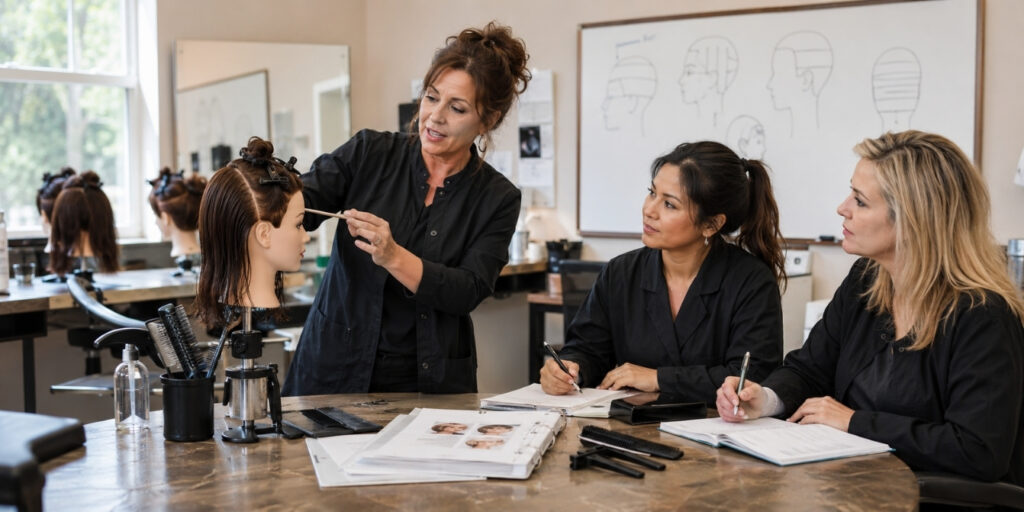
Starting a career as a beauty professional usually means spending long, exhausting hours on your feet, but many experienced stylists, esthetician specialists, and nail techs eventually look for a way to grow past the physical limitations of the salon floor. Transitioning into education is the most natural step forward, yet it is completely normal to feel unsure about managing a room full of students. Knowing how to perform a flawless service requires an entirely different skill set than knowing how to teach that same technique to a beginner. A dedicated beauty instructor school focuses on transforming your hands-on talent into professional teaching authority.
Key Takeaways
- Focus on Teaching Skills: Training centers on instructional design and educational theory, not on reviewing basic service techniques you already master.
- Mindset and Management: You will study classroom dynamics, communication strategies, and adult learning traits to build confidence at the front of the room.
- Digital Evolution: Modern programs may prepare you to handle online platforms, remote theory delivery where approved, digital hour-tracking systems, and electronic student records.
- Compliance Concepts: The curriculum builds a strong understanding of state regulations, tracking hours, and keeping coursework legally compliant.
Shifting Your Focus from Service to Student Guidance
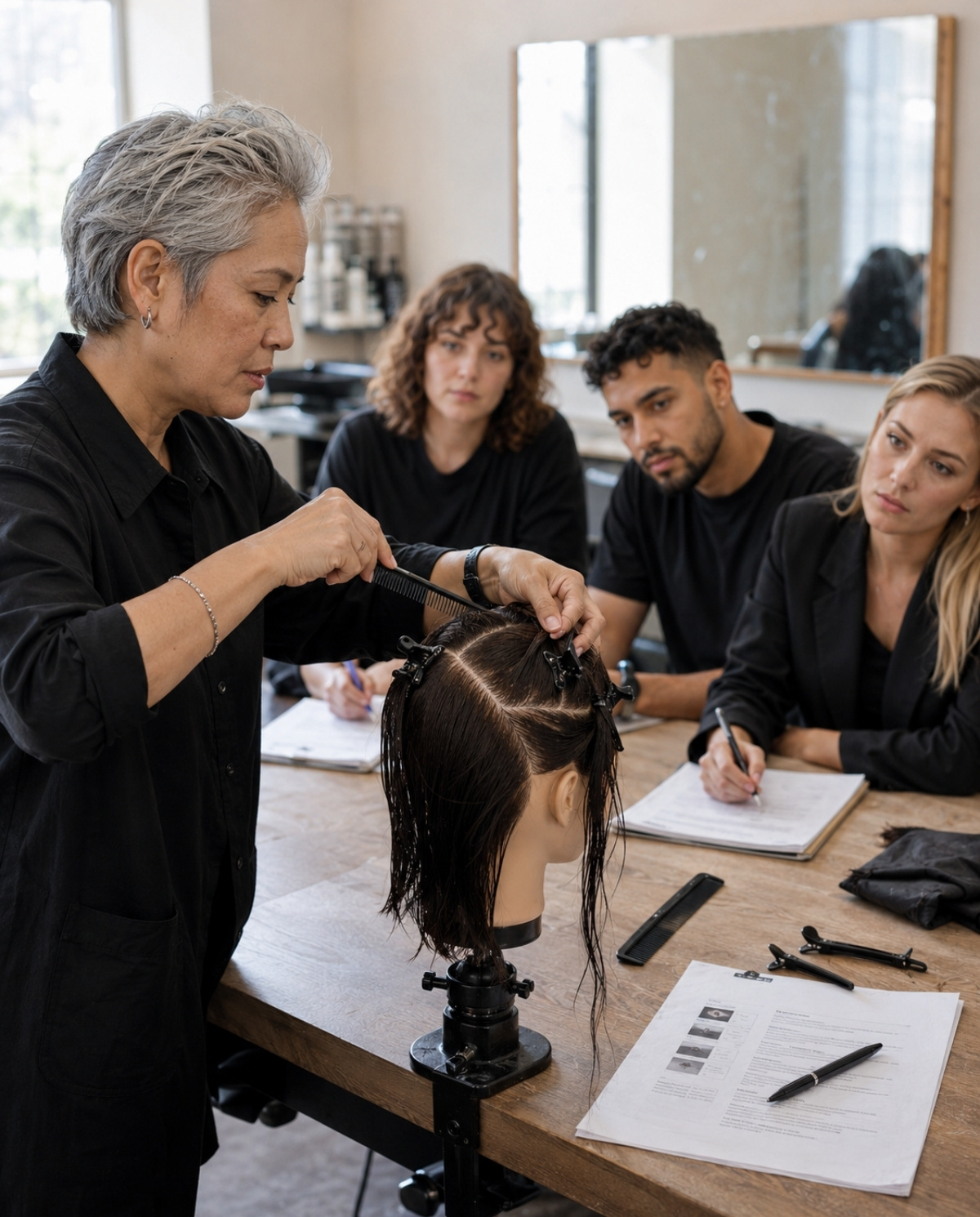
The biggest hesitation beauty experts have about entering a beauty instructor program is the misconception that they will spend time and tuition relearning fundamental trade techniques. In reality, a state-approved beauty instructor training program assumes you are already highly skilled on the floor. The core objective shifts entirely toward pedagogy—the actual science behind lesson delivery and curriculum structures.
When you enroll in a cosmetology instructor program, your real job is learning how to untangle your own muscle memory. Over years of working with clients, your hands just know what to do automatically. You do not consciously calculate the exact angle of your shears or the precise pressure of a skincare tool. Teacher training requires you to slow down those automatic reflexes and translate them into clear, step-by-step spoken directions that a beginner can follow.
Instead of guiding a student based on instinct, this process gives you the tools to provide precise, objective directions. Going through structured beauty school instructor training teaches you how to organize a comprehensive syllabus, write daily lesson plans, integrate helpful training tools, evaluate practical work fairly, and align daily tasks with state board testing protocols.
This structured preparation is common across well-designed teacher training pipelines. Most coursework focuses closely on managing different learning types, overcoming classroom challenges, assessing student development, and leading practical lab sessions. To see how these educational responsibilities fit into a long-term career path, you can explore our detailed breakdown on defining the beauty educator meaning, duties, and professional career path. Gaining this structural knowledge is exactly what helps you switch smoothly between lecturing on theory concepts in the morning and running a busy student salon floor in the afternoon.
The Structural Foundation of Instructor Training
Established educator frameworks focus heavily on how you apply structured teaching strategies in real-world environments. Legitimate teacher training frameworks, such as the curriculum structures mapped out by the International School of Beauty, Coastal Alabama Community College, and formal teacher-training curriculum outlines, often emphasize curriculum creation, teaching methods, peer or instructor mentorship, lesson-plan delivery, student assessment, supervised classroom instruction, and safe student supervision in classroom or laboratory settings.
The primary goal here is to evaluate how well you organize information, explain complex ideas, and guide a group through practical milestones. Instead of giving vague feedback on a student's hair design or skin treatment, you learn how to use structured rubrics and performance benchmarks. This helps you explain exactly why a service missed the mark and how the student can fix it. To understand how these credentials, training hours, and testing steps fit into the licensing process, take a look at our complete guide on how to become a beauty instructor with the ultimate guide to training licenses and requirements.
Classroom Dynamics and Understanding Adult Learners
The fear of speaking to an unmotivated crowd or losing control of a room is a major hurdle for new teachers. To build your confidence, instructor courses place a heavy emphasis on educational psychology, group communication, and how older students process information.
Adult students learn best through methods that differ from traditional secondary schooling. They tend to be highly practical, goal-oriented, and heavily influenced by their own personal backgrounds. Because of this, your daily beauty instructor training plans must tie every lesson back to real-world salon scenarios, such as chemical reactions, sanitation mistakes, safety protocols, business numbers, and state board expectations.
You will learn how to build daily schedules that satisfy multiple learning preferences at the same time, balancing visual, verbal, and tactile methods. A student who feels overwhelmed by a textbook chapter might grasp the exact same concept instantly when you present a live demo, a clear diagram, or side-by-side coaching on a mannequin.
In addition, you will study advanced methods for keeping a room organized and focused. This goes far beyond basic behavior rules; you will learn how to handle different skill paces, de-escalate competitive tension between students, keep digital-native classes focused, and protect your professional authority. Understanding how adult minds stay motivated gives you the tools to guide them through the licensing process with a calm, capable presence.
Adapting to Digital Learning Environments
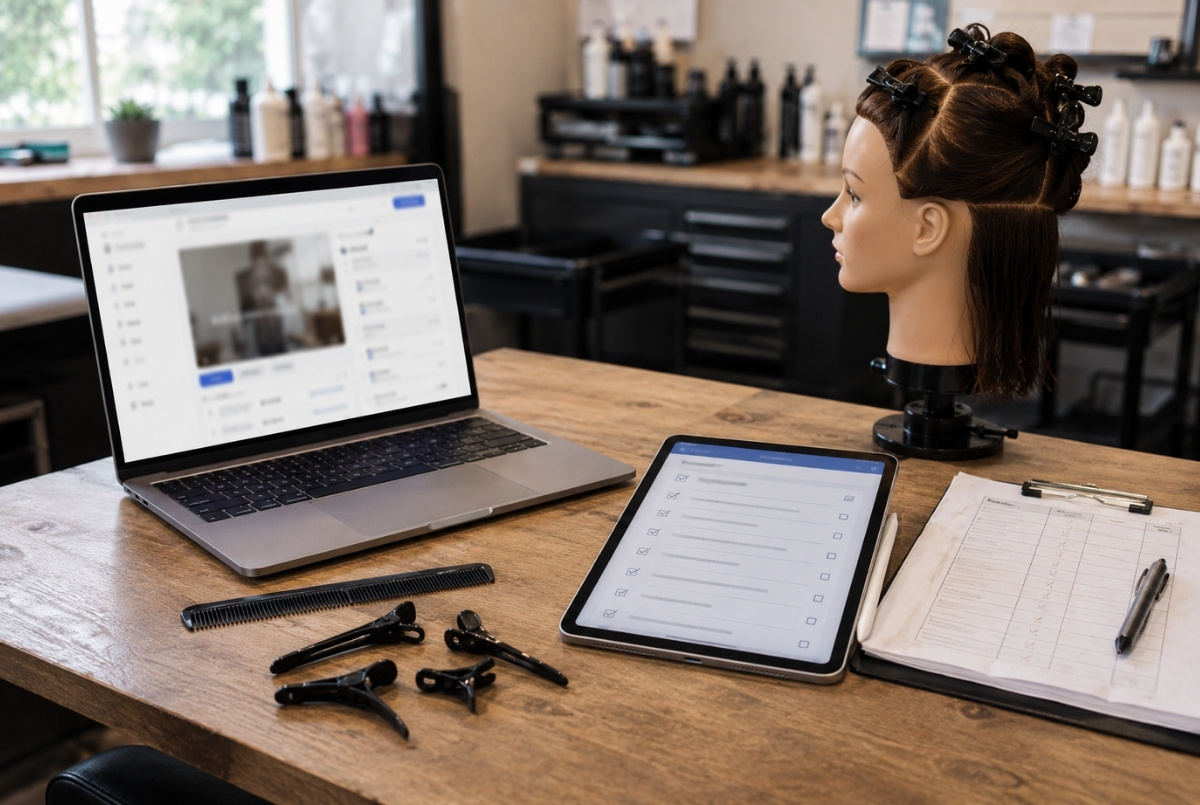
The modern beauty industry runs on technology, utilizing everything from online booking software to automated skin analysis tools. Because of this shift, beauty education has moved far past physical whiteboards and traditional textbooks.
Depending on the beauty educator course you choose, you may work with hybrid learning platforms, digital gradebooks, electronic hour trackers, and video-based teaching tools. If you are looking into a cosmetology instructor program with online components, keep in mind that theory lessons may be delivered digitally in some approved programs, but licensure-focused instructor training usually still requires state-approved supervised teaching, practical evaluation, and monitored clinic or lab experience.
Your daily prep work will expand from setting up a classroom to managing a dynamic online platform. You will practice organizing coursework inside learning management platforms, building hybrid lesson plans, monitoring student participation data, and utilizing digital tools without losing the hands-on control that beauty training requires. This preparation teaches you to track progress accurately with digital files and record helpful video lessons. Mastering these platforms readies you for modern school operations while opening up career options in corporate brand education, remote consulting, and curriculum design.
Using Technology Effectively in the Classroom
Modern classrooms increasingly use digital tools to improve how students learn, though it is best to view advanced simulations as helpful additions rather than absolute requirements. Many contemporary program outlines integrate digital client profiles, online platforms, email systems, and visual tech to enhance the student experience, similar to the instructional model established by ABC Adult School. When distance education is approved by regulatory bodies, teacher training plans may also include tools such as Zoom, digital textbooks, and pre-recorded video modules.
For an aspiring instructor, the main objective is knowing exactly when a piece of software makes a concept easier to understand and when it gets in the way of vital tactile practice. Elite educators use online quizzes to verify sanitation rules and video clips to preview advanced methods, but they always require plenty of supervised, real-world practice before a student ever provides a service to a real client.
Regulatory Laws and State Compliance

One of the most critical parts of managing a beauty academy is keeping up with administrative laws. A major component of your educator preparation involves studying the specific state regulations that govern professional training programs.
Your beauty educator training will teach you how to analyze your state's exact legal scope of practice boundaries. You will learn to create practical exams that mirror state board testing criteria, track and document student hours accurately, and keep daily lessons aligned with licensing requirements.
Furthermore, state codes change over time to keep up with public health safety, updated hygiene practices, and changing consumer trends. Your coursework will teach you how to analyze these legal updates, adjust school lesson plans accordingly, and keep your institution compliant with the law.
For instance, documented Illinois Department of Financial and Professional Regulation (IDFPR) updates show that barber and cosmetology curricula must explicitly include training for a wider variety of hair types and textures. Those same updates introduced a one-time abnormal skin growth education requirement for new applicants and renewals after January 1, 2026, with IDFPR initially approving Impact Melanoma’s free online “Skinny on Skin” program to help applicants and licensees comply. Gaining this deep understanding of administrative rules makes you incredibly valuable to school owners, transforming you from a great stylist into a vital compliance leader.
Tailoring Your Training to Your Specialty
The core rules of teaching apply to every classroom, but your program will show you how to adapt those methods to your specific section of the beauty industry.
Esthetics Instructor Focus
If you choose an esthetics instructor training program, your studies will focus on how to teach complex skin analysis, chemical safety, contraindications, product formulations, and biology. You will learn how to guide new students through the delicate science of the skin's lipid barrier—the vital surface layer that helps reduce moisture loss—while keeping all exfoliation training strictly within legal guidelines.
The real challenge at the instructor level is moving past basic product definitions. You must teach your students how to analyze complex skin changes, spot when a treatment must be canceled for safety reasons, keep professional client logs, and clearly separate cosmetic advice from medical opinions. This training helps you teach students to read ingredient labels critically, focusing on hard science instead of brand marketing.
Nail Instructor Focus
For professionals inside a specialized nail instructor program, the training highlights classroom ergonomics, chemical polymerization, precise mixing ratios, ventilation safety, and proper electric file techniques. In this environment, polymerization—the chemical reaction that links monomers to form acrylic enhancements—is a daily practical concern that affects odor control, product curing, client sensitivity, enhancement strength, and long-term nail health.
You will study how to teach correct structural nail placement, proper apex creation, safe filing angles, and strict infection control protocols. The goal is to ensure your future students can work safely, build technical confidence, and stay fully aligned with state safety codes. No matter what your specific background is, completing a formal educator program gives you the scientific background needed to back up your practical skills.
Streamlining Crossover Credentials
The international beauty school market continues to see massive investment, with data from Business Research Insights projecting it to hit $9.61 billion in 2026. Because of this growth, academies constantly look for adaptable teachers who can lead, document hours, and pivot when state rules change. This is why regulatory efficiency matters: experienced educators shouldn't have to waste time repeating basic teacher courses just to add a secondary credential.
Some states provide clear examples of cutting through this red tape. For instance, recent IDFPR updates outline that instructors who hold the right mix of experience and education can secure additional teaching licenses without sitting through redundant introductory classes. Instead, they only need to complete the specific modules missing from their previous license curriculum. A clear example is a licensed cosmetology teacher who wants to teach barbering; they may only need to take the missing shaving and facial hair modules rather than repeating an entire crossover program.
These updates are vital because they focus on actual knowledge rather than empty paperwork. For an experienced professional, growing your career isn't about resetting your progress to zero. It is about proving your current skills, closing specific training gaps, and getting qualified educators to the front of the room where they are needed most.
Master the Art of Teaching at Hogan Institute of Cosmetology & Esthetics
Stepping away from the physical strain of daily salon work to become an educator is a major milestone. It expands your career path and secures your place as an industry leader. To lead a classroom with true confidence, you need a training foundation that respects your experience and builds your teaching, classroom, curriculum, and business-management skills.
At Hogan Institute of Cosmetology & Esthetics, we focus on transforming seasoned beauty professionals into exceptional, salon-ready instructors. Our Instructor program is designed for experienced experts in cosmetology, barbering, nails, and esthetics who are ready to teach others with confidence. The curriculum covers core educator skills such as lesson planning, instruction delivery methods, teaching methodologies, conflict resolution, classroom management, business management, state board exam preparation, and curriculum creation.
You have already proven your dedication to your craft. Now, you can shape the next generation of talent and protect the safety and high standards of the industry. If you are ready to explore campus life and learn how our curriculum supports your goals, check out our Enrollment page to get started.
Have questions about scheduling, steps for enrollment, or what to expect in the classroom? Leave your details in the contact form below, and an admissions counselor will reach out to guide you through the process.
Frequently Asked Questions
What is the difference between a beauty educator and a beauty school instructor?
A licensed beauty school instructor usually works inside a state-approved or licensed school, teaching the curriculum students need for licensure. A beauty educator may work for a brand, salon group, private training company, or product manufacturer, teaching product knowledge, advanced techniques, or business education. Those private or brand roles often do not require a school instructor license unless the person is teaching state-mandated curriculum inside a licensed school.
Do I need to maintain my salon license once I get an instructor license?
Usually, yes, but requirements vary by state. Many instructor licenses are tied to an active underlying cosmetology, esthetics, barbering, or nail technician license, so applicants should verify renewal rules directly with their state board. The safest approach is to keep your base professional license in good standing while maintaining any instructor credential required in your jurisdiction.
What are cosmetology instructor CEU classes, and are they mandatory?
CEU stands for Continuing Education Unit. Some states require instructor-specific continuing education before renewal, while others set general licensee CE rules or no CE requirement at all. When required, these courses may focus on sanitation law updates, scope-of-practice changes, teaching methods, safety standards, educational technology, or classroom management rather than basic salon services. Always check your state board’s current renewal rules before assuming the number of hours or course type required.
