

Defining the Beauty Educator: Meaning, Duties, and Professional Career Path
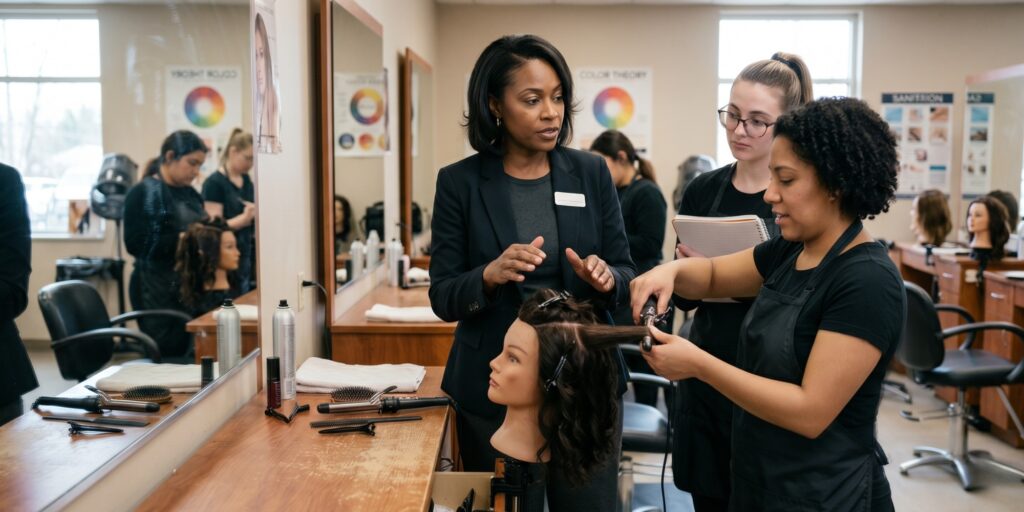
Finding a way to grow in the beauty industry often leads to a specific realization. After years of mastering techniques and building a client base, I have seen many professionals start to look for the next step that allows them to share their expertise without the physical toll of full-time salon work. Moving into education is one of the most rewarding shifts a person can make, turning a personal craft into a legacy for others. I want to look at the role of a beauty culture instructor and how this path can redefine a professional journey.
Key Takeaways
- Market Growth: The global cosmetology and beauty schools market is projected to reach $9.61 billion by 2026, showing continued demand for beauty education programs.
- Income Stability: A strong public benchmark for postsecondary career and technical education teachers—a category that includes cosmetology instructors—is a median salary of about $61,490, according to the U.S. Bureau of Labor Statistics.
- New Standards: Modern teaching increasingly requires product knowledge, client-care education, and pedagogy, the science of teaching, shifting the role from stylist to academic mentor.
- Career Longevity: Transitioning to education can reduce the physical strain of full-time salon work while establishing you as an industry authority.
The Role of a Modern Beauty Instructor: Meaning and Impact
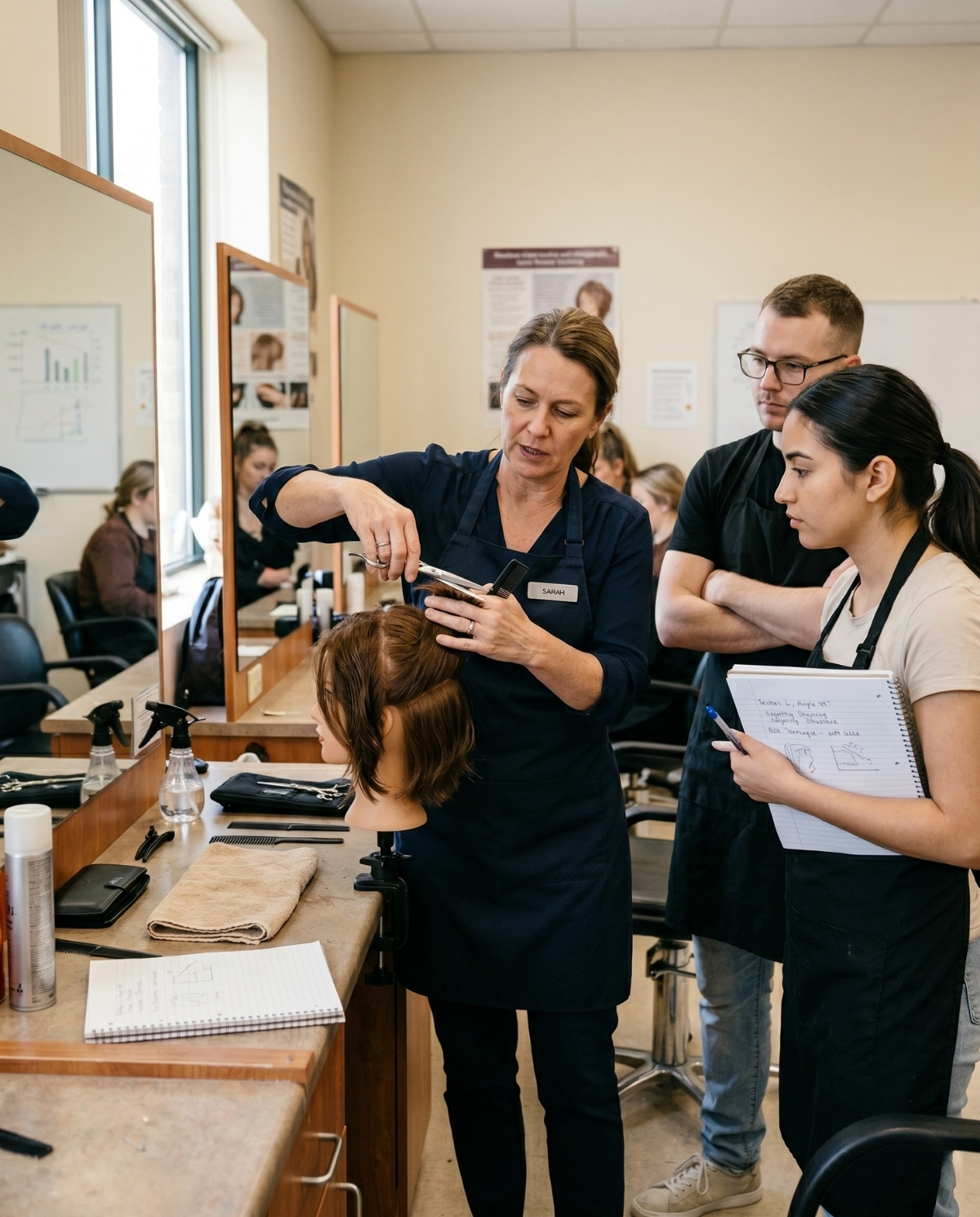
I find that the true beauty instructor meaning goes much deeper than simply demonstrating a haircut or a facial. When I think about this role, I see an architect who builds the foundation for a student’s entire career. To define beauty culture instructor roles today, we look at licensed experts who have transitioned into pedagogy, which is the art and science of teaching others.
Whether a professional is called a cosmetology instructor, a hair and beauty educator, or a beauty school instructor, the goal is to break down complex movements into lessons that are easy to follow.
Current trends from HOTT Beauty Lounge suggest that the industry is moving toward "Clean-ical" beauty, which combines clean products with clinical results. For a beauty educator, this means teaching students about things like the lipid barrier—the skin’s natural protective layer—and how specific ingredients affect it. Educators are no longer just teaching technical skills; they are guiding students through a market that is more focused on wellness and science.
According to Mintel’s 2026 predictions, we are entering a "Human Touch Revolution." Consumers are looking for beauty that feels authentic and emotionally real. This makes the role of a beauty school educator even more vital, as I believe only a human mentor can teach the intuition and empathy needed for a successful client consultation or a difficult color correction.
Daily Responsibilities and Classroom Duties
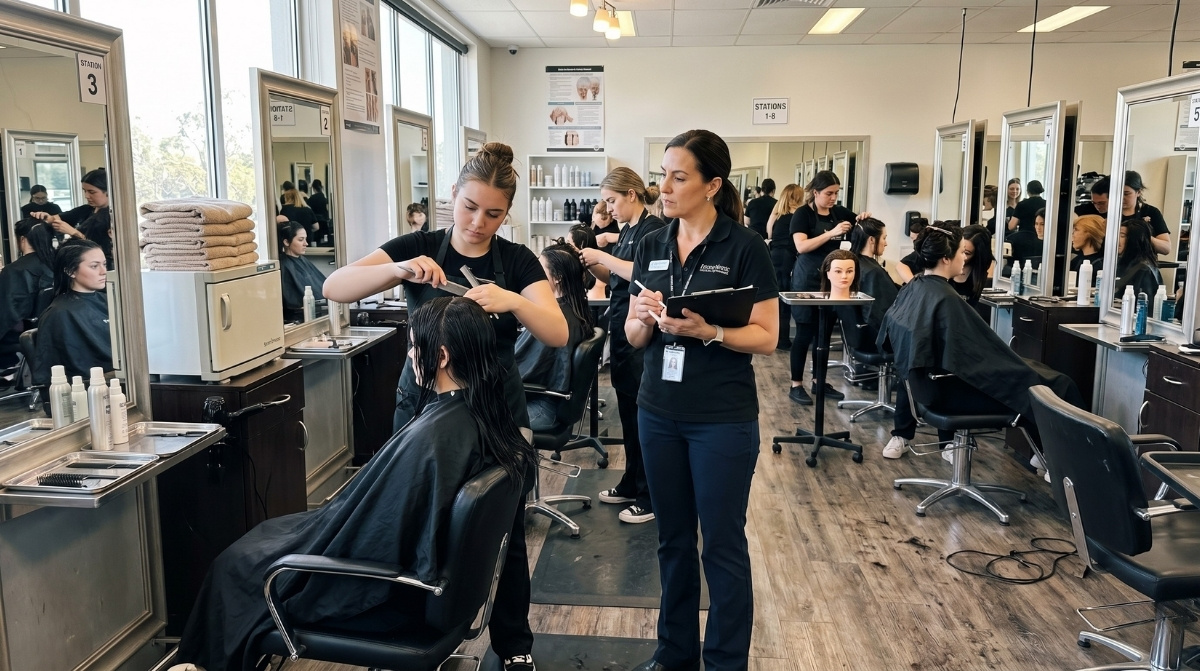
When a professional begins beauty school instructor training, they quickly see how different the environment is from a salon. The duties as a cosmetology instructor are a blend of teaching theory in a classroom and supervising students on the clinic floor.
In the classroom, I might lead a beauty educator training course on the chemical composition of hair color or skin anatomy. Out on the floor, the responsibilities change to watching students work on the public. I am there to guide their hands and make sure they follow their scope of practice. This term refers to the specific legal boundaries of what a professional is allowed to do. For example, under Georgia law, esthetics includes beautifying and stimulating the face or body but does not allow for diagnosing or treating dermatological conditions, medical aesthetics, or the use of lasers.
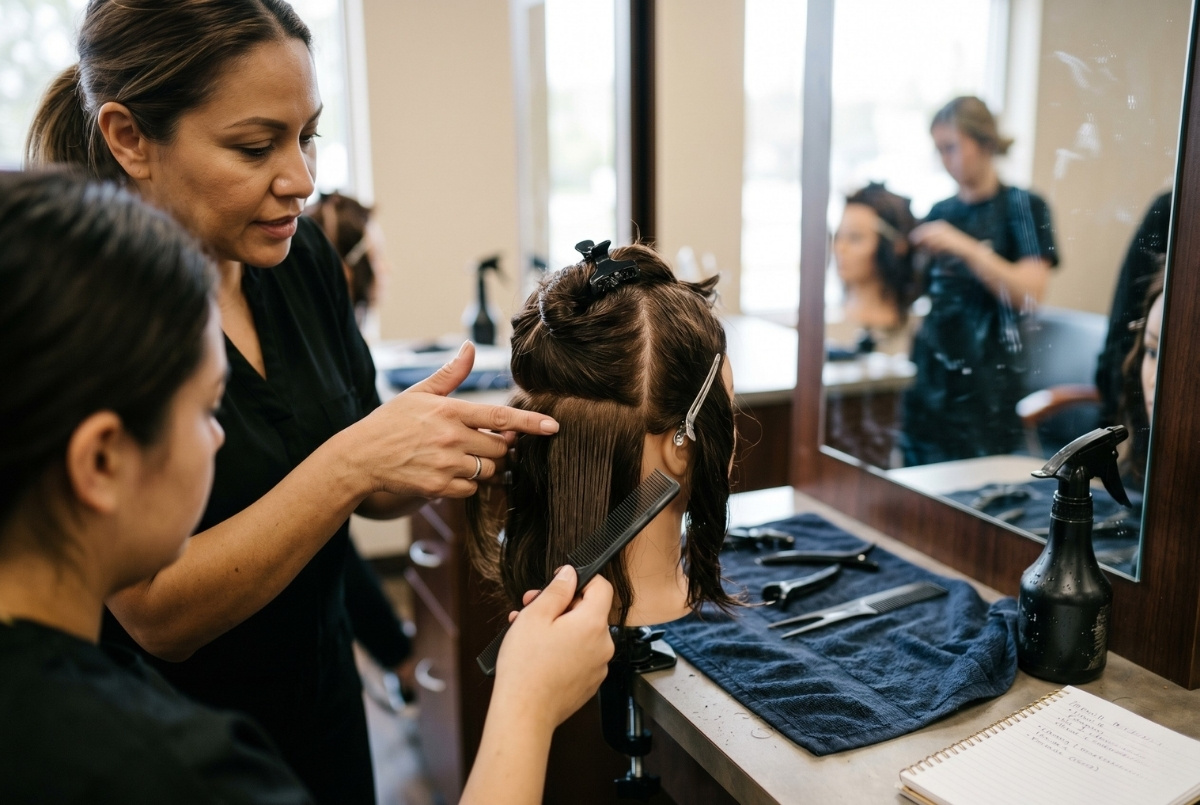
A standard day for a beauty educator might involve:
- Building lesson plans that follow state education standards.
- Demonstrating new techniques so students can repeat them safely.
- Grading tests and evaluating practical work.
- Recording student hours to make sure they are on track for licensing.
- Managing sanitation and professional behavior in the student salon.
- Helping students develop the "soft skills" they need to grow a business.
Understanding Income and Salary Potential
The steady nature of a paycheck is often a huge draw for those considering this path. I know how stressful the commission-based "feast or famine" cycle can be. A beauty instructor salary may be more predictable, and school-based positions may include benefits like health insurance or retirement plans, depending on the employer.
If you are asking how much do beauty school instructors make, it helps to use reliable data. O*NET classifies a cosmetology instructor under the category of Career/Technical Education Teachers, Postsecondary. For this group, the U.S. Bureau of Labor Statistics reports a median salary of approximately $61,490.
Other sources, like Franklin University, suggest the median can reach $83,637 depending on the specific market and employer. Whether you work for a private beauty school, a community college, or a large product brand will influence the average pay for cosmetology instructor positions. The broader BLS data also shows that the top 10% of career and technical education teachers earn more than $101,510, but actual income depends on location, employer, experience, and role type.
The growth of the market also supports these roles. Data from Business Research Insights shows the global beauty school market hitting $9.61 billion by 2026. This growth means that qualified people who know how to teach are highly valued.
How to Become a Beauty Instructor
Moving into this field requires a specific beauty instructor license. Even a master stylist or esthetician needs to learn how to manage a classroom and evaluate student progress.
The steps to become a beauty instructor generally follow this path:
- Hold an Active License: You need a current license in the specialty you want to teach, such as cosmetology, esthetics, hair design, or nails.
- Gain Field Experience: In Georgia, you usually need at least one year of work experience in your field before you can apply for an instructor license.
- Enroll in an Instructor Program: You must complete a state-approved beauty instructor training program. This is where you learn teaching methods, lesson planning, classroom management, evaluation methods, and supervised practice teaching.
- Complete the Hours: According to Georgia curriculum rules, a cosmetology instructor program requires 750 hours, while esthetician training is 500 hours and nail care is 250 hours.
- Pass State Exams: You will take exams that test your technical knowledge and your ability to teach those skills to others.
Teaching is about more than just technical skill. Proposed laws like South Carolina Bill 4752 highlight the need for a dedicated "method of teaching" course. This shows that the industry is focusing more on how we teach, not just what we teach.
Flexibility and Training in the Modern Era
I often hear people ask if they can get their cosmetology instructor license online. The reality is usually a hybrid model. While you can find a cosmetology instructor course online for theory subjects like classroom management or curriculum design, you still need hands-on practice.
In Georgia, instructor training includes supervised practice teaching, so students should expect some in-person or school-supervised training requirements. When looking for a beauty instructor school, I suggest finding one that offers enough flexibility for you to keep working while you finish your hours.
Begin Your Leadership Journey at Hogan Institute
Transitioning into education is a way to turn years of hard work into a lasting influence on the industry. It is a step toward professional respect and long-term stability. Choosing the right place to train is the first part of that journey.
At Hogan Institute of Cosmetology & Esthetics, we focus on preparing leaders. With over 20 years of experience in the Georgia beauty community, we understand what it takes to move from the chair to the front of the classroom. Hogan’s Instructor program is designed for experienced experts who want to share their knowledge in cosmetology, barbering, nails, and esthetics. I believe that our history and our team’s deep expertise provide the professional credibility you need to start your new career with confidence.
If you are ready to see where this path can take you, you can find more information about starting your journey on our Enrollment page. I also encourage you to use the contact form at the end of this article to ask any questions you have. We are here to help you reach the next level of your career.
FAQ: Common Questions About Beauty Education
How long does it take to become a cosmetology instructor?
Most students finish their training in 6 to 12 months. This depends on your state’s hour requirements and whether you attend school full-time or part-time.
What is the difference between a beauty instructor and a beauty educator?
Usually, an "instructor" works in a licensed school to help students get their licenses. A "beauty educator" might work for a specific brand, travel to different salons, or teach advanced workshops for licensed professionals.
Can I become an educator in beauty online for free?
You might find free workshops or introductory videos, but a legal beauty school instructor license requires state-approved training and passing official exams. You cannot get a license through free online videos alone.
What can I do with a beauty instructor license?
Beyond teaching in a school, you could become a school director, a brand trainer, a state board examiner, or even a developer for new beauty school curricula.