

How Much Do Beauty Instructors Make? Salary, Jobs, and Career Paths Explained
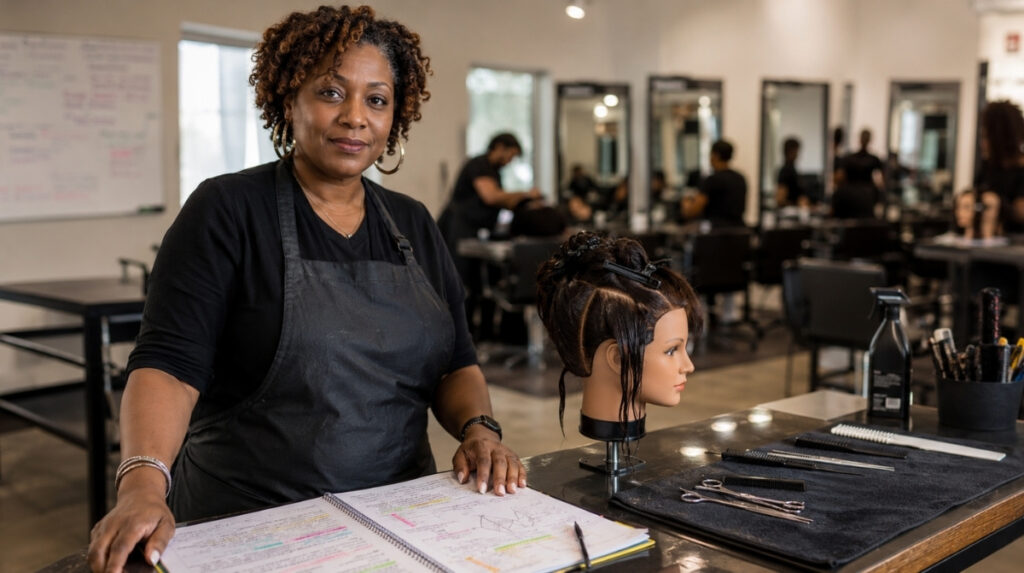
If you are a licensed beauty professional, you already understand how demanding the salon floor can be. Spending long shifts on your feet and managing the constant physical wear of hands-on services can take a serious toll over time. NIOSH notes that nail technicians face chemical exposure, repetitive motions, awkward positions, and strain on muscles and joints, while OSHA has warned that some hair-smoothing products can release formaldehyde during use. Beyond physical exhaustion, relying entirely on commission or booth rentals means your paycheck fluctuates with seasonal client drops and cancellations. Transitioning into an academic setting offers a path to steady income, clear structure, and genuine industry authority. To understand the daily classroom expectations, our overview on the defining the beauty educator meaning duties and professional career path provides a clear roadmap.
Let us look at the actual numbers, employment trends, and career structures shaping the beauty education sector today.
Key Takeaways
- Financial Stability: Moving into instruction can replace unpredictable salon commissions with steady hourly or salaried pay, especially in full-time roles.
- Competitive Compensation: According to the U.S. Bureau of Labor Statistics, career and technical education teachers earned a median annual wage of $62,910 in May 2024.
- Specialized Market Drivers: Growth in medical aesthetics and evolving state rules increase the value of instructors who understand safety boundaries and compliance.
- Reduced Physical Toll: Digital lesson modules and online portals can streamline paperwork and support hybrid theory classes, though hands-on clinic supervision and live service assessment usually remain in person.
How Much Do Beauty School Instructors Make?

When assessing how much a beauty education specialist can expect to earn, the data highlights a level of baseline stability that standard salon setups do not always provide. A steady beauty school instructor salary provides a predictable baseline that does not depend on how many clients walk through the door on a given afternoon.
Your exact compensation depends heavily on the type of institution, geographic region, your licensing background, and whether you work a part-time, full-time, adjunct, or contract schedule. Private academies, community colleges, public vocational programs, and corporate training departments all structure their pay scales differently. Still, replacing an appointment-by-appointment hustle with scheduled teaching hours brings a much more reliable financial rhythm to your life.
Calculating how much do beauty school instructors make over a full year requires looking beyond basic hourly wages. Because many institutional beauty educators are hired as employees rather than independent contractors, full-time packages may include benefits like health insurance, paid time off, and retirement plans, depending on the employer.
Understanding Your Total Compensation Package
In a salon, if your chair is empty, you are not making money. In a classroom or student training setting, instructors are paid for their scheduled hours, including lecturing, student guidance, grading, and administrative preparation. This predictable setup removes the constant anxiety of unpaid gaps in your workday. Completing your professional training pathway through an accredited program equips you with the classroom management, curriculum mapping, and student supervision skills that private and public academies value.
The U.S. Bureau of Labor Statistics Occupational Outlook Handbook groups beauty school teachers under the broader category of career and technical education instructors. In May 2024, the median beauty teacher salary benchmark sat within a general CTE median of $62,910. Looking at specific settings, secondary school teachers earned a median wage of $63,910, while postsecondary teachers made a median of $61,490. The top 10% of earners across the broader CTE field brought home more than $101,510 annually.
It is helpful to analyze these numbers in context. The BLS data groups multiple trades together rather than tracking every individual beauty title by itself. It also projects overall CTE employment to decline slightly from 2024 to 2034. However, that does not mean hiring stops. BLS still projects openings from replacement needs, while individual opportunities may also come from instructor turnover, private academy hiring, and demand for professionals with strong technical and regulatory backgrounds.
Breaking Down Cosmetology Instructor Income and Pay Structures
The baseline cosmetology instructor salary varies depending on local state board rules, school funding, and your employment status. However, national occupational benchmarks show that the career and technical training route provides a reliable income path for veteran stylists who want a break from chasing tips, surviving slow seasons, and stressing over client retention.
If you want to understand what is the average salary for a cosmetology instructor in your region, or if you are calculating standard cosmetology instructor pay on an hourly scale, you must look at the style of the institution. Large, multi-campus beauty school networks usually offer clear, structured pay scales alongside regular performance reviews and promotion paths. Smaller boutique schools might rely on flexible hourly cosmetology instructor income arrangements, while community colleges often follow public education pay scales.
The BLS data also highlights that compensation changes based on the sector. In May 2024, career and technical teachers at private trade and technical schools earned a median annual wage of $58,860, while those employed by state, local, and private junior colleges or professional universities saw a median annual wage of $63,920. These broad numbers are great for setting realistic expectations, but your actual cosmetology instructor jobs offer will hinge on your specific teaching background, your state license type, and the local demand for your technical specialties.
To land the highest starting pay grade within these corporate or public structures, you first need to complete the licensing steps outlined by your local state board. To help you plan this career shift step-by-step, take a look at our complete guide detailing how to become a beauty instructor, which covers the essential training steps and necessary foundational benchmarks.
Specialized Tracks: Esthetics and Nail Educator Salaries
The rapid expansion of specialized niches in the beauty market has created dedicated training tracks that affect compensation differently than a general cosmetology license. Your career path depends on where you focus your skills. While a general cosmetology focus opens up a broad student base and plenty of school openings, specialized skin and nail paths offer alternative rewards. Teaching advanced skin science can give you an edge at schools needing instructors who understand skin dynamics, safety rules, and medical-spa boundaries. Concentrating on manicuring opens both classroom positions and corporate brand roles for those with deep product knowledge and sharp safety training.
Advanced Skin Care Instruction
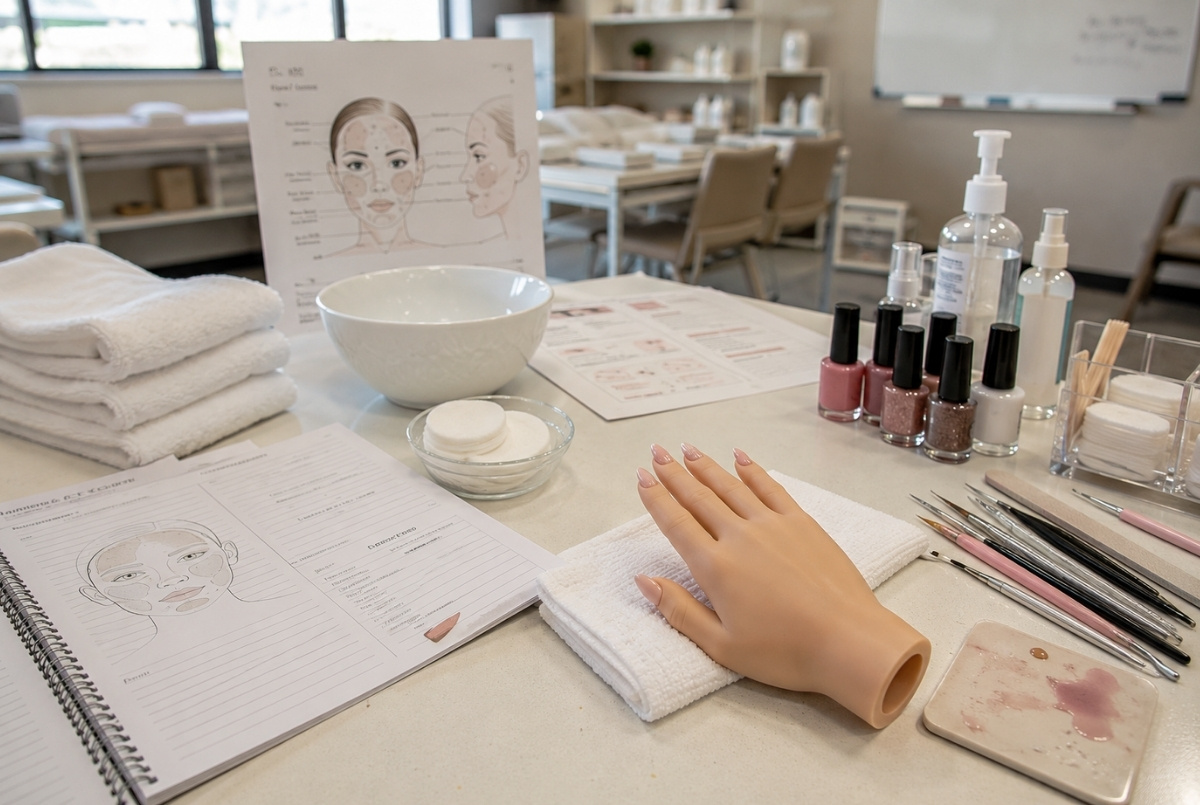
The soaring popularity of non-invasive skincare and clinical treatments has made specialized skin knowledge valuable for private academies. While this does not automatically mean every esthetics teacher salary beats a general cosmetology wage, having advanced skin experience makes you stand out to institutions that focus heavily on advanced spa prep, machine safety, sterilization, contraindications, and regulatory boundaries.
When evaluating a typical esthetician instructor salary, strong opportunities often go to individuals who can connect hands-on practical training with strict client safety. Instructors on this path guide classrooms through skin analysis, microdermabrasion, sanitation protocols, and protecting the skin's lipid barrier—the vital moisture defense layer that keeps external irritants out.
This specific market demand mirrors broader economic trends. Data from Fortune Business Insights valued the global medical aesthetics market at $28.49 billion in 2025 and projects it to expand from $31.96 billion in 2026 up to $89.59 billion by 2034. Because advanced procedures like lasers, cosmetic injections, and deep chemical peels carry different rules in every state, schools highly value beauty educator salary candidates who understand legal safety limits, precise charting, and the line where a service requires formal medical supervision. The American Med Spa Association points out that med spa laws vary widely by state, dictating who can operate a laser, who can handle filler injections, and who can legally own a clinical spa facility.
Precision Nail Care Education
Focusing on nail care offers another rewarding escape from the physical wear and tear of non-stop client appointments. Whether you are analyzing a specialized nail instructor salary or a general nail tech instructor salary, teaching advanced manicuring and structure techniques offers a completely different daily flow than bending over a nail table for back-to-back clients all week.
Corporate or regional nail educator salary tracks often have a different setup than campus positions, especially when the role involves corporate travel, product launch workshops, commissions, or brand promotion. Campus instructors usually divide their hours between basic anatomy, infection control, chemical safety, technique refinement, and keeping up with proper ventilation and chemical storage. NIOSH highlights that nail salon workers deal with dozens of workplace chemicals and face physical strain from repetitive motions and awkward postures, which makes safety-focused training a necessity on campus.
Because teaching these technical skills requires precision, finding a top-tier preparation program is key to your success. Take a look at our breakdown of how a beauty instructor school explained shows you exactly how experienced professionals learn to manage lesson planning, classroom dynamics, and technical theory before they ever lead their first real class.
Navigating the Job Market: Positions, Hiring, and Remote Roles
When searching through active cosmetology instructor hiring boards, you will find openings in private beauty academies, corporate vocational chains, public high school programs, continuing education businesses, and product brand teams. Securing steady cosmetology instructor employment comes down to matching your active state credentials, salon experience, and teaching background to what the employer needs. A school cosmetology instructor vacancy usually opens due to class expansions, staff retirements, schedule updates, or an urgent need for someone with specific technical skills.
Opportunities are just as varied across individual fields:
- Active listings for esthetics instructor jobs tend to favor experts who demonstrate deep knowledge of sanitation, client health tracking, skin analysis, and electrical modalities within state regulations.
- Regional esthetician instructor jobs often focus on managing the student spa floor, client intake forms, safety compliance, and documentation.
- Openings for nail instructor jobs range from school-based positions to weekend continuing education workshops, alongside corporate nail tech instructor jobs or nail educator jobs with major product distributors.
- Traditional hair instructor jobs are shifting too, as schools place a stronger focus on natural texture, inclusive client consultations, and modern cutting methods. Milady Standard Cosmetology, for example, describes its CIMA ExamReady tool as aligned to national theory exam frameworks developed by NIC or PSI, and its current materials include updated texture education and curriculum areas such as braiding, chemical texture services, and hair/scalp topics.
Can You Teach Beauty Culture From Home?

Finding pure online cosmetology instructor jobs work from home options remains rare, because teaching practical skills, checking sanitation, and grading live student services requires an in-person eye. However, hybrid teaching models are growing in popularity for the theory-based portions of the curriculum.
Instructors can often host remote lectures covering anatomy, chemistry, sanitation, business marketing, state board review, and professional career building. These hybrid or remote cosmetology instructor positions might also involve reviewing digital portfolios, grading online tests, monitoring attendance, and managing school compliance records.
According to a white paper by the AACS / Pivot Point Technology and Beauty Schools presentation at AACS, academies are actively incorporating digital tools like AI-driven tutoring assistance, automated grading features, online learning platforms, digital portfolios, and digital compliance tracking. These systems reduce everyday administrative work and make hybrid theory classes run much smoother. However, they function as tools to support the process, not as complete replacements for live technical coaching, hands-on practice, and real student salon supervision.
Even when teaching online, keeping your formal credentials active is non-negotiable. To keep things simple, you can use our detailed beauty instructor license requirements state board exams online training and renewal explained guide for straightforward steps on passing your exams, tracking local board rules, and hitting your ongoing renewal deadlines.
Summary: Designing Your Career Move
Moving into beauty education does not mean walking away from your passion—it means growing it. It is a smart, intentional choice to swap out salon burnout, physical exhaustion, and commission stress for a reliable, structured professional path. By moving into the classroom, you protect your physical health, gain predictable income potential, and help train the next generation of beauty professionals.
Succeeding over the long term depends on where you build your foundation. Partnering with an academy that focuses on solid regulatory compliance, modern classroom setups, and comprehensive teacher-preparation pathways ensures your shift from stylist to respected educator is smooth, rewarding, and sustainable.
Ready to Set a New Path for Your Career?
Taking the leap from a fast-paced salon environment into a stable, respected role in beauty education requires the right support system. At Hogan Institute of Cosmetology and Esthetics, we focus on helping experienced beauty professionals protect their physical longevity, enjoy a reliable career path, and step into their authority as true mentors.
Our educational approach is designed to blend your creative technical skills with structured classroom workflows, giving you the curriculum design and student leadership tools that strong academies look for. Whether you want to focus on advanced skin care, nail artistry, or guiding students through a comprehensive pathway, our campus provides the resources, experience, and community to back your career growth.
You have spent years perfecting your skills behind the chair—now you can share that valuable knowledge without draining your physical well-being. We invite you to see our dedication to educational excellence firsthand.
To learn more about transforming your salon experience into a lasting professional path, check out our Enrollment page. You can also fill out the quick contact form we have left at the bottom of this article to connect directly with an admissions advisor, ask your questions, and discover how to take your next big professional step.
Frequently Asked Questions
Do I have to give up my current salon clients if I take a beauty school instructor job?
Not at all. A lot of educators build a hybrid schedule by teaching at an academy during the week while taking care of a select group of clients on weekends or evenings. This setup lets you enjoy the financial reliability of scheduled teaching hours while keeping your creative outlet and extra salon income alive. Your balance depends on your school shift, employer rules, and personal schedule.
What is the difference between a beauty school educator and a brand educator?
A school instructor teaches a structured curriculum designed to help students master foundational skills and pass their state licensing exams. A brand educator works directly for a product manufacturer, distributor, or beauty company to run specialized workshops, train working professionals, and teach specific product lines, specialized tools, or new styling trends.
How long does it take to get a license to teach cosmetology or esthetics?
The timeframe depends entirely on your state board's rules. Some states let experienced, licensed professionals qualify for instructor credentials based on their active years of salon work, while other states require completing a dedicated instructor training program that focuses on lesson planning, teaching psychology, classroom management, and student assessment. Always double-check the current guidelines with your local state licensing board before you get started.