

Beauty Instructor License Requirements: State Board Exams, Online Training, and Renewal Explained
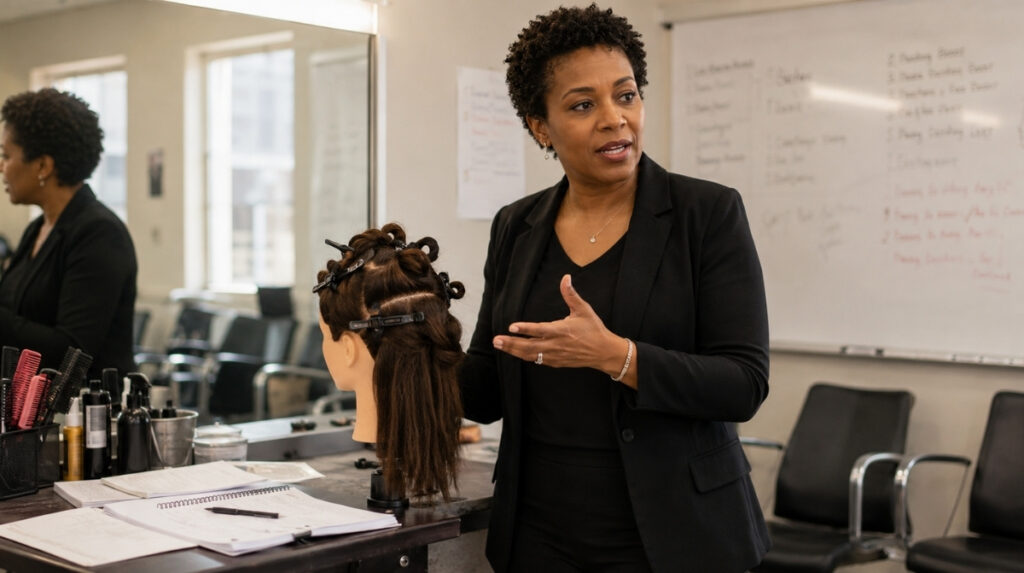
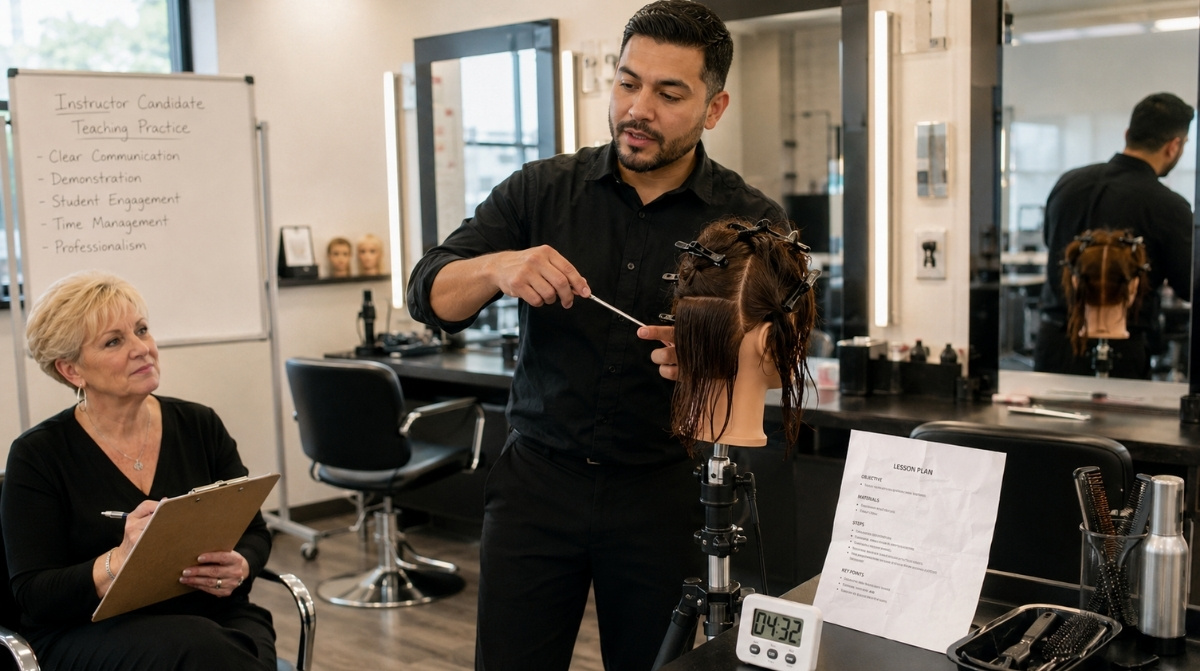 Are you feeling the physical toll of spending long, exhausting days behind the salon chair? Many experienced beauty professionals reach a point where they love the industry but want a career that offers better stability, predictable hours, and longevity. If you are ready to transition from a hands-on service provider to an industry leader, stepping into an educational role is an excellent way to achieve those goals. By earning your teacher credentials or meeting your state board qualifications, you can confidently step away from the physical demands of daily salon appointments and begin mentoring the next generation of talent.
Key Takeaways
- Career Evolution: Moving into an instructional pathway preserves your physical health while positioning you as an industry authority with predictable work hours and steadier employment structures.
- Curriculum Trends: Modern beauty classrooms focus heavily on business strategy, digital management tools, skin and scalp health, formulation awareness, and client consultation dynamics rather than just basic technical services.
- Flexible Schooling: Some states and schools may allow hybrid setups, where theory lessons are completed online and supervised teaching is completed in person, depending on state board rules and school approval.
- Testing Strategy: Overcoming state board anxiety requires a structured preparation routine built around Candidate Information Bulletins, practice exams, and dedicated study materials.
Defining the Modern Classroom: What is a Beauty Educator?
Before diving into the licensing paperwork, it helps to look at how different jurisdictions classify this professional milestone. If you are a generalist in hair, skin, and nail services, you will likely pursue a comprehensive beauty instructor license or a cosmetology instructor license if your state board still issues one. However, specialized professionals often aim for a more targeted credential, such as an esthetics instructor license, a nail instructor license, or a natural hair instructor license.
Depending on where you live, the local regulatory board might use completely different terminology to define someone who teaches on the school floor. You may see the role officially designated as a beauty culture instructor, a cosmetology teacher, or an approved educator. In some regions like Texas, the separate instructor license has actually been eliminated entirely. Instead, according to the Texas Department of Licensing and Regulation, schools are responsible for verifying that an educator holds the proper underlying practitioner license for the specific subjects they teach. No matter what title is stamped on your application file, your core mission remains the same: you are shifting from performing services to explaining the science, theory, safety, and mechanics behind them.
To help you understand the full scope of this career shift, you can explore our breakdown of the meaning, duties, and professional career path of a beauty educator. Acquiring structured training during this transition ensures that you can communicate complex concepts clearly to a room full of beginners, rather than just demonstrating them with your own hands.
Setting the Foundation: Prerequisite Requirements and Education
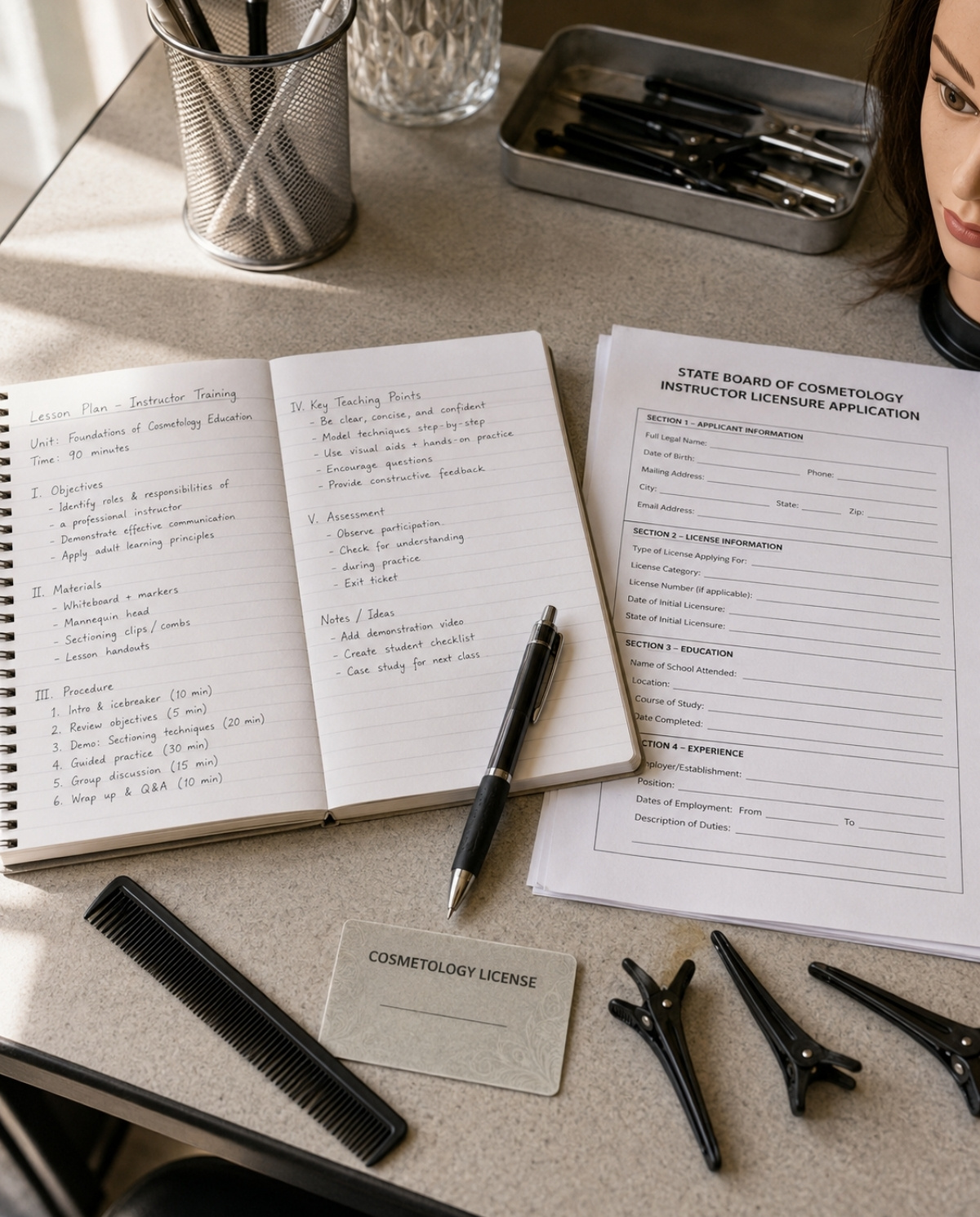
Most states require a specific foundation of hands-on salon hours, active licensure, and formal training before you can step up to the podium. Because rules vary by state, you cannot rely purely on your raw talent behind the chair. You must actively prove your technical competency, maintain your active credentials, and work strictly within your legal scope of practice—the legally defined boundaries of what a professional can and cannot safely perform for a client.
The Baseline Prerequisites
If you want to build a clear path forward, you need to analyze the underlying cosmetology instructor requirements enforced by your local board. For most regions, the initial step requires holding an active practitioner credential, such as a cosmetology, esthetician, or nail technician license. Depending on local laws, you may also need to complete an approved training program, log a specific number of teaching hours, or show proof of recent salon experience before taking your exams.
For a comprehensive checklist of these structural milestones, you can review our guide on how to become a beauty instructor to see how standard prerequisites function. Just keep in mind that local standards are not identical across state lines, so always confirm that your chosen program is fully state-approved before you enroll.
Navigating the Classroom Hours
Once you meet the initial qualifications, your next step involves completing your cosmetology instructor education requirements. This usually means enrolling in a dedicated cosmetology instructor training program, or reviewing specific esthetics instructor license requirements if your goal is to teach specialized skin wellness.
Shallow career advice often dismisses teaching as a low-paying alternative for struggling stylists, but current industry data shows a much more nuanced picture. For example, the ACTE Career Center lists the national average salary for cosmetology instructors at $52,096 per year, with top earners reaching up to $93,600. Similarly, data published by Salary.com reports a national average of $50,872 as of June 1, 2026. While actual earnings depend heavily on your location, specialty, full-time or part-time status, benefits, and employer, these figures show that education can be a serious professional path rather than just a fallback option.
Furthermore, recent market analysis from ProBeauty AI reveals a growing demand for educators who understand modern salon operations, digital branding, automated booking tools, and client management systems. Your real-world salon experience provides a valuable bridge for students learning to navigate retail, client retention, and self-employment. A state approved beauty instructor training program does not teach you how to do hair or skin from scratch; instead, it focuses purely on teaching methodologies, lesson planning, classroom management, and student evaluation techniques. Finding the right training academy, as detailed in our overview of beauty instructor school training, ensures you learn how to turn your personal salon instincts into structured lessons.
The Digital Transition: Can You Train Online?

If you currently manage a busy client book, stepping away from your daily income to sit in a physical classroom can feel financially impossible. This common dilemma leads many stylists to ask: can I get my cosmetology instructor license online?
The answer depends entirely on your local board regulations and school approvals. Some states and schools may allow a hybrid structure where you complete theory-based modules online, covering topics like educational psychology, grading scales, and lesson design. This flexible approach may extend to specialized programs, where an online esthetics instructor course or a digital nail instructor curriculum can reduce commuting time if those hours are accepted by the board.
However, you should never assume a purely digital course will suffice for licensure. Effective teacher preparation often requires supervised student teaching, live clinic floor oversight, and sanitation monitoring that cannot be fully evaluated through a screen. For instance, the Washington State Department of Licensing dictates that instructor candidates must hold a valid practitioner license, graduate from an approved school with at least 500 instructor hours, and pass both written and practical examinations.
Before signing up for a cosmetology instructor course online, always ask whether the hours count toward state requirements, if the school is board-approved, and how many supervised teaching hours must be completed in person. Blending digital convenience with physical classroom experience is often the best way to build genuine confidence.
Conquering the State Board: Exams and Preparation Strategies
The final hurdle for many veteran beauty professionals is testing anxiety. Facing a formal exam after years away from a school environment can easily trigger imposter syndrome. The most effective way to calm those nerves is to understand the exact structure of your upcoming tests.
In regions that require formal evaluation, the licensing process wraps up with a multi-part state board cosmetology instructor exam. The testing format generally covers two main areas:
- The Theory Exam: A computer-based, multiple-choice cosmetology instructor written exam covering curriculum design, state laws, infection control, and teaching psychology. The same format applies to specialized fields, such as the esthetics instructor exam or nail instructor exam.
- The Practical Exam: A live demonstration where you are graded on your teaching mechanics. During a typical cosmetology instructor practical exam, you may be asked to submit a formal lesson plan, deliver a micro-lecture, and demonstrate instructional control while teaching safety protocols. You are not being graded on how well you perform a beauty service, but on how effectively you teach it to a class.
To ensure you pass your exams on the first attempt, I highly recommend following a structured preparation sequence.
First, download the official testing guidelines from your state’s assigned vendor. For example, PSI directs candidates to use their official Test Taker Guides and Candidate Information Bulletins, while the NIC National Instructor Theory Examination bulletin outlines reference materials, timing, supplies, fees, and safety criteria. These bulletins are critical because they map out exactly what will be tested.
Second, dedicate consistent time to a targeted cosmetology instructor study guide. Utilize a digital cosmetology instructor practice test to get used to the phrasing of the multiple-choice questions, aiming for a passing score above 80 percent before scheduling your official date.
Third, practice your teaching demonstrations out loud. Have a licensed peer critique your pacing, vocabulary, and sanitation cues to simulate a realistic cosmetology instructor state board practice test environment. Once you feel prepared, compile your graduation records, current license info, completed cosmetology instructor application, and processing fees to secure your exam date.
State-by-State Breakdown: Navigating Regional Rules
Because there is no universal national teaching credential, you must follow the precise guidelines of your local board. Every state establishes its own unique requirements and pathway to licensure.
In Georgia, for example, the state relies on structured training hours. Official documentation from PSI notes that Georgia requires 750 school hours for Master Cosmetology and Hair Designer instructor pathways, 500 hours for Esthetician instructors, and 250 hours for Nail Technician instructors, alongside active practitioner credentials.
If you look at the cosmetology instructor license NC pathway, North Carolina also utilizes strict category matching. The North Carolina Board of Cosmetic Art Examiners requires 800 hours for cosmetology, 650 hours for esthetics, and 320 hours for manicuring or natural hair care in an approved teacher program, or proof of one year of full-time salon work immediately prior to filing your application.
Conversely, a cosmetology instructor license in Texas follows a completely different model. The Texas Department of Licensing and Regulation states that as of September 1, 2021, a separate instructor license is no longer required to teach. Schools can hire any educator who holds an active practitioner license for the specific skills they teach, allowing institutions to set their own internal hiring standards.
California takes a similar approach to Texas. The California Board of Barbering and Cosmetology sets hours for practitioner licensing categories but does not issue a standalone teacher credential. Industry resources regarding cosmetology teacher training in California emphasize that while a separate state certificate is not required, individual academies generally expect applicants to hold an active specialty license and complete teacher-training courses.
In the Midwest, an Illinois credential follows a traditional model. According to Illinois Administrative Code Section 1175.405, applicants must complete either 500 hours of teacher training paired with two years of active licensed experience, or a full 1,000-hour teacher-training program at an approved school.
On the West Coast, Washington requires instructor candidates to hold a valid practitioner license, graduate from an approved program with at least 500 hours, and pass state-approved exams, according to the Washington State Department of Licensing. If you look at Utah, testing pathways are managed via the Division of Professional Licensing, meaning candidates should cross-reference the latest Utah cosmetology exam information before booking an exam.
Finally, compensation trends shift by region. The ACTE Career Center highlights Wisconsin, California, and North Carolina as strong paying regions for beauty educators, but local demand changes quickly. Always verify renewal schedules, exam steps, and tuition costs with your specific board before making financial commitments.
Keeping Your Credentials Active: Renewal and Continuing Education
Earning your teacher certificate is a massive professional milestone, but keeping it active requires ongoing maintenance. Many states require beauty educators, practitioners, or both to complete continuing education units, or CEUs, before renewal, but continuing education rules vary by state and license category. Some states require educator-specific classes, while others only mandate updates for your underlying practitioner license.
To prevent any legal lapses in your right to teach, check your local board’s website for current renewal deadlines, state-approved providers, and the exact fee to renew a cosmetology instructor license.
Our educational priorities mirror a massive industry shift toward wellness, product chemistry, and consumer safety. Data from America's Beauty Show indicates that modern hair trends increasingly focus on a balance of self-expression, hair health, and sustainability. Similarly, research from Rizzieri Aveda School shows that skin and scalp health dominate consumer demand, with clients expecting professionals to understand how underlying conditions affect their treatments.
As an instructor, your job is to translate these evolving trends into teachable classroom systems. Students must learn how to identify contraindications, analyze product ingredients, protect the skin barrier, manage thorough client consultations, and know when to refer a client to a medical professional. Fortunately, balancing these requirements with a busy teaching schedule can be manageable when your state permits online learning, allowing you to complete your cosmetology instructor ceu classes digitally during school breaks or evenings.
Frequently Asked Questions
Can I teach out of state if I move?
Licensure does not automatically transfer across state lines. If you move, you must apply for reciprocity or endorsement through the new state board. They will evaluate your original schooling hours, exam scores, and work history to see if you match their local requirements or if you need to complete additional training or testing.
What happens if my practitioner license expires but my instructor license is active?
In most states, your right to teach depends on maintaining your underlying practitioner credential. If your cosmetology, esthetics, or nail license lapses, you may generally lose the legal authority to teach that subject until the practitioner license is fully restored.
How much does it cost to renew an educator license?
Processing fees vary depending on your location. You should check your state board's official website regularly for the most up-to-date fee schedules, and clarify whether the fee applies to your instructor certificate, your practitioner license, or both.
Do I need a separate certification for nails or skin if I have a cosmetology instructor license?
Generally, a comprehensive cosmetology instructor credential may allow you to teach subjects included in the general cosmetology curriculum. However, the exact teaching scope depends on state law, school approval, and the license category you hold. Specialized credentials like esthetics instructor or nail instructor certifications usually limit your teaching authority to those specific departments.
Ready to Step Into Your Legacy?
Transitioning from the salon floor to the classroom is an incredible way to protect your physical longevity, establish your professional authority, and shape the future of the beauty industry. You already possess the technical skills and real-world wisdom; now, you just need to align with an educational community that knows how to help you master the art of teaching.
To take the next step on your professional journey, head over to our Enrollment page to find out more about how our programs can support your career goals. If you have any questions about prerequisites, schedules, or the application process, please fill out the contact form below to connect with an admissions advisor today.