What Is Esthetician School Like? A Complete Look at Training, Hours, and Preparation

Moving from a personal interest in skincare to a professional career in a treatment room is a significant step. While many people start by simply wanting to understand their own skin better, the path to becoming a licensed professional involves mastering clinical theory, rigorous safety standards, and specific technical skills. Transitioning into this field requires a blend of passion and the academic dedication to handle the responsibilities that come with a license.

This guide provides a detailed look into the structured environment of a modern esthetics education and how students prepare for the industry.

Core Industry Insights

  • Career Outlook: Statistics indicate that employment of skincare specialists is expected to rise by 7% between 2024 and 2034, which is faster than the average growth for most occupations.
  • Education Focus: Current training programs prioritize the science of skin barrier function, ingredient knowledge, sanitation, and client safety alongside traditional service techniques.
  • Regulatory Standards: Awareness of cosmetic safety and labeling has become more important due to MoCRA, and state boards remain strict about sanitation, licensing boundaries, and scope-of-practice rules.
  • Training Variations: Total hours required for training vary by state, ranging from as few as 220 hours for certain specialties in Florida to 1,000 hours in states such as Georgia.
  • Wage Expectations: Earnings depend on specialty, location, business model, and clientele; the BLS reports a median wage of $19.98 per hour for skincare specialists, though specialized or high-end roles may earn more.

Understanding What Esthetician School Is Like

A student esthetician wearing grey scrubs and blue gloves organizes a treatment bed and a tray of skincare supplies in a bright clinic.

The environment in a modern esthetics program usually feels more like a professional clinic than a typical classroom. A quality curriculum focuses on merging theoretical knowledge with repeated practice. Students spend time studying skin anatomy, product chemistry, infection control, and consultation methods before applying those lessons in a supervised setting. Most students follow a schedule that alternates between classroom instruction and work in a student clinic.

During training, students learn to identify visible skin concerns within their scope, maintain high sanitation standards, and perform services safely and consistently. Standard coursework often covers facials, hair removal, skin analysis, cleansing protocols, extractions, and brow or lash services. Beyond technical ability, the training prepares students for the professional pace of a spa or salon, including treatment documentation, room setup, client communication, and tool disinfection.

Professional Insight: The Shift Toward Efficient Services

According to data from the U.S. Bureau of Labor Statistics, demand for skincare specialists is growing. This trend is supported in part by the popularity of mobile services and shorter treatment sessions that offer convenience to clients looking for more affordable skincare options.

The Scientific Foundation of Skincare

Many people entering the field worry about the science requirements, but this foundation is part of what makes esthetics a credible profession. A thorough program explains not only how to perform services, but also why certain products, ingredients, and treatment steps matter for skin health and client safety.

A student esthetician in a mask and gloves performs a facial treatment on a client lying on a treatment bed.

Safety, Chemistry, and Biological Study

Students dedicate a large portion of their time to skin anatomy, barrier function, pH, product chemistry, ingredient interactions, contraindications, and sanitation. They also learn why knowledge of visible skin conditions matters in professional practice, including when a concern may fall outside their scope and should be referred to a physician or another licensed medical professional. Understanding these limits is a key part of professional responsibility.

Developing Technical Expertise

The practical side of school involves mastering cleansing techniques, facial movements, treatment customization, and safe service procedures. Students develop precision through repeated hands-on work designed to protect skin integrity and avoid unnecessary trauma. Core technical training often includes:

  • Facial Services: Learning cleansing methods, facial massage movements, and service flow for safe and effective treatments.
  • Extraction and Hair Removal: Practicing extractions, hair removal techniques, and other supervised services with attention to sanitation and client safety.
  • Service Variety: Training may also include makeup fundamentals, lash and brow services, and product education to support a more complete client experience.

Hours and State Requirements: The Roadmap

The logistics of esthetics education are dictated by state rules, which determine how many hours students need to complete training and qualify for licensure.

  • California: Esthetics remains a separate licensed category, and current licensing standards reflect the state’s revised beauty-program framework.
  • Texas: Students need 750 hours to qualify for licensure.
  • Florida: 220 hours for Facial Specialist training; 400 hours for Full Specialist training.
  • Georgia: A standard esthetician program requires 1,000 hours.
  • Arizona: Arizona generally requires 600 hours for an esthetics license.

If speed matters, the quickest path depends on local law and scheduling. Some students attend full-time to finish in a matter of months, while others choose evening, weekend, or part-time formats to balance work and family obligations. Theory may sometimes be offered in hybrid form, but state-approved hands-on training must still be completed in person.

Professional Standards and MoCRA Compliance

Recent changes under the Modernization of Cosmetics Regulation Act (MoCRA) have increased attention on cosmetic safety, recordkeeping, and adverse event oversight in the beauty industry. In a professional setting, estheticians focus on safe work practices, recognizing reactions, documenting incidents appropriately, and following state board rules and employer procedures. Different obligations may apply if an esthetician also owns or markets a cosmetic product as the responsible person.

Budgeting for Your Education

The cost of esthetician school can vary depending on location, program length, and what is included in the student kit. Many programs cost several thousand dollars, but it is important to confirm what tuition covers, whether books and supplies are separate, and whether payment plans are available. Students should also verify directly with each institution whether the school qualifies for federal financial aid before assuming FAFSA eligibility.

When comparing costs, it is often more useful to evaluate total tuition, schedule flexibility, licensure preparation, and job-placement support rather than focusing only on the headline price.

Getting Ready for Enrollment

Before starting, students should confirm the admission requirements of the school and the training standards in their state. Age and education rules vary. In some states, applicants may qualify with a diploma or equivalent, while other states use different minimum education standards.

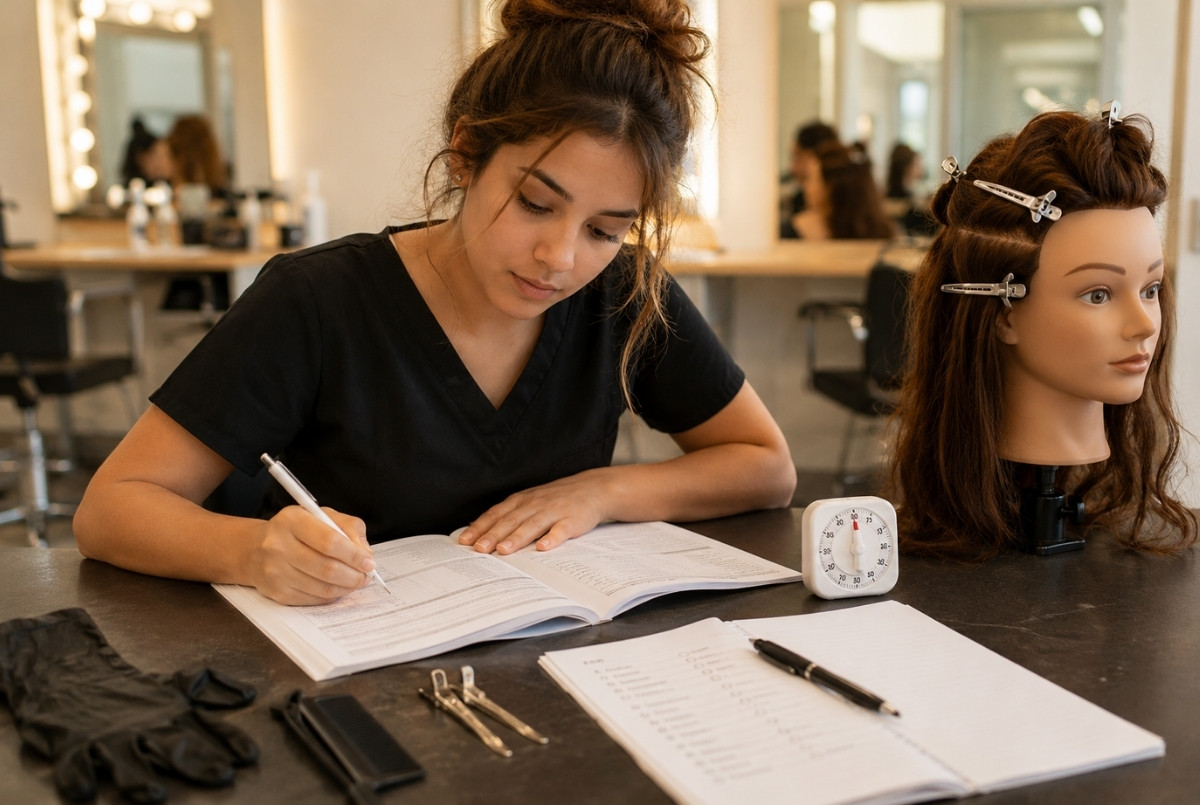
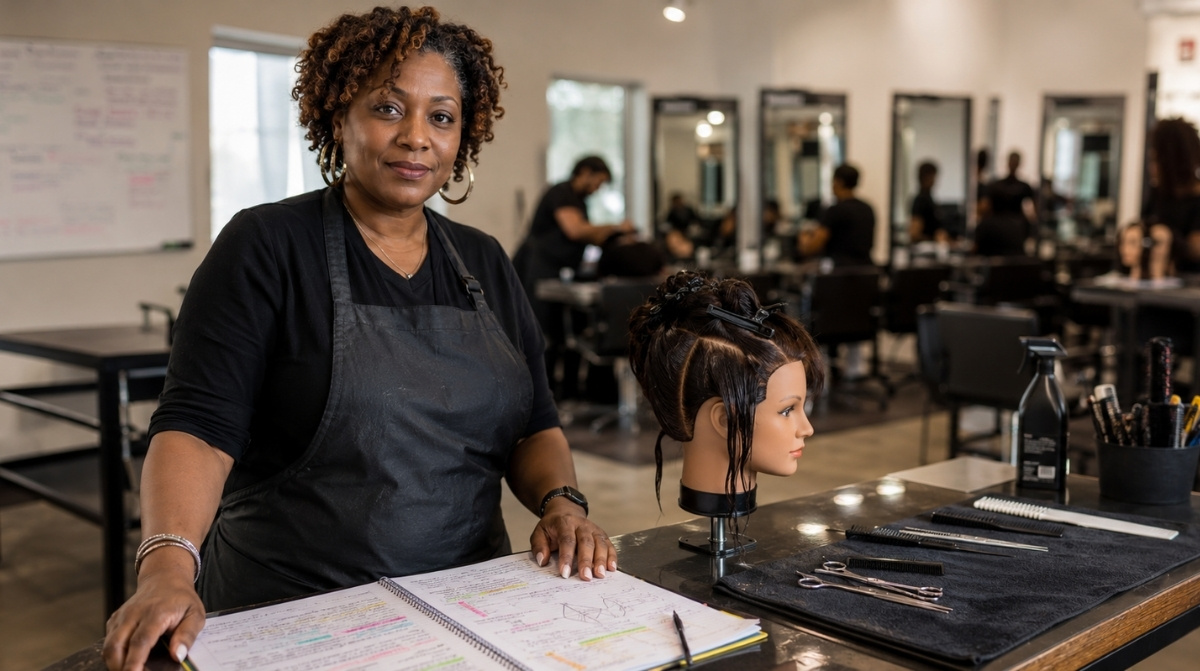
Once training begins, students may start by practicing on mannequins or classmates before advancing to supervised work with real clients, depending on the school and service type. That progression helps build confidence and connects theory, safety, and technique. You can find more details about this transition in our guide on everything to know about becoming an esthetician.

The State Board Exam and Future Earnings

A student esthetician wearing blue scrubs and gloves writes on a clipboard beside a treatment bed and organized skincare cart.

The final step in the process is licensure. Depending on the state, that may involve a written exam, a practical exam, or both. Students often spend the final portion of training reviewing infection control, service procedures, safety rules, and state-law requirements.

After licensure, income can vary widely. The U.S. Bureau of Labor Statistics reported a median wage of $19.98 per hour in May 2024. Experts at Beauty Insurance Plus note that those in specialized, luxury, medically adjacent, or business ownership roles may have the potential for much higher earnings.

Start Your Professional Journey

Deciding on a school is about finding an environment where students can build both skills and professional confidence. It is important to choose a program that prepares students for the real rhythm of working in a busy salon or spa. Proper training supports not only service performance, but also long-term career development in the beauty industry.

If you are ready to take the next step toward licensure, you can find out more about the process in our section on Enrollment. You can also use the contact form at the bottom of this page to get in touch if you have questions or want to learn more about the school.

Common Questions About the Professional Path

Can I balance school with a full-time job? Many schools offer flexible schedules, such as evening, weekend, or part-time tracks, to accommodate students who work.

Is getting into esthetician school a difficult process? Admissions are generally based on meeting age, education, and school-specific requirements rather than on a competitive academic process.

Can a nurse transition into this field? Yes, many registered nurses attend esthetics school to move into skincare-focused or medical spa settings, though the services they can perform depend on state law and licensure.

What is the difference between a basic and a master esthetician? This depends on the state. Some states have a separate license category for advanced training, while others do not.

Do I need a license for a home studio? In most states, a license is required to perform skincare services for pay. Home-based businesses may also need to meet local zoning, salon licensing, inspection, and sanitation requirements.

Everything to Know About Becoming an Esthetician: Schooling, Costs, and Jobs

Starting a career in skincare is an exciting move that allows you to turn your interest in beauty into a stable, professional life. I have seen many people transition from being skin enthusiasts to becoming respected experts, and the journey is more structured than you might expect. If you want to figure out how to become an esthetician, you need to understand the educational steps, the licensing process, and the financial investment required to succeed.

The beauty industry is growing fast, and clients are looking for professionals who truly understand skin health. I wrote this guide to help you navigate the training for an esthetician and prepare for a career that is both rewarding and flexible.

Key Industry Highlights

  • Rapid Career Entry: Most students finish their esthetician school programs in under a year, allowing for a much faster start than a university degree.
  • Market Demand: The Bureau of Labor Statistics expects the demand for skincare specialists to grow by 7% through 2034.
  • Earning Potential: While the average salary for an esthetician is approximately $45,374, those who reach the level of Master Esthetician can see earnings exceed $66,900.
  • Modern Regulation: New standards like the Modernization of Cosmetics Regulation Act (MoCRA) ensure that everyone in the field maintains high levels of accountability and safety.

A student esthetician in a sage green uniform organizes white towels and skincare bottles on a rolling metal cart next to a treatment bed with a mannequin.

The Evolution of Modern Skincare

The beauty world has moved toward a concept that Mintel analysts call “Metabolic Beauty.” This trend means clients want treatments that work with their internal health. As a professional, I focus on protecting the lipid barrier, which is the natural shield that keeps skin healthy and hydrated.

You will learn to use advanced technology and professional-grade peels to help skin repair itself. Staying ahead of the curve means understanding “Bio-intelligent actives,” which are ingredients that adapt to what the skin needs in the moment. Choosing a school for an esthetician that teaches these modern concepts will give you a significant advantage.

Steps to Qualify for a Career in Skincare

You need to meet a few basic requirements before you can start your journey. Most states require you to be 16 or 17 years old and possess a high school diploma. If you are wondering, “can you be an esthetician with a GED,” the answer is yes. Almost all state boards recognize a GED as a valid qualification for enrollment.

The typical path for how to become an esthetician after high school follows these steps:

  1. Find reputable schools with esthetician programs in your area.
  2. Enroll and complete the required hours of training for an esthetician.
  3. Complete your state board examinations.
  4. Submit your application for a professional license.

How Long is Esthetician School?

People often ask how many years of school for an esthetician are required. The truth is that you can finish your education in months rather than years. While the Bureau of Labor Statistics confirms that you must attend a state-approved program, the specific time you spend in school depends on your state.

In Georgia, you are generally required to complete 1,000 hours of training. Here is how that usually breaks down:

  • Full-time students: Many students can complete training in about 9 to 12 months, depending on the school schedule.
  • Part-time students: Programs often take longer, depending on how many hours you attend each week.

This schedule helps you gain hands-on confidence quickly so that you feel ready for a real salon environment by the time you graduate.

Can You Become an Esthetician Online?

I see many ads for an online esthetician course, but you should approach these with caution. While you can take online classes for an esthetician to learn about skin theory or business, you cannot learn how to perform a clinical facial through a computer screen.

Most states require a high number of hands-on hours in a supervised clinic. If you try to do esthetician school online without any in-person practice, you likely won’t qualify for a license. I always recommend programs that prioritize physical practice to ensure you can work safely and effectively.

A focused student wearing blue gloves performs a facial treatment on a client under a bright magnifying lamp in a clinical setting.

Investing in Your Education: Costs and Financial Aid

The esthetician school cost is an important factor to consider. You will find that tuition usually ranges from $3,000 at some colleges to over $15,000 at private beauty institutes. Some schools also offer financial aid to help cover these fees.

There are several ways to manage the cost to become an esthetician:

  • Federal Aid: You can apply for FAFSA for esthetician school if the institution is accredited and participates in federal programs.
  • Grants: Many schools offer grants for esthetician school that do not need to be repaid.
  • Veteran Benefits: If you have a military background, the VA pays for esthetician school at many qualifying locations.

Remember to factor in “kit fees” when you look at the price for esthetician school. These fees cover the professional tools you will use during your training and often take with you to your first job.

Obtaining Your Professional License

Finishing your esthetician program is the first major milestone. After that, you must pass the state board exam to prove you are ready for the field. Most states use a two-part testing system:

  • The Theory Exam: This is a written test about skin biology, safety protocols, and state regulations.
  • The Practical Exam: This is a hands-on demonstration where you show your skills on a mannequin or model.

While states like California have simplified their process recently, Georgia still maintains high testing standards to ensure every licensed professional is fully prepared. You should expect to pay between $100 and $250 for your application and testing fees.

Career Opportunities and Salary Expectations

Many people wonder, “what can you do with an esthetician license?” The career paths are quite diverse. You might find yourself working in:

  • Medical Spas: Assisting with advanced treatments like chemical peels or laser therapy.
  • Luxury Resorts: Providing high-end services in a vacation setting.
  • Private Practice: Starting your own business and specializing in niche services like bridal skincare.

Current data from ZipRecruiter in early 2026 shows that the average yearly salary for an esthetician is around $45,374. Your income will often increase as you build a loyal client list or specialize in advanced services.

Confident esthetician standing beside a prepared treatment bed in a clean modern skincare treatment room with a rolling cart, folded towels, facial steamer, mirror, woven baskets, and soft natural daylight.

Advance Your Skills at Hogan Institute

Selecting the right environment for your education is the most important step you will take. At Hogan Institute of Cosmetology and Esthetics, I believe in providing a learning experience that prepares you for the realities of the modern beauty industry. Our school has been in business for over 20 years, and our team brings more than 80 years of combined experience to the classroom. This helps ensure you understand both the science of skin health and the business of beauty.

We focus on helping students become “Salon Ready” through hands-on training, practical experience, and real-world preparation. My goal is to make sure you graduate with the confidence to handle client needs from day one. We have a long history of helping students in Lilburn and the surrounding areas turn their passion into a professional career.

If you are ready to begin, I invite you to find out more about our process through Enrollment. You can also fill out the contact form below this article to get more information about our schedules and how we can help you reach your goals.

FAQ: Common Questions About the Industry

Is it hard to get a job as an esthetician?
The demand for experts is high, especially for those who graduate from a reputable school. Employers are always looking for people with strong hands-on skills and a good understanding of safety.

Do you need a degree to be an esthetician?
You do not need a college degree. You only need a high school diploma or GED and the completion of a state-approved esthetician course.

Can you be an esthetician without going to school?
No. Every state requires you to complete a specific number of educational hours at an approved school before you can take the licensing exam.

How to Get a Cosmetology License With or Without School: Finding Your Path

Starting a career in the beauty world is incredibly exciting, but I’ll be the first to admit that the legal side of things can feel like a total maze. I remember when I first started looking into the industry, I was so focused on learning the latest trends that the actual licensing process caught me off guard. It often feels like you need a special degree just to figure out how to work in a salon legally.

I want to simplify this for you. Getting your license is a major milestone, and while the specific rules change depending on where you live, the overall path is actually very manageable once you break it down step-by-step. I am going to walk you through how the system works so you can stop worrying about the paperwork and start focusing on your future career.

Verify the Specific Rules in Your Area (No Guessing!)

The biggest mistake I see people make is assuming that the rules in one state apply everywhere else. Every state has its own board that decides exactly what you need to do. When you are looking up cosmetology license requirements or general cosmetology requirements, you are essentially looking for the unique rulebook of your specific state.

I always suggest starting with the official state board website. You should look for details on how many training hours you need to complete, what the fees are, and the exact exam type you’ll face. For example, California requires at least 1,000 hours of instruction. Meanwhile, Virginia recently updated its rules to a 1,000-hour curriculum as well. Since these numbers can shift, checking the board directly is the only way to be certain you are following the right steps and not wasting time.

Choosing Your Training Path

There are generally two ways to get your training done.

The Traditional Beauty School Route

This is the path I see most students take because it provides a structured environment where you can learn everything from safety to advanced technical skills. If you choose this route, you just need to make sure the cosmetology school is approved by your state board. This ensures your hours will actually count toward your license.

The Apprenticeship Route (Licensing Without School)

I get asked all the time about how to get cosmetology license without school. In many states, you can actually get cosmetology license without school by finding a cosmetology apprenticeship. This basically means you work under a licensed professional as a mentor while also completing some classroom instruction. You can find more information about these types of registered programs through federal resources. It is a great alternative for people who prefer a hands-on environment, but you have to check if your state actually allows a cosmetology apprenticeship path before you start. You can even check California’s specific apprenticeship model or visit Apprenticeship.gov to see what’s near you.

Understanding Your Licensing Timeline

I often hear people asking how long does it take to get a cosmetology license. The answer depends on your daily schedule and how fast your state processes paperwork. If you attend school full-time, you might finish in less than a year, but part-time students will naturally take longer.

Once you finish your training hours, you also have to factor in the time it takes to get an exam date and for the state to mail your license. In California, for instance, applying online is much faster, but mailed applications can take up to eight weeks to process. I always tell people to plan for a few months of waiting after graduation just to be safe.

Managing the Costs and Financial Aid

Training for a new career is an investment, and it can be stressful to figure out the finances before you are allowed to earn. You have to think about tuition, your student kit, and the various application fees.

If the school you choose is eligible, you might be able to use federal student aid. You can use the Federal Student Aid school code search to see if a specific program qualifies. If a school does not show up there, Federal Student Aid explains that they might not participate in those programs. Additionally, the IRS allows for certain tax deductions for education expenses at eligible institutions, which can help out during tax season.

The State Board Exam Process

Once your training is complete, it is time to handle the actual testing. This is the part that makes everyone nervous, but there is no need to panic. The standard flow is to finish your hours, submit your how to apply for cosmetology license paperwork, and then get approved to schedule your exam. For instance, California provides clear checklists through their board’s forms to help you stay organized.

Many states use exams developed by the NIC. They provide Candidate Information Bulletins that tell you exactly what topics the cosmetology state board exam will cover. I have found that the best way to prepare is to treat your practice sessions like a real performance. When students ask me how to pass cosmetology state board exam, I tell them to focus on the procedures. Most people do not fail because they don’t know how to do hair; they fail because they forget a sanitation step. I have seen many people on Reddit express frustration with vague study advice, so I recommend focusing strictly on the official bulletins or checking resources from Prometric if they are your exam vendor.

Keeping Your License Active

After you finally get that license, you have to maintain it. You will need your license number for job applications, booth rentals, and professional insurance. Most states have an online portal like BreEZe where you can verify your status or update your address.

You also have to stay on top of your cosmetology license renewal. Every state has a different schedule. In New York, for example, you have to renew every four years. In Texas, the renewal process is also done online. If you let it lapse for too long, like more than five years in Pennsylvania, you might have to retake the exam entirely. Florida is particularly strict, and if your license becomes null and void, you may have to show documented hardship to get it back.

Moving Between States

If you decide to move, you will need to look into a cosmetology license transfer from state to state. This is technically called applying for a cosmetology license by reciprocity. The board in your new state will check your previous training hours and exam scores. Some states, like Virginia, are working on a licensure compact to make moving easier in the future. Until that is fully active, you will need to follow the specific transfer rules of the state you are moving to, which often include official verification letters.

Special Circumstances and Eligibility

I know some people worry about personal factors like not having a social security number or having a past record. In California, the board is allowed to accept an ITIN instead of an SSN for applications. When it comes to criminal history, many states evaluate these situations on a case-by-case basis. I always suggest being honest on your application and contacting the board early if you have concerns about your eligibility.

Your Path Forward with Hogan Ice

Taking the first step toward a new career is a big deal, and I want to make sure you feel supported through the whole process. At Hogan Institute of Cosmetology and Esthetics, we focus on providing the training you need to meet the strict standards of the state board while also giving you the confidence to succeed in a real-world salon environment. We know how much this career means to you, and we are dedicated to helping you navigate the journey from being a student to becoming a licensed professional.

If you are ready to learn more about how to get started, I encourage you to check out our Enrollment page. It has all the information you need to begin your application and join our community.

I also want to make sure all of your questions are answered. If you want to talk about your specific goals or see the campus for yourself, we have a contact form at the bottom of this page. Please reach out and let us know what you are looking for so we can help you take that next step.

Does Everyone Get Into Cosmetology School? What You Actually Need to Enroll

I have seen so many people with incredible natural talent hold themselves back because they are worried about a piece of paper. Maybe you are sitting there wondering if your education background is going to stand in the way of your career, or perhaps you are just trying to figure out where to even start the enrollment process. It is completely normal to feel a bit overwhelmed by the technicalities.

I want to help you clear the air. Getting into beauty school is less about being a perfect student and more about understanding the specific rules that govern our industry. If I had to break down who these schools are actually for, I would categorize it by the requirements you need to meet to move forward with confidence.

Understanding the Three Different Hurdles

One of the biggest reasons people get confused when looking into how to get into cosmetology school is that there isn’t just one set of rules. You are actually looking at three different gatekeepers that each have their own requirements.

The Admissions Office

Each individual school has its own standards for who they let in. While most prefer a high school diploma, some have flexibility depending on the program.

The State Board

This is the most critical part. To actually work as a professional, you eventually have to be licensed by the state. In Georgia, this is handled by the Georgia State Board of Cosmetology and Barbers. If you don’t meet their specific criteria for training hours and education, you won’t be able to sit for your exams, regardless of how well you did in class.

Federal Funding

If you are planning to use federal financial aid to pay for your tuition, the government has its own strict set of rules. This is often where the requirement for a high school diploma or GED becomes most rigid. If you are in a position where you are looking at cosmetology school without a high school diploma, you might need to explore Ability-to-Benefit (ATB) pathways, which are specific routes designed to help students without a traditional diploma qualify for aid through career-focused programs.

The Reality of GEDs and High School Diplomas

I get asked all the time if it is possible to start a beauty career without a standard high school background. The answer is usually more positive than people expect, but it requires some planning.

If you have been asking yourself can I get into cosmetology school with a GED, the answer is a very common yes. Most schools and state boards view a GED as the equivalent of a high school diploma. It is a perfectly valid way to meet the education requirements for both enrollment and licensing.

However, if you are currently looking for cosmetology schools without GED or diploma requirements, you have to be more careful. While some programs may allow you to start your training, you will almost always need to complete your GED before you can apply for your state license. I always tell people that it is better to handle the education side of things early so you aren’t stuck right at the finish line when it’s time to get your license.

Starting Young: Age and High School Programs

I think it is great when someone knows they want to be in the beauty industry while they are still in their teens. I often hear from 16-year-olds who are ready to jump in right away.

In many cases, you can actually begin your journey while you are still in high school. Many states allow students to start clocking hours at age 16 or 17, though you will generally need a parent to sign off on your enrollment. If you are a high school student, you might even find that your school has a partnership with a local beauty academy, which is one of the smartest ways to get a head start on your career.

Is Beauty School Hard to Get Into?

There is a common myth that you have to be a naturally gifted artist to even get accepted. In my experience, that is rarely the case. Most academies are looking for dedication and reliability rather than existing skills – they are there to teach you the skills, after all.

When people ask does everyone get into cosmetology school, I usually tell them that the main things that stop an application are logistical rather than personal. The most common delays include:

  • Missing Paperwork: Not having a valid ID or your high school transcripts ready to go.
  • Availability: Popular programs fill up fast, and schools have to stay within legal student-to-teacher ratios.
  • Financial Readiness: Having a clear plan for how to handle tuition and the cost of your professional kit.

If you are organized and meet the basic age and education requirements, the path is generally very open to you.

Preparing for Success at Hogan Institute of Cosmetology and Esthetics

If you are looking for a place that is focused on preparing you for the reality of the industry, the Hogan Institute of Cosmetology and Esthetics is a fantastic environment to consider. I have found that the best schools are the ones that don’t just teach you how to do hair or skin, but specifically how to pass your state board exams and thrive in a real salon or spa.

Our Professional Programs

We offer several specialized paths depending on where you want to take your career:

  • Master Cosmetologist
  • Esthetician
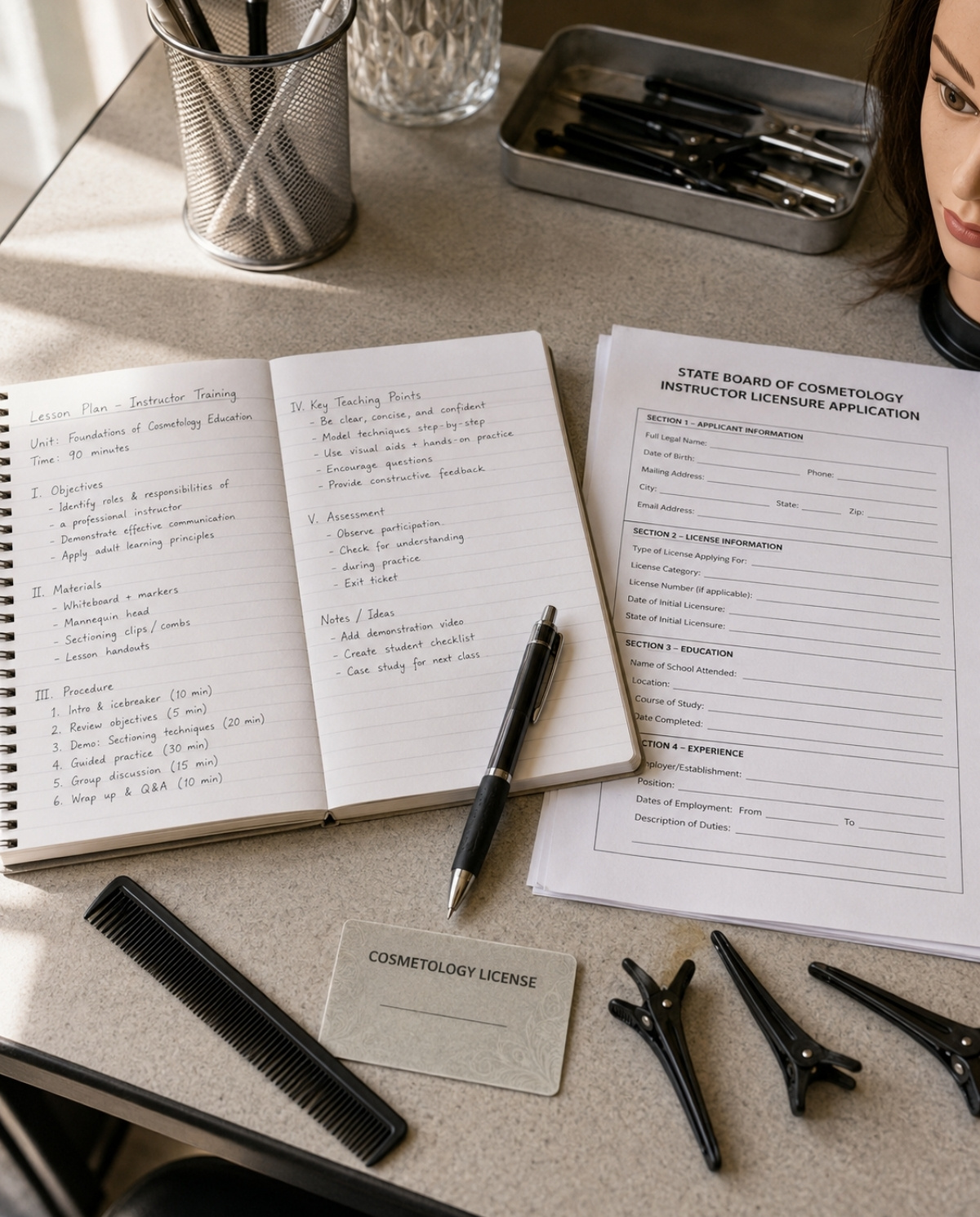
  • Instructor Training

Know Before You Enroll

I highly suggest that anyone thinking about applying take a moment to look through our Student Catalog. It contains all the essential details regarding our admissions requirements and the specific documents you will need to provide. Being prepared with your transcripts and identification from day one makes the entire process much smoother.

If you are ready to stop wondering and start training, the best thing you can do is come see the school for yourself. We have a contact form right here on the site where you can reach out to our team to schedule a tour or ask specific questions about your eligibility.

Cosmetology Jobs Without a License: What Can You Legally Do in the Beauty Industry?


If you have been looking for ways to jumpstart your career in the beauty world without a license, I want you to know that you aren’t being reckless. Honestly, you’re just being realistic.

Maybe you want to start making an income sooner rather than later, or maybe the cost of school feels a bit heavy right now. I also know how frustrating it is to get five different answers from the internet and have no idea which one is actually legal.

So, I want to keep this simple. I am going to explain what a “license” actually means in our industry, where the legal boundaries usually sit, and most importantly, what you can do right now to build your brand while staying on the safe side of the law.

License vs Certification vs Business Permit: What is the Difference?

This is where I see the most confusion, so let’s break this down into plain English.

A Professional License

Think of this as your legal permission from the state to perform specific services on other people. States require these because a lot of beauty work involves chemicals, sharp tools, or sanitation risks that could actually hurt someone if handled incorrectly.

A Certification

I see a lot of people get these mixed up with licenses. A certification usually shows you have been trained in a specific skill, like a certain lash technique. While it helps your credibility and sometimes helps you get insurance, it does not give you the legal right to perform that service for money if your state requires a license.

A Business License

This has nothing to do with your talent and everything to do with running a legal company. This covers your local permits, taxes, and zoning. Even if the job you are doing doesn’t require a personal beauty license, you will likely still need a business registration to legally charge clients or sell products.

A quick way to remember it: license = permission to perform, certification = proof of skill, and business license = permission to operate.

How the Law Decides What Requires a License

Most states don’t regulate beauty based on how creative you are; they regulate based on risk.

In my experience, a service is almost always going to require a license if it involves:

  • Cutting hair or skin
  • Using strong chemicals (like hair color, relaxers, or deep chemical peels)
  • Tools that require intense sanitation (like needles or metal cuticle nippers)
  • Anything that could break the skin or cause a serious infection
  • Procedures that carry a risk of burns or long-term scarring

Services that stay on the “surface level” are often less restricted. However, this is why online advice is such a mess. Two people can tell you completely opposite things, and they might both be right, simply because they live in different states.

Cosmetology Jobs Without a License You Can Start Now

If your goal is to get your foot in the door and start earning, there are several careers with a cosmetology license not being mandatory. You can build your network and your name without any legal drama.

Non-Service Roles

These are underrated paths that I think more people should consider:

  • Beauty Retail and Sales: Working with brands or in stores to sell products.
  • Brand Representative: Helping brands at events or trade shows.
  • Salon Coordinator: Managing the front desk, bookings, and client experience.
  • Content Creation: This is huge right now. You can do reviews, tutorials, and education on social media.
  • Beauty Photography or Writing: Creating the visuals or the blogs that keep the industry moving.
  • Consulting: Helping people build skincare or hair routines without actually applying the treatments yourself.

Product-Based Businesses

If you want to be your own boss but aren’t ready for the hands-on service side, products are a smart move:

  • Launching a press-on nail brand
  • Opening an online store for beauty tools or accessories
  • Digital products like beauty planners, checklists, or “how-to” guides

This lane usually requires a solid business setup, but you generally won’t need to worry about cosmetology without a license issues here.

Can You Own a Salon Without Being Licensed?

This is a question I get all the time: can I own a salon without a cosmetology license? The answer, surprisingly, is often yes! In many states, you can be the owner and the “business brain” without ever holding a stylist’s license.

The catch is in how you structure the business:

  • You must hire licensed professionals to perform any regulated services
  • Your building will likely need an “establishment” or “salon license”
  • You are responsible for keeping the business compliant with health and safety laws, even if you aren’t the one behind the chair

So, while you can absolutely own the shop, it isn’t a “do whatever you want” situation. You still have to follow the rules of the board.

The “Big Five”: Lashes, Nails, Hair, Makeup, and Microblading

Most of the time, people aren’t trying to break the law. They are just asking practical questions like, “can I be a lash tech without a cosmetology license?” or “can you do makeup without a cosmetology license?”

Here is the general pattern I see across the country:

Where the Legal Risk Is Higher

  • Lashes: Because you’re working so close to the eyes with strong adhesives, this is heavily regulated.
  • Nails: If you’re wondering, “can I be a nail tech without a cosmetology license?” the answer is usually no if you’re doing professional services involving cuticle work or gels.
  • Hair: Usually, “alteration” (cutting or coloring) requires a license, while “enhancement” (styling or braiding) is sometimes exempt, depending on the state.
  • Makeup: This is often the most flexible area, but it can get tricky if you start doing skincare treatments.
  • Microblading: This is almost always treated as permanent makeup or body art and has its own strict set of rules.

A good rule of thumb I use: If it involves cutting, chemicals, needles, or high-level sanitation, assume you need a license until you prove otherwise with your local board.

How to Check the Rules for Your Area

If you want a clear plan that won’t get you in trouble, I suggest following these steps:

1) Define your service exactly
Don’t just say “nails.” Be specific, like “selling press-on nails” or “applying acrylics.”

2) Contact the right authority
This is usually your State Board of Cosmetology or the Department of Health.

3) Confirm the three big requirements
Do you need a personal license, a building license, and a local business permit?

4) Pick a “legal lane” while you train
I always suggest building your brand through content, products, or admin roles while you are working toward your official credentials.

Final Thoughts and Next Steps

If you’re ready to stop wondering what’s legal and start building a career that no one can take away from you, I’d love to help you take that next step at Hogan Institute of Cosmetology and Esthetics.

Whether you want to master the art of hair in our Cosmetology program, dive deep into skin health with Esthetics, or become a specialist in our Nail Technician course, we focus on making sure you’re ‘salon-ready’ from day one.

If you have questions about our hybrid learning options or how to get started, just fill out the contact form right below this post. I’d love to see you on campus for a tour soon!

Is It Possible For You to Work as an Esthetician, Barber, Lash Tech, or Nail Tech With a Cosmetology License?

If you have ever looked at your cosmetology license and wondered what else you can do with it, you are definitely not the only one. I see this happen all the time – someone is about to graduate or is already licensed, and they start dreaming about doing lashes full-time, opening a nail boutique, or even moving into a barbershop. Usually, the confusion starts because of one simple fact:

A cosmetology license is very broad, but it is not a “magic key” for every service in every state.

What your school tells you or what a salon owner says is okay does not actually matter. The only thing that legally matters is your scope of practice as defined by your specific state.

Your License Is Not One-Size-Fits-All

In the U.S., every state gets to decide exactly what “cosmetology” means.

For instance, New York is pretty straightforward – they explain that cosmetology includes things like nail specialty, waxing, and esthetics, but also includes cutting or trimming beards and hair.

Texas handles things differently. They publish detailed guides that spell out exactly what a Cosmetology Operator can and cannot do. For example, they are very specific that you can only use a safety razor, not a straight razor, for shaving services.

So, when I get asked, “Can you become an esthetician with a cosmetology license?” my answer is always the same:

You are allowed to do whatever your state board says is part of your license – no more, and certainly no less.

My 5-Minute Strategy for Checking Your Scope

Before I ever help a pro add a new service to their menu or pivot their career, I use a quick verification checklist:

  1. Find your regulator. Go straight to your state board or licensing agency website.
  2. Look for the “Scope of Practice” section. You might also see it under “Laws and Rules” or “Definitions.”
  3. Search for specific terms. Look for things like eyelash extensions, chemical peels, straight razors, or microneedling.
  4. Get it in writing. If you are still confused, email the board and save their response.

Texas makes this very easy by putting everything in one place. California, on the other hand, uses “Industry Bulletins” to explain rules for specific tools or services like lashes. Following this process can save you from a very expensive legal headache.

Can You Work as an Esthetician With a Cosmetology License?

In most states, your cosmetology license covers standard skincare treatments. These are the typical services you would find in a full-service salon.

In New York, esthetics is explicitly listed as part of cosmetology. Similarly, Florida includes skin care, waxing, and manicures in their definition of a cosmetologist.

The Catch: Basic Skincare vs. Medical Procedures

I like to keep the distinction simple:

  • Basic services like traditional facials, masks, and manual exfoliation are usually fine.
  • Advanced procedures are where things get tricky.

Illinois is very strict, stating that neither cosmetologists nor estheticians should be performing services that affect the living layers of the skin. And in California, the board is clear that microneedling is outside the scope of practice for all of its licensees.

A Note on Your Professional Title

Even if you can legally do a facial, you might not be allowed to call yourself an “Esthetician.” The National Coalition of Estheticians Association points out that some states restrict this title only to those with a specific esthetics license. I always tell my readers to check this before they start printing business cards or running Instagram ads.

Doing Nails With a Cosmetology License

This is generally the most straightforward “yes” you will find.

Texas includes manicures, pedicures, and artificial nail applications in the cosmetology scope. Florida does the same.

While you are likely legally covered, remember that employers and boards care deeply about sanitation. Just because you can do nails doesn’t mean you shouldn’t seek extra training in hygiene and safety to protect your license and your clients.

Can You Be a Lash Tech With a Cosmetology License?

Lashes cause a lot of stress because people often confuse a training certificate from a brand with a legal license from the state.

California’s Board notes that applying lash extensions or strips is only for licensed estheticians or cosmetologists. Texas has a specific lash license, but they also allow Cosmetology Operators to perform those same services.

The Liability Factor

It is not just about the law; it is about insurance. On forums like SalonGeek, you will see endless threads about whether insurance covers moving from lash lifts to extensions. Even if it is legal, I always recommend double-checking that your policy actually covers you for the specific service you are providing.

Working as a Barber With a Cosmetology License

This is where people usually get surprised. While there is a lot of overlap in hair cutting, the big divider is usually the razor.

In Texas, a cosmetologist can do most barbering tasks but cannot use a straight razor for shaving. In contrast, New York allows cosmetologists to perform shaving and beard trimming.

Interestingly, in Texas, a Class A Barber can do almost everything a cosmetologist does, except for eyelash extensions. This is a perfect example of why you have to know your specific state’s rules.

Can You Work Without a License?

I get why people search for ways to work without a license – they want to start making money now. But the risks are massive. States like Texas explicitly forbid you from even advertising services you aren’t licensed for. It is always better to finish school and stay within the legal lines so you don’t lose your future career before it even starts.

How to Build Your Career Path at Hogan Institute

If you are looking at all these options and thinking, “I want a license that lets me do the most,” the key is choosing the right foundation. At Hogan Institute of Cosmetology & Esthetics, we focus on high-impact training that matches Georgia’s licensing requirements.

The Pathway for All-Around Skills

For those who want to “do it all” – hair, skin, and nails – our Cosmetology program is the standard. It is a 1,500-hour comprehensive course that prepares you for the Georgia State Board. Because the curriculum includes hair coloring, cutting, manicures, pedicures, and basic facials, it is the most flexible license you can hold in this industry.

The Specialist Route

If your heart is strictly in skincare, you can dive into a more targeted program:

  • Esthetician: This program goes deep into skin health, spa treatments, and advanced techniques like microdermabrasion and chemical peels. It is designed specifically for those who want to work in high-end spas or medical esthetics environments.
  • Instructor Training: For licensed pros who are ready to step away from the chair and lead the next generation of beauty professionals.

Take the Next Step

The best way to figure out which program fits your goals is to see the school in action. You can schedule a tour at our Lilburn campus to meet our instructors, check out the CHI-equipped labs, and talk to admissions about your career path. Whether you want a broad cosmetology foundation or a specialized esthetics focus, we are here to help you get salon-ready.

The Ultimate Guide to Cosmetology Career Opportunities (Offline & Remote)

The common assumption is that getting a cosmetology license means you’re signing up for one specific job-standing behind a salon chair for forty hours a week. While that’s a classic and rewarding path, it’s only one piece of the puzzle. I’ve found that a license is actually a versatile toolkit that can open doors to everything from corporate brand roles to legitimate work-from-home options.

If you have been searching for what you can actually do with those hours of training, I want to break down the real opportunities-both the high-energy offline roles and the digital paths you might not have considered.

Check Your Boundaries First

Before you dive into a specific niche, you have to understand your “scope of practice.” This is just a fancy way of saying “what the law allows you to do.” Because every state has its own board, the rules for what a licensed cosmetologist can do in Georgia might differ from New York or California.

For example, if you are looking for specific details on what is allowed, the Texas Department of Licensing and Regulation has a great official scope guide that explains how different licenses overlap.

Also, if you are dreaming of a home-based setup, keep in mind that many states view this as a regulated business, not just a hobby. California’s home salon rules are a good example of how detailed these requirements can get. My best advice is to verify your local board’s rules before you spend money on equipment or a home studio.

Traditional and Hands-on Cosmetology Occupations

The Salon and Studio Landscape

This is the heart of the industry, but it isn’t a “one-size-fits-all” career. Inside the salon world, there are several cosmetology career opportunities depending on what you love doing most:

  • Precision cutting and modern styling
  • Advanced color chemistry and balayage
  • Texture specialist roles
  • High-end extensions
  • Bridal and special event styling

Specialization is usually where you find the best cosmetology careers. According to the Bureau of Labor Statistics, the median pay for hairstylists and cosmetologists was around $16.95 per hour as of May 2024, with roughly 84,200 job openings expected each year. While that is a broad average, specializing in high-demand services like color corrections or extensions can significantly shift your personal cosmetology careers salary.

Focusing on Esthetics and Nail Care

Many professions in cosmetology focus less on hair and more on the detailed work of skin and nails. If you enjoy a more routine, one-on-one environment, these are fantastic jobs in the cosmetology field.

The BLS reports that skincare specialists earn a median of $19.98 per hour, while manicurists and pedicurists are around $16.66 per hour. I like these paths because they often lead to very loyal, repeat clients who value the consistency of their monthly appointments.

The Underrated Path: Senior Living Communities

If you want more predictable hours and a built-in client base, look into senior living facilities. Companies like Resident Salon Services specifically hire licensed pros to work within these communities. It is a stable, care-focused way to use your skills without the constant pressure of chasing the latest TikTok hair trends.

The Creative Side: Stage, Screen, and Specialty Work

If you love the idea of storytelling or high-stakes environments, there are plenty of cosmetology opportunities in the creative arts.

This includes:

  • Film and television production
  • Fashion editorials and magazine shoots
  • Theatrical and performance makeup

The BLS actually tracks makeup artists for theater and performance as a distinct category. If you’re aiming for the big screen, look at the IATSE Local 706 requirements, which often specify that a current license is needed for hair department roles.

Medical Support and Wigs

Some of the most meaningful work involves helping people through medical transitions. Specialized wig styling and “cranial prosthesis” (the medical term for wigs) are vital for clients dealing with hair loss.

The American Cancer Society provides resources on how patients can choose wigs, and the National Alopecia Areata Foundation helps clients navigate insurance reimbursement. As a licensed pro, you can be the bridge that helps these clients feel like themselves again.

Corporate Roles and Career Stability

If you are looking for cosmetology jobs with benefits and a more corporate structure, you might want to move “behind the scenes” of the brands you already use.

  • Education and Training: Every major beauty brand needs people to teach stylists how to use their products. This could be anything from a local educator to a platform artist at major trade shows.
  • Sales and Account Management: If you have a head for business, you can work as a sales rep for professional lines. You’re still in the beauty industry, but your day-to-day involves building relationships with salon owners rather than doing hair.

Can You Work From Home with a Cosmetology License?

I get asked this a lot. While you can’t physically cut hair over Zoom, there are real cosmetology jobs remote that allow for a better work-life balance.

Online Color Consulting

This is probably the most legit WFH path right now. Companies like eSalon hire licensed colorists to help customers find their perfect shade and troubleshoot application issues from home. It’s perfect if you love color theory but your body needs a break from the physical demands of the salon floor.

Digital Content and Brand Support

Your license gives you instant authority. You can use that to create educational content, write for beauty publications, or work in remote customer support for high-end beauty brands. When a customer has a technical question about a product, these brands want a licensed professional-not a generic chatbot-to answer them.

How Hogan Institute of Cosmetology and Esthetics Prepares You for These Paths

If you’re sitting there thinking, “I want these options, but how do I actually start?” then your choice of school is the first big move. You need a program that doesn’t just teach you how to pass the state board, but one that prepares you for the “Beyond the Chair” opportunities I’ve mentioned.

At Hogan Institute of Cosmetology and Esthetics (HoganICE), we focus heavily on making sure you are “Salon Ready” from day one. Here is why that matters for your career:

Comprehensive Master Cosmetologist Training

In Georgia, you need 1,500 hours to get your license. Our program covers the full spectrum-hair, skin, makeup, and nails. Because we use high-quality products like CHI, you are getting trained on the same tools used in top-tier salons and by major brands. This makes a huge difference if you eventually want to go into brand education or sales.

Real-World Experience on our Clinic Floor

You can’t learn the nuances of client retention or salon management by reading a book. At HoganICE, we have a full-service salon environment where you work on actual clients. I believe this is where the real confidence is built. We even encourage you to make mistakes while you’re in school, because that’s how you learn to solve problems before you’re out in the real world on your own.

Support for Your Job Search

We don’t just hand you a diploma and wish you luck. Our instructors help with the “unspoken” skills-things like resume writing, job seeking strategies, and how to build a client base that actually sticks with you. Whether you want to work in a high-end spa, a film set, or a corporate office, we provide the foundation of professionalism you need.

If you are wondering what careers can you do with a cosmetology license and which one fits you best, the easiest way to find out is to see our environment for yourself. You can book a tour at our Lilburn campus to ask about our schedules and see if the vibe matches your career goals.