

How to Do Cosmetology After BDS: Training, Licensing, and Career Paths

Years spent working over dental chairs, handling insurance administration, and completing similar restorative treatments can make some clinicians wonder whether their skills could support another professional direction. Dentistry depends heavily on precision, but its physical demands and financial pressures can lead certain practitioners to consider facial aesthetics alongside conventional dental care.
Dentists receive substantial education in head and neck anatomy, facial muscles, nerve pathways, local anesthesia, occlusion, and the tissues surrounding the mouth. After completing procedure-specific education, this background may be relevant to treatments involving the lips, smile, lower face, and muscles used for chewing. Nevertheless, neither a dental degree nor a private course certificate automatically provides legal permission to offer aesthetic procedures. Practitioners must hold the required professional license and follow the scope-of-practice rules in the state where the treatment takes place.
This distinction is particularly important for international graduates researching how to pursue cosmetology after BDS. A foreign BDS alone generally does not authorize someone to practice dentistry or provide medical-aesthetic treatments in the United States. Internationally trained dentists must satisfy the licensing requirements of the state where they intend to work. In most states, this involves earning a DDS or DMD through a CODA-accredited pathway, frequently through an advanced-standing program, although specific requirements and limited alternative pathways vary by jurisdiction. In the United States, procedures involving neurotoxins and dermal fillers are normally categorized as facial aesthetics, medical aesthetics, or aesthetic medicine, not conventional cosmetology.
What Dentists Should Know First
- Potential for Self-Pay Revenue: Cosmetic facial-aesthetic procedures are frequently paid for directly by patients, reducing insurance administration and eliminating dental laboratory charges for those services. Actual profitability still depends on product expenses, treatment time, inventory loss, liability insurance, marketing, follow-up appointments, and complication management.
- Rules Change Across State Lines: Each state establishes its own legal boundaries. Georgia, for example, requires most eligible dentists to complete a Board-approved postgraduate course lasting at least 21 hours. It also restricts where and under what circumstances qualifying injectable procedures may be performed.
- Dental Anatomy Is Only the Starting Point: Dentists have valuable knowledge of the head, neck, oral tissues, and perioral structures, but they still require procedure-specific education covering patient selection, injection methods, informed consent, adverse reactions, and emergency response.
- A Certificate Cannot Enlarge a License: ADA CERP recognition, AGD PACE approval, and private training certificates may provide information about a continuing-education organization. They do not independently authorize treatment, guarantee acceptance by a dental board, or confirm malpractice coverage.
Defining the Legal Boundaries of Dental Aesthetics

How Existing Dental Education Applies
Dental education gives clinicians detailed knowledge of the facial and trigeminal nerves, facial musculature, circulation, occlusion, and structural relationships within the lower face. Dentists also administer local anesthesia and regularly evaluate interactions among the teeth, jaws, lips, cheeks, and muscles of mastication. These skills can help when examining perioral balance and the relationship between a patient's smile and surrounding facial structures.
Even with that background, additional education remains essential. Fillers and neurotoxins involve distinct pharmacology, contraindications, injection planes, anatomical danger zones, consent requirements, and emergency procedures. A dentist must be competent in the particular treatment and remain within the purposes and anatomical areas authorized by state law.
The central legal issue is whether a proposed facial-aesthetic procedure falls within the dentist's established professional scope. The United States has no single nationwide standard governing this question. Depending on the jurisdiction, a dental board may regulate the treatment area, clinical purpose, connection to dental care, required coursework, practice location, documentation, delegation, or permit status. Knowledge of facial anatomy does not create legal authority when a state's laws exclude the procedure.
Some jurisdictions allow properly trained dentists to provide defined cosmetic and therapeutic services within oral and maxillofacial regions. Others restrict dentists to the lips, cheeks, jaws, oral cavity, associated tissues, or treatments directly connected to a dental procedure. Dentists should confirm the exact boundaries through current statutes, administrative regulations, official board policies, or written guidance.
Examples of how state requirements differ include:
- Georgia: Georgia Rule 150-14-.04 allows licensed dentists who satisfy its requirements to administer qualifying injectable pharmacologics for functional or cosmetic enhancement of the gums, cheeks, jaws, lips, oral cavity, and associated tissues. The treatment must be connected to a dental procedure and performed in a dental treatment setting. Unless the dentist completed an ADA-accredited oral and maxillofacial surgery advanced specialty program, a Board-approved postgraduate course of at least 21 hours is required. The dentist must send the Board a certified true copy of the course-completion certificate within 30 days, complete the required patient assessment, document the treatment, and personally administer the injectable without delegating it.
- Arkansas: Arkansas has previously indicated that dentists with suitable education may perform certain botulinum-toxin and dermal-filler procedures as part of dental practice. However, publicly available Arkansas rules do not establish an injectable framework as detailed as Georgia's. Before obtaining products, promoting treatments, or treating patients, an Arkansas dentist should request up-to-date direction from the Arkansas State Board of Dental Examiners.
These jurisdictional differences should be investigated before any aesthetic service is introduced. Beauty professionals may consult a state-by-state cosmetology license guide covering training hours, examinations, and renewals, while dentists must examine the separate requirements established by their dental board. A foreign BDS, US dental license, cosmetology license, and private aesthetics certificate are different credentials and do not create the same professional authority.
When Functional Care and Cosmetic Results Overlap
A single treatment may sometimes have both therapeutic and cosmetic effects. Some clinicians use botulinum toxin off-label in carefully selected patients with overactive chewing muscles, masseter hypertrophy, bruxism, or particular temporomandibular disorders. Reducing the activity of an enlarged or overactive masseter may provide a functional benefit and can also produce a narrower-looking lower face over time.
These applications are not universally approved, suitable for every patient, or automatically included in every dentist's scope. The temporomandibular joint is the physical joint, commonly abbreviated as TMJ, while conditions involving this system are generally called temporomandibular disorders, or TMD. In the United States, botulinum-toxin treatment for bruxism and many TMD-related uses is generally off-label because those purposes are not specifically listed in the product's FDA-approved labeling.
A licensed professional may sometimes use a product off-label when there is an appropriate clinical basis, but off-label use does not bypass state law. The clinician must have the necessary authority and competence, obtain informed consent, and maintain proper records.
Calling a cosmetic procedure therapeutic does not make an otherwise unauthorized service legal. Similarly, mentioning a vague connection to smile enhancement cannot expand a dentist's permitted scope. The diagnosis, treatment site, clinical purpose, consent documents, patient record, and advertising must truthfully reflect the service being provided.
The discussion published by Oberman Law Firm provides general background on how jurisdictions approach injectable treatments in dental practices. However, a private legal article is an interpretation rather than an official source of law. Current statutes, administrative rules, dental-board guidance, and advice from a qualified healthcare attorney should take priority whenever the permitted scope is uncertain.
Evaluating Postgraduate Training Options
The postgraduate training market contains brief workshops, online lessons, tiered certificate courses, and privately named programs advertised as a fellowship in medical cosmetology after BDS or a diploma in facial cosmetology after BDS. These labels are not used consistently. Unlike a state-issued dental license or a CODA-accredited dental specialty, terms such as certificate, diploma, and fellowship do not have a standardized meaning throughout the private facial-aesthetics education industry.
A beginner course might take one day or several days and introduce facial anatomy, consultation methods, basic neurotoxin or filler concepts, and early recognition of complications. A longer program may continue for several months and include additional treatment areas, supervised patient participation, case discussions, skin procedures, and mentorship. Program length alone does not prove that the education is comprehensive, clinically adequate, or accepted by a licensing board.
Before registering, determine:
- Whether the relevant dental board accepts the education provider and curriculum
- Whether the curriculum meets every required subject and minimum training hour
- How the program divides its time among lectures, simulation, observation, and hands-on participation
- Whether any clinical component uses properly screened live patients
- Whether instructors hold suitable licenses, qualifications, and experience
- Whether the program addresses anatomy, dosing, contraindications, consent, product handling, and complication response
- Whether continued clinical guidance is available after the introductory training
- Whether the dentist's professional liability insurer considers the training sufficient
Chemical peels, microneedling, facials, lasers, and other skin services should each be investigated individually. Permission to administer certain injectables under a dental license does not necessarily include laser treatment, unrestricted skin procedures, or the general services performed by licensed estheticians. Conversely, cosmetology and esthetics licenses generally do not give a person authority to prescribe or inject dermal fillers or neurotoxins.
Beauty professionals face a different regulatory framework when determining whether they may provide esthetics, barbering, lash, or nail services under a cosmetology license. Dental education does not automatically grant the legal privileges of a cosmetologist or esthetician. Beauty-school education also cannot enlarge the medical or dental authority established by a dentist's professional license.
The Value of Closely Supervised Practice
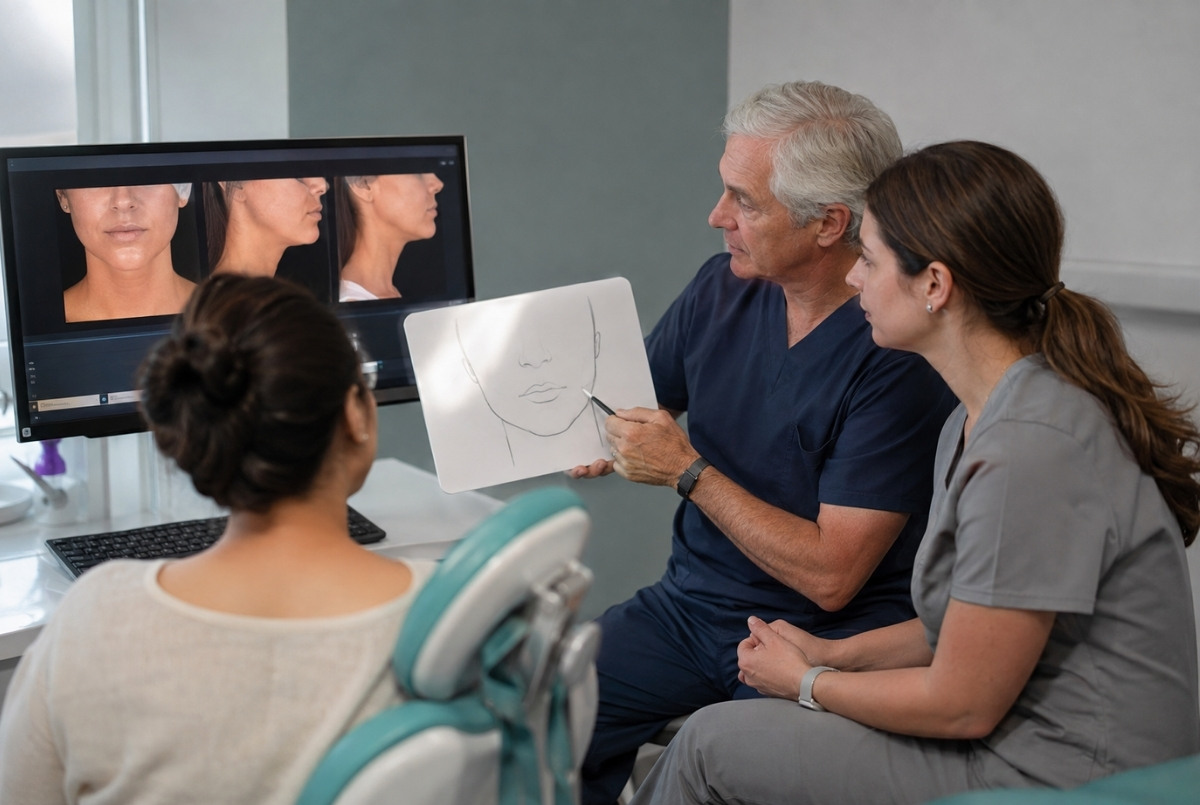
Digital courses can support the study of anatomy, pharmacology, skin biology, consent, and the theoretical management of complications. However, an online lesson cannot fully reproduce the physical judgment required to evaluate tissue, select and control injection depth, monitor how a product behaves, or manage an unexpected patient response in real time.
Injectables and skin treatments should not be treated as one interchangeable skill. Filler procedures require detailed understanding of vascular structures, tissue planes, product properties, and the response to suspected vascular occlusion. Neurotoxin treatment involves muscle function, dosing, diffusion, contraindications, and the prevention or correction of unwanted asymmetry. Microneedling and chemical peels introduce separate considerations involving skin type, treatment depth, infection prevention, pigment changes, wound healing, and aftercare.
Dentists comparing courses may consider continuing-education organizations recognized through the American Dental Association's Continuing Education Recognition Program or approved through the Academy of General Dentistry's Program Approval for Continuing Education. These designations must be interpreted correctly. ADA CERP applies recognition to continuing-education providers, not to each individual course, procedure, or technique. The program also explains that recognition does not guarantee a state dental board will accept the credit. In the same way, AGD PACE evaluates and approves continuing-education organizations rather than separately endorsing every treatment taught by those organizations.
Verification should therefore occur with both the regulator and the insurer. Before paying for a program, ask the dental board whether the proposed course fulfills its requirements. The dentist should also provide the curriculum and clinical-training details to the professional liability carrier and ask what evidence the carrier requires.
Filler-related vascular occlusion deserves significant attention in clinical education. The US Food and Drug Administration warns that filler accidentally introduced into a blood vessel can obstruct circulation and result in tissue death, visual impairment including blindness, or stroke. These complications are uncommon, but the harm can be severe and permanent.
A suitable curriculum should cover early warning signs, product-specific response plans, emergency equipment, consent, documentation, referral arrangements, and immediate escalation for visual symptoms or evidence of tissue ischemia. A completed course does not guarantee insurance coverage. Nevertheless, relevant and documented clinical education may be among the requirements considered by an insurer or regulatory board.
Assessing the Business Side of Aesthetic Services
Insurance administration, slow third-party reimbursement, and dental laboratory charges can create financial pressure in general dentistry. Cosmetic facial-aesthetic procedures are often self-pay, so those particular treatments may require less insurance billing and normally do not involve dental laboratory expenses.
Self-pay status does not mean that every treatment will produce a high profit. The practice must account for product purchases, storage conditions, expiration dates, unused inventory, disposable supplies, employee education, appointment length, insurance premiums, advertising, follow-up care, refunds, and the resources needed to address complications.
A practical estimate should begin with:
- Revenue actually collected minus the cost of the treatment product
- Minus inventory that expires or must be discarded
- Minus staff time and clinical materials
- Minus advertising and professional liability expenses
- Minus the cost of follow-up appointments and adverse-event management
Financial planning should be based on the practice's real treatment capacity, local prices, patient demand, and product usage. Revenue promises published by training providers should not be treated as reliable projections for an individual dental office.
What Procedure Statistics Reveal About Patient Interest
Minimally invasive cosmetic procedures appeal to many patients partly because recovery is usually shorter than it is after surgery. Certain fillers can produce a visible change immediately, although temporary swelling may alter the initial result. Neuromodulator effects generally emerge over several days. Results from peels and skin-remodeling treatments may develop more gradually.
The American Society of Plastic Surgeons reported nearly 25.4 million cosmetic minimally invasive procedures in 2023. Its total included 9,480,949 neuromodulator injections and 5,294,603 hyaluronic-acid filler procedures. The figures demonstrate considerable overall demand, but they do not establish how many patients will seek treatment from dentists or how profitable these services will be for a particular practice.
Patients may consider their teeth and smile within the appearance of the entire face. A person receiving veneers or clear aligners might also raise concerns involving lip volume, lines around the mouth, facial symmetry, or skin texture. If the dentist holds the appropriate license, has completed suitable procedure-specific education, carries the necessary insurance, and is authorized under state law, selected facial-aesthetic services may be discussed within an existing professional relationship.
Chemical peels do not create the same effects at every treatment depth. Their action depends on factors such as the chemical agent, formulation, concentration, contact time, and intended penetration. A superficial peel may mainly address surface texture or pigmentation. Deeper controlled treatments can produce more extensive remodeling but also involve greater risk and a longer recovery period.
Commercial research from Fortune Business Insights estimates that nonsurgical facial treatments represent nearly 61% of aesthetic procedures performed in the United States. This percentage comes from a commercial market report rather than a national clinical registry, so it should be treated as an industry estimate instead of a precise official count.
The American Academy of Facial Esthetics reports that a typical dentist member adds approximately $30,000 per month in production after combining facial-pain treatment, facial aesthetics, and dental sleep-medicine services. This figure is promotional, comes from the organization itself, and covers multiple types of treatment. It is not an independently verified measure of injectable revenue. In addition, production refers to gross treatment value, not net profit or personal income. The claim should therefore not be used as a guaranteed financial forecast.
Creating a Responsible Entry Strategy
A gradual, organized approach can help dentists protect their patients, professional licenses, and practices when expanding into facial aesthetics.
Begin by confirming licensure and legal authority. Internationally educated BDS graduates should identify the full pathway required to obtain a dental license in the jurisdiction where they plan to practice. Dentists who are already licensed should ask their state board about permitted products, purposes, anatomical regions, treatment locations, course requirements, documentation, permits, and delegation. Written board guidance is preferable when published rules do not provide a clear answer.
Next, evaluate clinical education. The chosen dental or medical continuing-education provider should offer qualified instructors, appropriate clinical participation, and emergency education that meet the dental board's standards. The curriculum should address patient selection, health screening, contraindications, informed consent, facial and vascular anatomy, product storage and handling, treatment planning, clinical records, adverse reactions, vascular-occlusion management, and referral procedures.
Professional liability coverage should then be confirmed separately. A standard dental malpractice policy may not cover cosmetic injectables, lasers, peels, or other aesthetic services. The dentist should give the insurer a written description of the products, procedures, treatment sites, training, and clinical setting. Written confirmation should be obtained before the service is advertised or performed. Depending on the policy and carrier, coverage may already apply, require an endorsement, undergo separate underwriting, contain restrictions, or be excluded.
The practice must also establish treatment-specific systems. These may include consent documents, medical-history screening, standardized photographs, lot-number and expiration records, follow-up procedures, emergency supplies, adverse-event protocols, and relationships with appropriate referral providers. Employees should know how to identify urgent symptoms and follow the escalation plan.
If every legal, educational, and insurance requirement has been satisfied, the service can be introduced gradually within the existing practice. Appropriate patients might first receive information during consultations involving smile design or facial balance. Treatment should proceed only after a complete assessment, accurate documentation, informed consent, suitable scheduling, and confirmation that the requested service remains within the dentist's authorized scope.
Common Questions From Dentists
Must I leave general dentistry to enter facial aesthetics?
No. Some dentists add legally permitted facial-aesthetic procedures to an existing dental practice. Whether they may do so depends on state law, the treatment purpose, anatomical location, required education, clinical setting, and insurance coverage. Dedicated appointment sessions may provide more time for consultation, medical assessment, photographs, consent, treatment records, and follow-up.
How does an introductory workshop differ from a privately named fellowship?
A short workshop may introduce anatomy, consultation, product fundamentals, and basic techniques. A more extensive program might include supervised patient participation, advanced planning, complication response, case analysis, mentorship, or separate skin procedures. The label fellowship does not automatically indicate a CODA-accredited specialty or a credential accepted by a licensing board. Dentists must evaluate the actual curriculum and its regulatory acceptance.
Are aesthetic treatments included in ordinary dental malpractice coverage?
Not necessarily. Coverage depends on the insurer and the individual policy. Before providing treatment, the dentist should disclose the procedures, products, anatomical locations, education, and practice environment and obtain written confirmation from the carrier. Completing education through an ADA CERP-recognized or AGD PACE-approved provider does not independently guarantee coverage.
May a dental hygienist or assistant administer the injections?
Delegation requirements differ considerably among jurisdictions and licensed professions. Georgia Rule 150-14-.04 specifically prevents dentists from delegating administration of the injectable pharmacologics covered by that rule. In other states, dentists must determine whether hygienists or assistants may administer each individual product and what supervision, permits, or education would be necessary. Botulinum toxin is a prescription biologic drug, while dermal fillers are generally regulated as medical devices, so their legal treatment should be examined separately.
Does earning a facial-aesthetics certificate increase my permitted scope?
No. Education may develop clinical competence and provide documentation of training, but it cannot increase the authority granted by law. The procedure must already fit within the dentist's licensed scope, and the education must satisfy any additional standards imposed by the dental board.
Can a dentist trained outside the United States begin after earning a private certificate?
Generally, no. A private course does not replace the dental or medical license required in the jurisdiction where a patient is treated. International BDS graduates must first determine how to qualify for professional licensure and then confirm the additional facial-aesthetics requirements established by the relevant board.
Prepare Carefully Before Expanding Your Services
Moving beyond conventional dental treatment into facial aesthetics requires much more than introductory knowledge. A practitioner needs an active professional license, confirmed legal authority, procedure-specific competence, emergency preparation, appropriate clinical systems, and written confirmation of professional liability coverage.
Hogan Institute of Cosmetology and Esthetics provides education for beauty-industry careers, including cosmetology and esthetics. Its programs are not dentist-specific injectable courses, advanced-standing dental programs, or substitutes for authorization from a state dental board. Dentists interested in neurotoxins, fillers, or other medical-aesthetic procedures must select education appropriate for their professional license and accepted by the relevant regulator.
If your goals involve professional cosmetology or esthetics education, visit our Enrollment page to review how to get started. You may also complete the contact form below, and our team can answer questions about Hogan Institute's available beauty programs.