


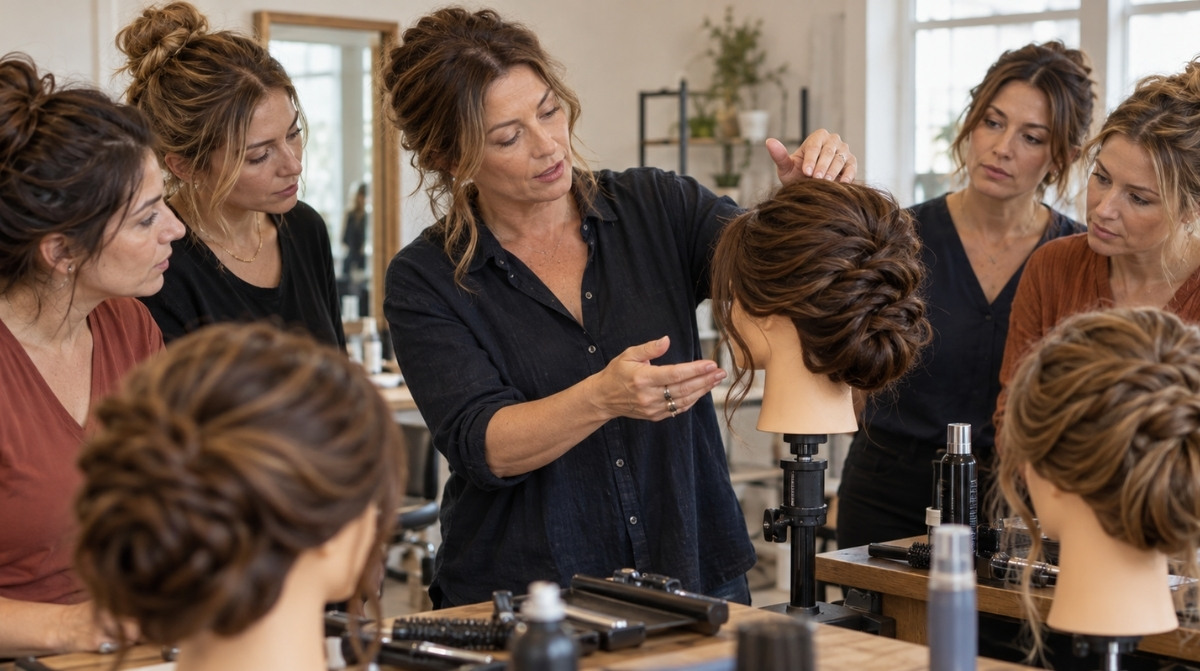
What to Know Before Becoming a Beauty Educator
- Career Direction: Instructor roles let experienced beauty professionals teach their craft, although pay, benefits, and schedules depend on the employer.
- Georgia Requirements: A cosmetology instructor applicant needs the appropriate license and experience, approved instructor training, and passing written and practical exam results. Georgia requires 750 training hours for a cosmetology instructor.
- Training Format: Some programs use digital tools for theory lessons, but prospective students should confirm which hours their state and chosen school permit online.
- Exam Preparation: Instructor exams assess teaching skills as well as safety and infection control. Check the current requirements for the state where you intend to apply.
Years of working with clients can give you knowledge worth passing on. If you enjoy explaining techniques, guiding newer stylists, and helping people build confidence, instructor training may be a natural next step. Teaching can also change the physical demands of your work, though the duties and conditions of each position vary. This guide covers the credentials, training, exams, and career possibilities to consider before making the transition.
Check Your Eligibility to Teach
Instructor licensing rules differ by state and by the specialty you plan to teach. Begin with the board requirements for your intended license before choosing a training program.
Licenses and Professional Experience
In Georgia, an applicant for an instructor license must document the prerequisite license and experience specified by the Georgia State Board of Cosmetology and Barbers. The application also calls for proof of qualifying education, completion of approved instructor training, and passing written and practical examinations. Check the current rule for your license type rather than assuming that experience with clients alone qualifies you to teach.
Work in a salon or shop gives future educators firsthand knowledge of consultations, sanitation, scheduling, and the decisions professionals make during services. Instructor training then helps you turn that experience into lessons students can follow.
Training Hours and Teaching Skills
Required hours depend on the state and instructor specialty. Arkansas rules specify at least 600 hours over no fewer than four months for instructor training. In Georgia, a cosmetology school’s instructor course consists of 750 hours to be completed within one year. Hogan Institute of Cosmetology & Esthetics also lists 750 hours for its Georgia cosmetology instructor pathway.
Instructor coursework develops skills such as lesson planning, teaching methods, classroom management, and evaluating student progress. These are distinct from performing a service yourself: you need to explain each step, observe a learner’s work, and respond when they need help.
Your scope of practice also matters. An instructor’s license and underlying professional license determine which subjects and services they may teach. If you expect to work across state lines, review the requirements in each destination state. Our state-by-state cosmetology license guide introduces the differences in training hours, exams, renewals, and license transfers.
The time needed to finish a program depends on its schedule and how many hours you attend each week. Ask a school for its actual instructor course calendar before planning around a projected graduation date.
Explore How Instructor Courses Are Delivered
Continuing to work with clients while attending school takes planning. Class hours, supervised teaching, and travel to campus can all affect how much salon work you can keep on your schedule.
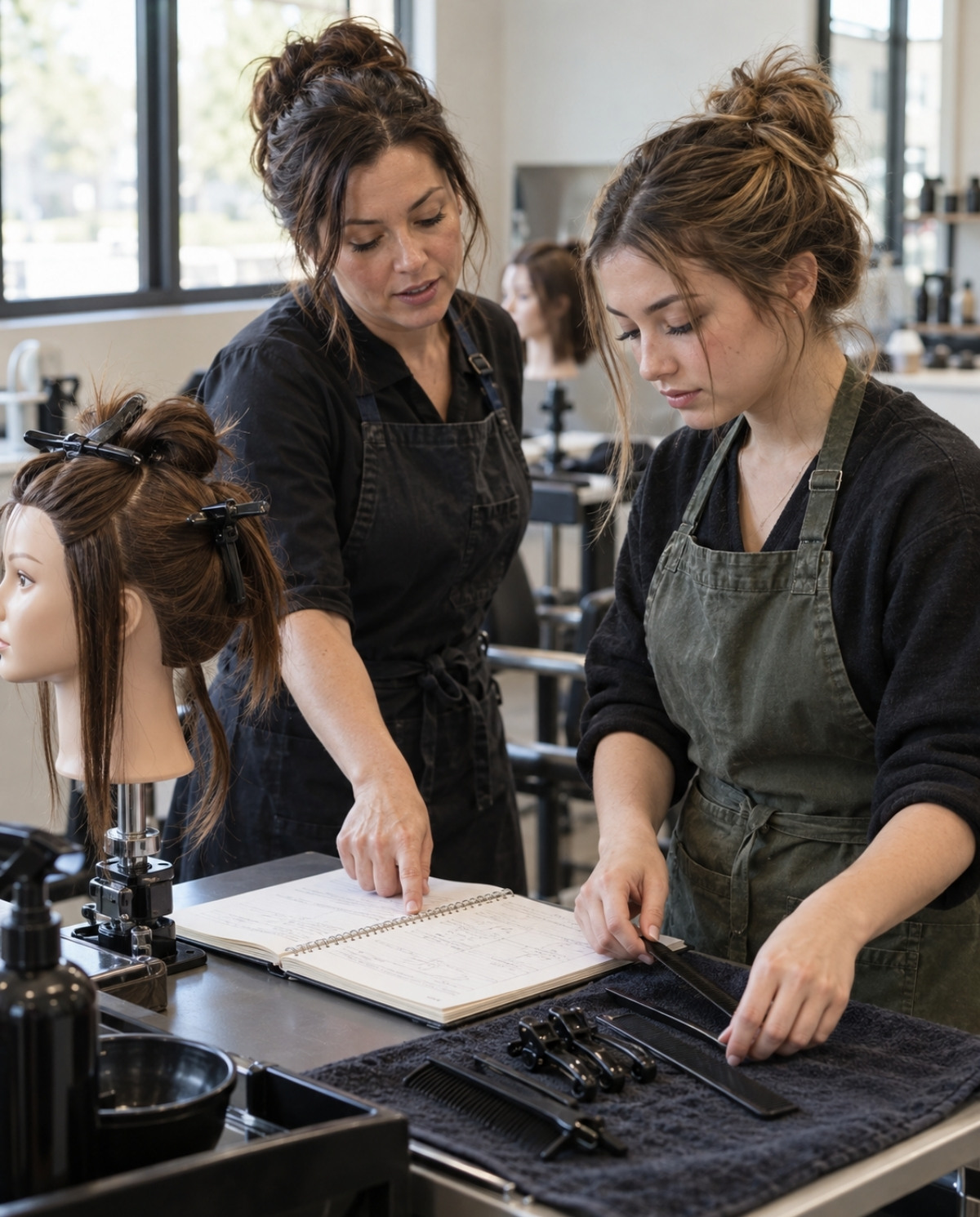
Digital Lessons and Supervised Practice
Technology can help schools deliver reading materials, assignments, and parts of their theory instruction. The American Association of Cosmetology Schools’ discussion of technology in beauty education describes ways digital tools are used in schools, but it does not establish that a particular instructor program is available in a hybrid format.
Instructor candidates also need opportunities to practice teaching and receive feedback. Georgia’s instructor training rule requires trainees in cosmetology schools to remain under the direct supervision of a licensed instructor during their training. If online study is important to you, ask the school which instructor hours, if any, can be completed remotely and how its schedule meets state requirements. Hogan’s published Instructor program page describes hands-on training but does not specify a hybrid schedule.
Consider Pay and Career Options
Moving into education changes how you earn a living, but instructor jobs do not share one standard salary or benefits package. Compensation can depend on location, school type, experience, responsibilities, and whether a role is full-time or part-time.
Compare Actual Job Offers
Salon earnings may vary with appointments, service prices, commissions, and tips. An instructor position may instead pay an hourly wage or salary. Before accepting an offer, compare the full terms: teaching hours, preparation time, evening or weekend duties, health coverage, paid leave, and retirement benefits.
Published salary estimates can provide context, but they should not be treated as a promise of what a new instructor will earn. Review current openings in your area and ask employers how the position is paid.
Paths Beyond Daily Instruction
An experienced educator may later take on curriculum planning, student support, staff training, or school management. Some professionals also train teams for beauty brands or work in education-related sales. Those roles have different qualifications, and an instructor credential does not automatically qualify someone for every specialty or advanced treatment.
Teaching is one of several directions a beauty license can support. For a broader look at possible roles, see our guide to cosmetology career opportunities.
Prepare for the Instructor Licensing Exams
Finishing the required training hours is an important milestone. You must also meet the examination requirements of the state where you seek an instructor license. Georgia’s instructor licensing rule calls for proof of passing written and practical examinations.

What the Exams Assess
The National-Interstate Council of State Boards of Cosmetology instructor theory bulletin outlines knowledge areas for its written exam. Its instructor practical bulletin describes an assessment involving lesson plans, a theory lecture, and a demonstration. The practical assessment also includes safety and infection control procedures.
Exam formats and required materials can change. Use the current candidate bulletin and instructions from your state’s examination provider when preparing, especially for lesson plan materials, supplies, timing, and procedures.
Practice Teaching, Not Just Techniques
Preparing to teach means practicing how you introduce a topic, demonstrate a process, check student understanding, and close a lesson. Reviewing sanitation and safety procedures is part of that preparation. A mock presentation can help you become familiar with the format, but it cannot guarantee a passing result.
New graduates may need guidance on their own licensing and first employment steps. Our article on cosmetology license rules and career options provides a starting point for those conversations.
Common Questions About Teaching Beauty

Can an esthetician or nail technician become an instructor?
Potentially. States may offer instructor licenses for individual specialties, with prerequisites and training hours that differ from those for cosmetology instructors. Your existing license does not by itself authorize you to teach every beauty discipline. Check the rules for the specific instructor license you want.
Is a college degree required for beauty school instructors?
Requirements depend on the state and employer. Georgia’s instructor application rule lists qualifying secondary or postsecondary education documentation, along with its licensing, experience, training, and examination requirements. A public school or college employer may set additional hiring qualifications for a particular position.
How does teaching differ from managing a salon?
A salon manager handles responsibilities such as scheduling, inventory, staff, and business operations. An instructor plans lessons, demonstrates skills, supervises student practice, evaluates progress, and helps learners prepare for licensing requirements. Some jobs may combine teaching and management duties.
What should I ask about instructor training costs?
Request the school’s current tuition and a complete list of fees, supplies, and payment deadlines. Ask whether your chosen program qualifies for any available aid or payment options. Eligibility and total cost can vary, so use the figures provided for the specific program rather than a general industry estimate.
Take the Next Step with Hogan Institute
Hogan Institute of Cosmetology & Esthetics lists an Instructor program in Lilburn, Georgia, with coursework that includes lesson planning, instructional methods, classroom management, and state board exam preparation. Its program page identifies 750 hours for the Georgia cosmetology instructor pathway.
If you would like to discuss admission requirements, the course schedule, and costs, visit Hogan’s Enrollment page or submit the contact form to speak with its admissions team.