
Choosing Beauty Instructor Training in Georgia: Find a Program That Fits Your License, Schedule, and Budget

Key Takeaways

  • Match the program to the license you want. Georgia requires 750 clock hours for cosmetology instructor training and 500 for esthetics instructor training. Both tracks include supervised practice teaching. Georgia’s instructor curriculum rules
  • Compare the week you’ll actually have to work around. Ask for the next cohort’s class days, weekly clock hours, makeup policy, and itemized cost before you move client appointments or pay a deposit.
  • Find out how you’ll learn to teach. Ask to see a trainee’s lesson plan and find out who observes your teaching, what feedback you’ll get, and when you can put it into practice.
  • If you earned hours at a school that closed, start with your records. Ask the receiving school to confirm in writing which hours it can count toward your instructor track. See GCI’s teach-out notice and Georgia’s closed-school transcript guidance.

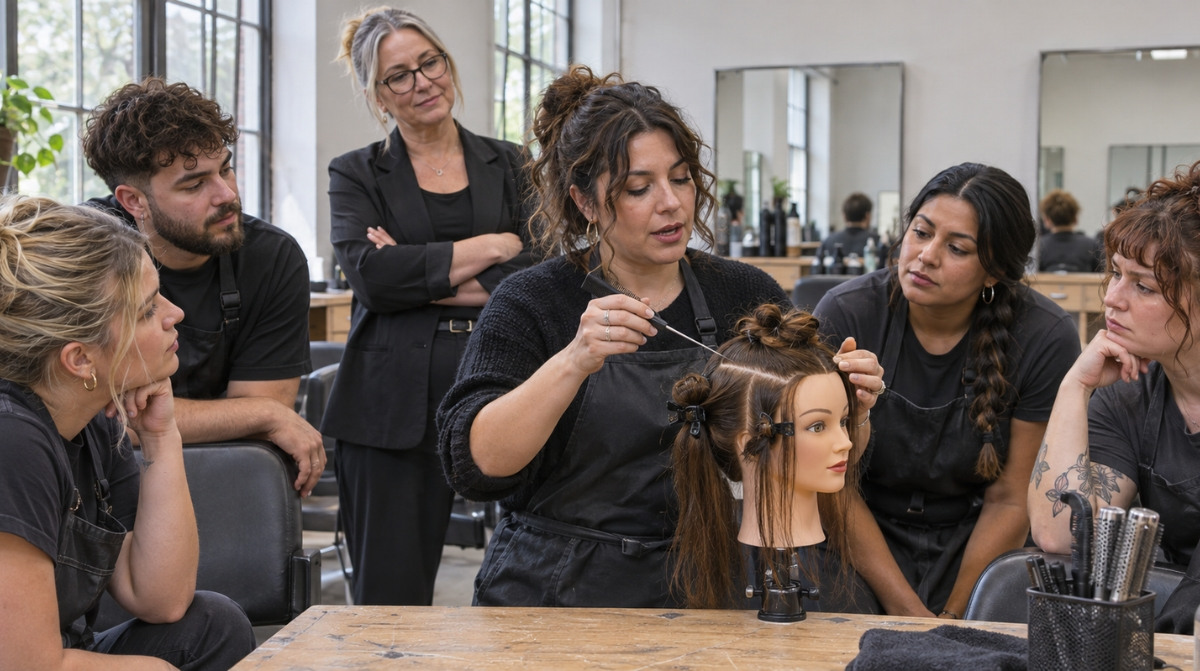
A newer stylist asks why her color turned out uneven, and you show her how to spot sections that are too thick before she tries again. If that’s the part of your work you’d like to do more often, look for training that fits your license and work schedule and gives you time to teach under supervision. If you’re still deciding what kind of teaching you want to do, start with how beauty school teaching differs from independent coaching.

Which Georgia Beauty Instructor Program Fits Your License?

Start with what you want to teach. Schools may use beauty educator training as an umbrella term, but Georgia has separate instructor credentials for cosmetology and esthetics. For the cosmetology instructor application, the Georgia Secretary of State lists a valid Georgia master cosmetologist license and documentation of one year of work experience. The esthetics instructor checklist is for licensed estheticians and also calls for documentation of one year of work experience. If you’ve worked at several salons or spas, ask how to document that experience before you enroll. An employment affidavit is a signed statement used to verify your work history. See Georgia’s cosmetology instructor application guide and Georgia’s esthetics instructor application guide.

Georgia’s cosmetology instructor curriculum requires 750 clock hours within one year, including 275 hours of supervised practice teaching. The esthetics instructor curriculum requires 500 clock hours within nine months, including 175 hours of supervised practice teaching. A clock hour is an hour of training time the school records. If your work schedule changes with the season, compare your projected finish date with the state’s completion window for your track. See Georgia Board Rule 240-15-.04 for cosmetology and Georgia Board Rule 240-16-.04 for esthetics.

What Does Instructor Training Cost, and Can You Keep Working?

A stylist in a black apron compares an open appointment planner with a printed timetable at her salon station.

When you compare the cost of cosmetology instructor training, ask each school for an itemized quote. Check whether it includes registration, books, course materials, and a uniform. Ask what you’d pay separately for exams and the license application. If you plan to use financial aid or a payment plan, ask which options apply to your instructor program and what you’ll owe before classes start. That first payment matters when you’re also adjusting your work hours.

Put a typical class week next to your appointment book. Mark the clients you’d have to move, then factor in travel and childcare. A morning class may protect your evening appointments. An evening class may work better if you can share childcare after work. Ask how many clock hours you’ll earn in a typical week and when makeup sessions are offered. If the only makeup session falls during your busiest shift, missing a class can cost you income as well as time.

What Should Hands-On Beauty Instructor Training Look Like?
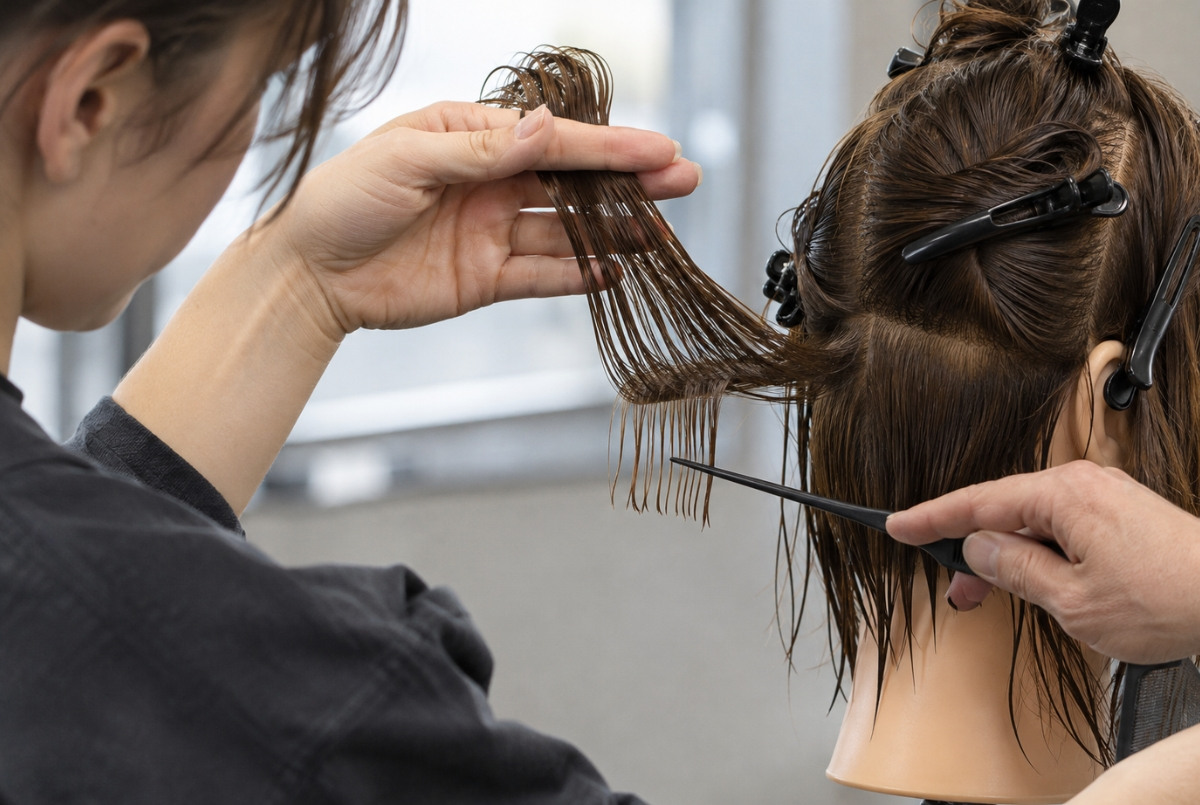
A learner lifts a section of damp mannequin hair while a coach points to the shorter guide strand with a tail comb.

Ask what you’ll be responsible for during a practice lesson. Picture a layered haircut demo. One student holds the hair at the wrong angle. Another loses the guide, the section that shows how much hair to cut. Both cuts can come out uneven, but each student needs a different correction. A practice lesson gives you a chance to spot the difference, explain it, and see whether the student can correct it on the next section. If you’ve ever had to slow down a technique you do by feel, you’ll recognize the challenge in how experienced beauty pros learn to teach their craft.

Georgia allocates 225 hours of the cosmetology instructor curriculum to teaching techniques and instructional aids. That block covers lesson planning, classroom management, demonstrations, and ways to evaluate student work. On a tour, ask to see a trainee’s lesson plan and how it’s evaluated. Look for what a beginner should be able to do by the end of the lesson, how the trainee will check it, and what they’ll try if the student gets stuck. Georgia Board Rule 240-15-.04

A 2026 Journal of School Psychology review of 52 studies found that feedback on teaching performance improved the teaching behaviors researchers measured. The studies came from education settings outside beauty schools. A practical question to take from the research is whether your supervisor will give you specific feedback after observing a lesson and whether you’ll have another chance to teach with that feedback in mind. Levi-Nielsen and colleagues’ review of teacher performance feedback

Beauty Instructor Schools Near Atlanta and What to Verify

We publish this guide at Hogan Institute of Cosmetology & Esthetics. We checked the school listings below on November 9, 2026.

Beaver Beauty Academy in Decatur lists a 750-hour cosmetology instructor program. If you’re considering Beaver, ask whether it has a confirmed start date for the instructor cohort specifically. Its general admissions calendar covers multiple programs, so confirm which dates and class hours apply to yours. See Beaver Beauty Academy’s program listings and Beaver’s admissions information.

Hogan Institute in Lilburn publishes four estimated timelines for its 750-hour instructor program. The estimates are 24 weeks full-time, 28 weeks on the three-day schedule, 30 weeks part-time in the mornings, and 38 weeks part-time in the evenings. The 14-week difference between the full-time and evening estimates can matter if you’re planning around a busy season at work. We also share examples of trainee work you can look through before a visit. Ask admissions which schedule is available for the next cohort. If your goal is to teach skin care, ask whether the separate esthetics instructor track is currently offered. See Hogan’s published instructor schedules and Hogan’s instructor training and student work.

What If You Were Considering GCI or Health and Style Institute?

Georgia Career Institute (GCI) announced October 1, 2026, as its final day of instruction. Georgia’s FY2025 closure report lists February 1, 2025, as the closure date for Health and Style Institute’s Atlanta and Kennesaw campuses. If you were still looking for a program, compare new options by license track and start date. If you had already earned hours, get your official record before committing to a new program. See GCI’s closure notice and Georgia’s FY2025 postsecondary education report.

A teach-out is a formal arrangement that helps affected students finish training after a school closes. Under GCI’s applicable agreements, participating providers agreed to accept all verified hours and successfully completed practical work documented in the student’s official record. GCI also says tuition to finish the remaining training under those agreements will stay within the amount originally contracted. Ask the receiving campus to confirm in writing that your exact instructor track is covered and how many hours you have left. GCI’s teach-out terms

For cosmetology records from Health and Style Institute, the Georgia Nonpublic Postsecondary Education Commission directs former students to the Georgia State Board of Cosmetology and Barbers. The commission received transcripts for the makeup artistry program only. Georgia’s closed-school transcript guidance

Questions to Ask Before Enrolling in Beauty Instructor Training
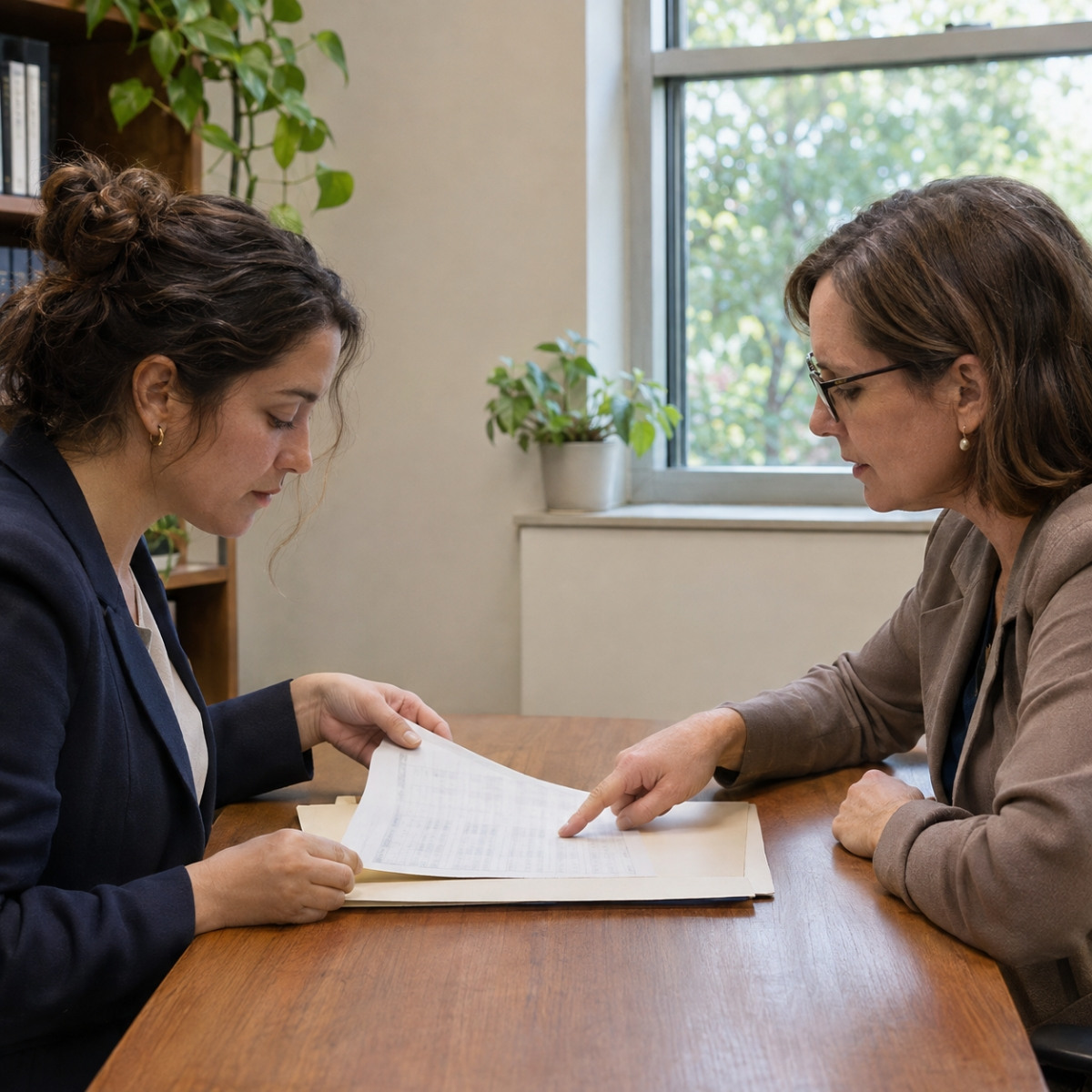
An admissions advisor points to a row on a training record while a trainee follows along across the table.

Once you have a school in mind, compare its enrollment agreement with the answers you got on your tour. If evenings are the only time you can attend, ask what happens to your deposit if the evening cohort is postponed or unavailable. Read the refund terms before paying, and ask when the start date will be firm enough to rearrange your client appointments.

Frequently Asked Questions About Georgia Beauty Instructor Training

Does Finishing Instructor Training Give Me a Georgia Instructor License?

Graduation completes the training portion. Georgia’s cosmetology and esthetics instructor application guides also call for passing the written and practical exams and applying to the Board. If you’re planning for your first teaching job, allow time for those steps after your last day of class. See Georgia’s cosmetology instructor application guide and Georgia’s esthetics instructor application guide.

Once you’ve checked Georgia’s requirements, our overview of instructor exams and license renewal can help you plan for the exams and understand what to check when it’s time to renew.

Can I Teach in Georgia If I Already Hold an Instructor License in Another State?

You can apply for a Georgia instructor license by endorsement, the process the Board uses to review your existing credential. Georgia’s rule calls for verification that the out-of-state license is active, in good standing, and at the appropriate level. If you can’t document that you passed qualifying written and practical exams in English, the Board may require testing. Check the rule before paying for another training program. Georgia Board Rule 240-11-.01 on endorsement

What Does a Beauty Instructor Do Besides Demonstrate Techniques?

Instructors plan lessons, supervise safe tool use, and assess how students are progressing. That last part can shape what you teach next. For example, if several students complete a service correctly but miss the same disinfection step, you might build a station-reset exercise into the next class and check each student’s routine. U.S. Bureau of Labor Statistics, career and technical education teacher profile

Ready to Teach the Next Generation of Beauty Pros?

You’ve built your skills behind the chair. Now learn how to pass them on. At Hogan, our Salon Ready approach brings practical experience into instructor training. You’ll learn to plan lessons, lead demonstrations, and manage a classroom as you prepare for Georgia instructor licensure and opportunities to teach in a beauty school.

For more than 20 years, we’ve helped beauty students take their next step. Fill out the form below to plan a visit to our Lilburn campus and see that experience in action.

Changing Beauty Schools in Georgia: Records, Training Hours, and Your Next Steps

Key Takeaways

  • Start with official records. Request your transcript and available subject-level training records before comparing transfer offers.
  • Separate documented hours from accepted hours. Your records show what you completed; the receiving school’s written evaluation explains what applies to its program.
  • Compare teach-out protections carefully. Terms offered through a formal agreement do not automatically apply at another school.
  • Do not confuse records retention with hour expiration. Georgia’s five-year records language does not, by itself, establish that training hours expire.
  • Get a complete finishing plan. Ask about remaining requirements, tuition, fees, attendance, and financial aid before signing.

Changing beauty schools can leave you wondering whether the months you have spent in class will move you closer to graduation—or have to be repeated. That uncertainty becomes harder when you are also managing tuition, work, transportation, and family responsibilities.

Before choosing another school, you need a clear account of your completed training and a written explanation of how it will apply to the new program. A promise to accept transfer students does not tell you how many hours will count, what you will owe, or when you could finish.

Whether you are leaving your current school, responding to a closure, or returning after a break, we’ll help you organize the questions that matter and prepare for a conversation with a school such as Hogan Institute of Cosmetology & Esthetics.

Can You Transfer Beauty School Hours in Georgia?

You may be able to apply previous beauty school training toward another program in Georgia. However, you need to understand the receiving school’s acceptance terms rather than assume that every completed hour will count.

GCI’s official student notice makes this distinction explicit: transfers covered by its formal teach-out agreements have specified protections, while other institutions determine their own acceptance of hours, tuition arrangements, and financial-aid eligibility.

Beauty programs commonly describe training in clock hours, meaning recorded training time rather than college academic credits. When asking about transferring cosmetology hours, request an explanation of both the total accepted and the requirements that training satisfies.

If your previous training took place outside Georgia, also review how cosmetology training and licensing requirements differ between states. This helps you identify questions for the receiving school and licensing board; transferring unfinished education is a different process from applying with an existing professional license.

For example, ask whether the evaluation accounts for your completed practical applications—the documented services or exercises you performed during training. A total alone may leave you uncertain about which subjects, assessments, and services remain.

Expert insight: Read your transcript alongside the receiving school’s evaluation. Your transcript documents previous training; the evaluation should explain how that training applies to the new program. Resolve any unexplained difference before estimating your remaining time.

Gather Your Records Before You Commit to Another School

Request your official transcript or certified training record first, then ask what supporting information is available. A breakdown of hours by subject, grades, and completed practical applications can give the receiving school a fuller picture of your progress.

Ask about admission documents separately from your training records. Our guide to what you need to enroll in cosmetology school explains the distinction between school admission, state licensing, and financial-aid requirements. Use it to prepare your questions, then confirm the receiving school’s current checklist.

Keep your enrollment agreement, account statement, financial-aid records, and any closure correspondence as well. Use those documents to organize separate questions about charges, funding, refunds, and any outstanding balance.

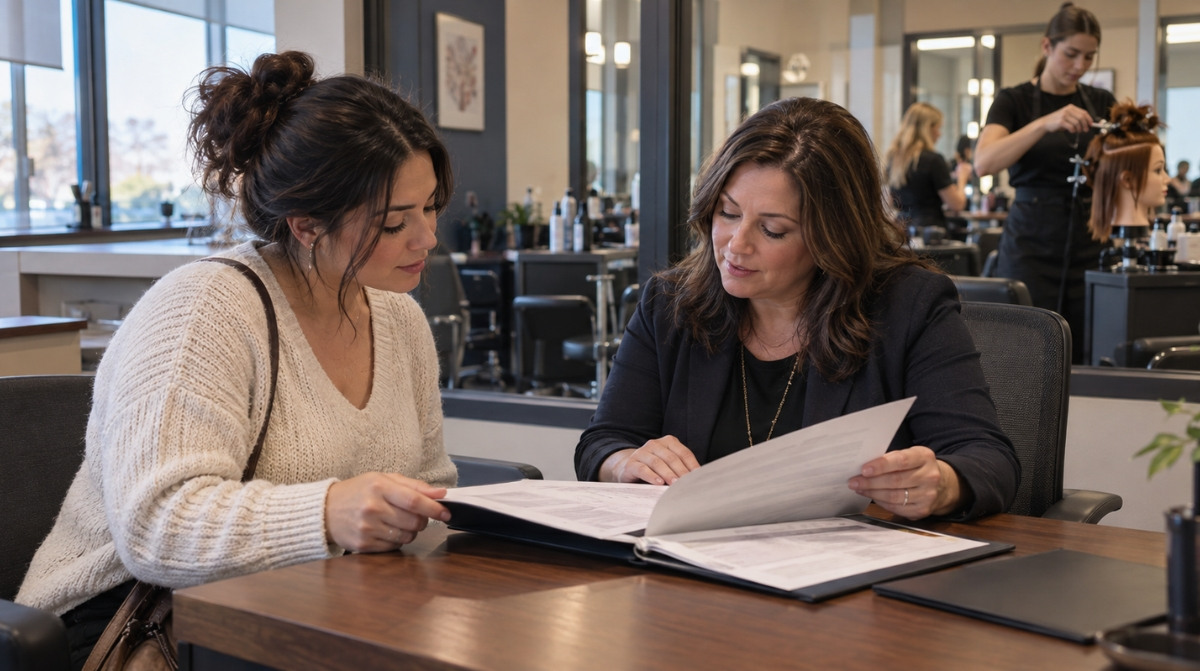
Before paying to send records, ask the receiving school which documents it requires and who must submit them. Confirm whether copies are sufficient for an initial discussion and what official submissions are needed for a final evaluation.

Check your name, attendance dates, program, and reported training. If something appears incorrect, identify the discrepancy and gather supporting documents before requesting a correction.

Where to Request Records if Your School Has Closed

According to Georgia’s closed-institution transcript guidance, students seeking records from closed Georgia cosmetology schools should contact the State Board of Cosmetology. The Georgia Nonpublic Postsecondary Education Commission, or GNPEC, does not license those schools.

Health and Style Institute illustrates why the program matters. GNPEC says it received transcripts only for the school’s Makeup Artistry program and directs requests for other records to the State Board of Cosmetology.

Before submitting a request or paying a search fee, confirm that you are contacting the appropriate records custodian—the organization responsible for maintaining the documents.

Expert insight: Under Georgia Rule 240-13-.04, schools must keep signed weekly worksheets showing training hours by subject, with monthly subtotals. When a student withdraws, a notarized transcript of total hours must be submitted to the Board within 30 days. The rule also requires schools to submit hours and records to the Board upon request regardless of a student’s financial obligation to the school. That last provision concerns submission to the Board; it should not be interpreted as a blanket promise about every transcript request.

Do Cosmetology School Hours Expire?

Over-the-shoulder view of a student comparing training documents at a wooden table beside an open folder and a closed tool pouch.

A records retention period does not, by itself, establish an expiration date for your training.

The Georgia Board’s Request for Verification of Training Hours, revised October 2026, states that Board staff retain school hours, transcripts, and examination scores for five years and cannot process requests for records more than five years old. It also directs students whose schools remain open to request transcripts from their schools, and technical-college students to contact their colleges.

This is a statement about records availability, not proof that all Georgia cosmetology hours expire after five years.

If you are returning after a break, ask two separate questions: Can your training still be documented, and how will the receiving school evaluate it? Provide your attendance dates and ask whether an assessment or additional instruction would be required.

Expert insight: Preserve copies while records are accessible. Keep your transcript, available training breakdowns, and correspondence together so you can present a consistent account of your education.

Teach-Out vs. Transfer: Compare the Written Terms

A teach-out is an organized arrangement intended to help affected students complete their education. A transfer outside that arrangement follows the receiving institution’s applicable acceptance and enrollment terms.

The distinction matters because an agreement may address accepted training, tuition, and exceptions to normal school policies. A separate transfer offer needs to be evaluated on its own terms.

One policy to ask about is a residency requirement: the minimum training a school normally requires you to complete there. This concerns education, not where you live. If an agreement waives that requirement, ask how the waiver affects your completion plan.

Expert insight: In its published closure notice, GCI states that its applicable teach-out agreements provide acceptance of 100% of verified, successfully completed clock hours and practical applications, waive standard residency requirements, and allow completion without additional tuition beyond the originally contracted tuition. GCI also says students may choose another institution, whose terms are determined separately.

Compare accepted training, remaining charges, attendance schedules, and outstanding practical requirements. Ask for an itemized explanation rather than treating “no additional tuition” as a complete description of every possible expense.

Leaving Beaver, GCI, or Health and Style? Start With School-Specific Information

If you attended Georgia Career Institute, begin with your finalized academic record and its official student notice. GCI identified October 1, 2026, as its final instruction date. When discussing your transfer, ask the receiving school to address both your verified hours and completed practical applications.

Former Health and Style Institute students should follow the records instructions for their program. GNPEC’s February 7, 2025, closure notice identifies schools that expressed willingness to accept affected students’ transfer credits. That wording does not establish identical financial arrangements or acceptance terms at every institution. Confirm the offer available to you now.

If you are considering leaving Beaver Beauty Academy, ask directly about its records contact and withdrawal procedures. Then ask prospective schools what they need to evaluate your training. Do not assume that a special transfer agreement exists without seeing its terms.

These starting points differ, but each should lead to a documented explanation of how you could continue your education.

Georgia Beauty School Options to Compare Before You Transfer

Use the following order as a practical sequence for investigation, rather than a ranking of school quality. Your decision should reflect your program, available agreements, remaining costs, and ability to attend.

Prospective student listens to an instructor beside an esthetics treatment bed while another student arranges clean towels.

1. A School Covered by Your Existing Teach-Out Arrangement

If a formal agreement covers your program, understand its protections before declining it. Confirm eligibility, deadlines, accepted training, remaining charges, and required forms.

Then consider whether you can manage the schedule. Calculate the commute, childcare needs, and effect on your work hours. Compare the agreement’s financial protections with the practical demands of completing your education there.

2. Hogan Institute of Cosmetology & Esthetics in Lilburn

Hogan’s admissions information identifies its Lilburn campus, lists Master Cosmetologist and Esthetician program interests, and invites prospective students to ask about programs, schedules, campus tours, and financial-aid options.

To make that conversation useful, explain which program you attended, when you attended, what records you have, and the weekly schedule you can maintain. Request Hogan Institute’s current transfer policy and ask what is needed to determine whether your previous training can apply.

Before committing, request written details about accepted training, remaining requirements, and applicable charges. The admissions page reviewed for this article does not establish a transfer-hour acceptance percentage.

During a campus visit, ask how students receive feedback on practical work and how remaining instruction connects to examination preparation. These questions help you evaluate the education you would receive alongside the time and cost involved.

3. Other Georgia Schools Offering Your Program

Use the same questions when contacting other beauty schools in Georgia. Ask each institution to explain what it would accept, what remains, and the full cost of completion.

If you want to continue esthetics training, confirm that the receiving school offers the program you intend to finish. If you are switching from cosmetology to esthetics, request an evaluation specifically for that change rather than assuming your previous total applies unchanged.

Also ask how remaining practical training is delivered. Georgia Rule 240-13-.05 permits authorized online delivery for specified theory instruction, but requires school-based practical training to be hands-on, on the clinic floor, and taught by a Board-licensed or approved instructor. An online theory option should therefore not be understood as permission to finish all practical training remotely.

Compare the Cost and Time Needed to Finish

A useful completion estimate connects accepted training to a specific schedule and an itemized cost.

For a hypothetical example, suppose a school confirms that you have 600 hours remaining and can attend 25 hours each week. Dividing 600 by 25 gives 24 instructional weeks. That calculation does not account for holidays, absences, scheduling restrictions, or outstanding practical requirements.

If you are deciding how school will fit around work or family responsibilities, our guide to full-time and part-time cosmetology study explains how weekly attendance and makeup opportunities affect the timeline. Ask the receiving school to calculate your projected completion date using your accepted transfer hours and its actual calendar.

Request remaining tuition and mandatory charges separately from supplies, books, uniforms, and replacement equipment. Include transportation and childcare in your own budget. This allows you to compare the actual commitments rather than two headline tuition figures.

Expert insight: According to the Federal Student Aid Handbook’s guidance on transferring students, changing schools does not automatically restart your annual Direct Loan allowance. Overlapping academic years can affect initial borrowing, and clock-hour programs have specific loan-period rules. Ask the receiving school to review available funding separately from accepted training.

The 2026–2027 Pell Grant guidance also explains that eligible students affected by closure may receive restoration of previously used Pell eligibility, subject to school and student conditions. Restored eligibility concerns your capacity to receive future grant funding; it is not a tuition refund or loan cancellation. Ask the financial-aid office to check your current record before assuming an adjustment has occurred.

Your Next Step: Prepare for a Conversation With Hogan

Bring your available records and explain what you need from your next school: the program you want to complete, the schedule you can sustain, and the financial questions you need answered.

Before signing, make sure you understand how your previous training would apply and what completing the program would involve. Your next decision should give you a clear plan: documented progress, understood costs, and a schedule you can realistically follow.

Student uses a calculator beside an open weekly planner and printed paperwork while reviewing her education budget at a home desk.

Frequently Asked Questions

Can I Switch From Cosmetology to Esthetics When I Change Schools?

Ask whether the receiving school permits the change and how it evaluates your previous education. Request an explanation of the specific esthetics requirements your training would satisfy, rather than relying only on the total hours completed.

What if My School Transcript Has Missing or Incorrect Hours?

Contact the school or records custodian responsible for the transcript. Describe the discrepancy and provide supporting attendance or training documents. If the school has closed, ask the State Board about the appropriate process. Keep copies of your correspondence and any corrected records.

Should I Withdraw Before Another Beauty School Accepts Me?

Before withdrawing, coordinate the timing with both institutions. Clarify notice requirements, records procedures, financial consequences, and the proposed start date. If your school is closing, review its published instructions and any required election forms before acting.

Can I Transfer After Taking a Break From Beauty School?

Ask the receiving school to review your attendance dates and available records under its current policy. Confirm whether an assessment or additional instruction would be required. Remember that the Board’s records retention language does not, by itself, establish whether a school will accept older training.

Do I Have to Buy Another Student Kit When I Transfer?

Request an itemized equipment list before purchasing anything. Ask which existing tools the school will permit, which supplies need replacing, and whether required kit charges are included in your written estimate.

Ready to Build Your Future in Beauty?

Your next chapter starts with the skills to move forward confidently. At Hogan Institute of Cosmetology & Esthetics, our Salon Ready approach combines classroom instruction with hands-on training to help you prepare for opportunities in cosmetology and esthetics.

Come see 20+ years of beauty education experience in action. Explore our Lilburn campus, meet our team, and discuss your previous training and career goals.

Complete the contact form below to discover your next step—and become part of Hogan’s continuing legacy in beauty education.